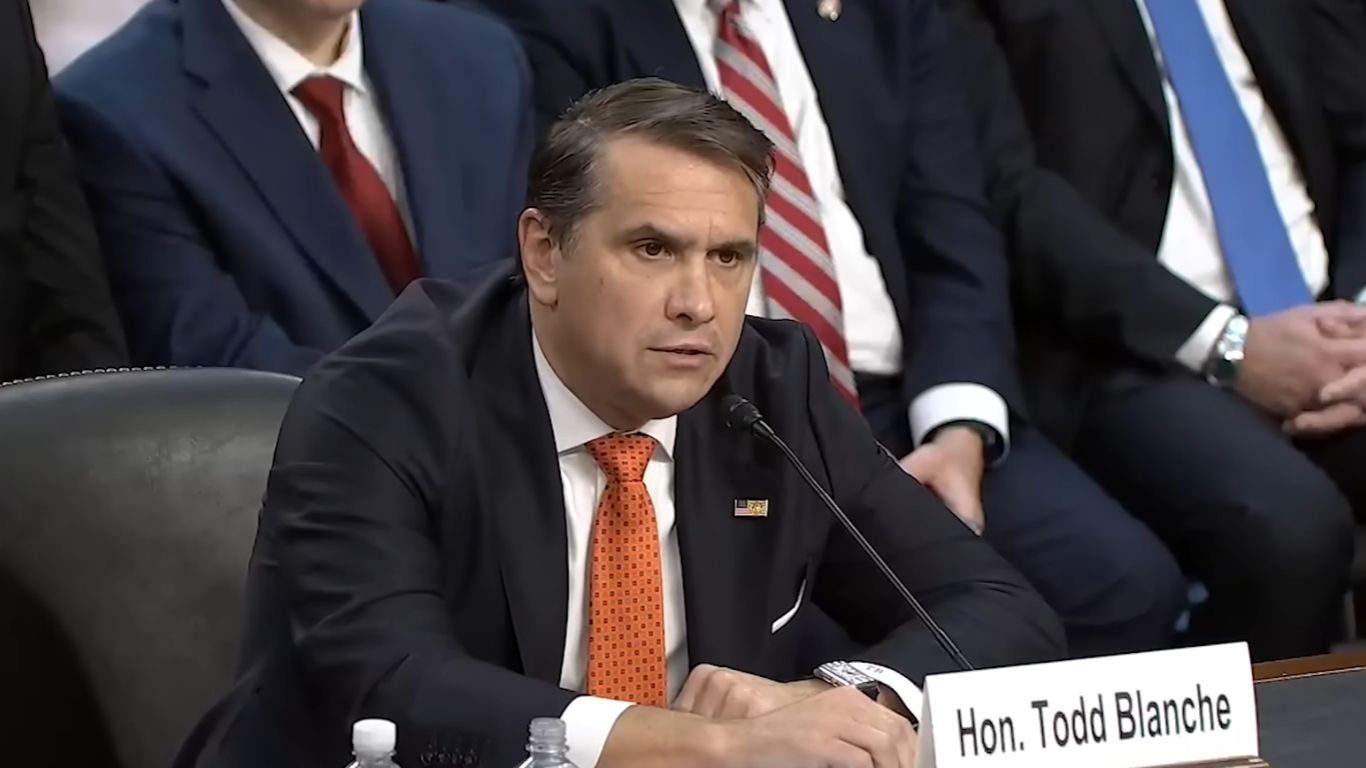
WASHINGTON (Diya TV) — Two influential Senate Republicans announced Monday that they will support Todd Blanche’s nomination for attorney general after he formally canceled President Donald Trump’s controversial $1.8 billion “anti-weaponization” fund. The move removed a major obstacle to Blanche’s confirmation and cleared the way for a key Senate Judiciary Committee vote this week.
Blanche, who currently serves as acting head of the Justice Department, issued an order Sunday that officially ended the fund. Soon afterward, Republican Sens. Thom Tillis of North Carolina and John Cornyn of Texas said they would back his nomination. Their support marked a significant breakthrough after weeks of negotiations and public disagreements over the proposal.
Blanche shared the announcement on X and said he had spent the past several weeks meeting with senators and committee members to address their concerns. He said those discussions took place in good faith and helped resolve outstanding issues surrounding the Justice Department’s settlement agreement with the Internal Revenue Service.
His signed order stated that the May 18 directive creating the Anti-Weaponization Fund had been rescinded and would have no force or effect. The written order provided the formal commitment that several lawmakers had requested before agreeing to support his nomination.
The fund became the biggest issue during Blanche’s confirmation process. It emerged from a settlement tied to Trump’s lawsuit against the IRS. Under the proposal, taxpayer money would have gone to people who claimed they suffered because of what they described as political weaponization by the federal government. That group included some people connected to the Jan. 6, 2021, attack on the U.S. Capitol.
Although Blanche had previously said the program was finished, many senators wanted the Justice Department to put that promise into writing. Sunday’s order finally met that demand. As a result, Tillis and Cornyn announced their support for Blanche only hours later.
In a joint statement, the senators said they were pleased with Blanche’s decision. They also said they looked forward to voting to advance his nomination out of the Senate Judiciary Committee. Their endorsement significantly improved Blanche’s chances of winning Senate confirmation before lawmakers begin a five-week recess.
In addition, Blanche addressed another issue that concerned Cornyn. The original settlement included an addendum involving tax investigations related to Trump and members of his family. Cornyn wanted written language confirming that the protection applied only to past investigations and only to the people specifically named in the lawsuit.
Blanche’s latest order clarified that the provision applies only retroactively. It also stated that the agreement covers only the named parties involved in the legal case. Tillis and Cornyn said that clarification answered concerns shared by several Republican senators.
However, questions remain about the settlement itself. The latest document carries only Blanche’s signature. Trump and his personal attorneys did not sign the order, even though the settlement remains an agreement between the Justice Department and the president.
Blanche’s announcement followed several days of political uncertainty. Last week, Trump suggested he might temporarily withdraw Blanche’s nomination if Senate Republicans refused to support him. The president said he could submit the nomination again after Tillis and Cornyn leave the Senate.
Blanche later met privately with both senators. Reports indicated the discussions made progress, although the two sides did not immediately reach an agreement. Sunday’s written order ultimately resolved the dispute.
Trump also criticized both senators during the debate. He claimed they opposed his nominee because he had not endorsed their political campaigns. Cornyn recently lost his Republican primary to Trump-backed Ken Paxton. Meanwhile, Tillis decided not to seek another Senate term after repeated disagreements with Trump.
Even after Blanche canceled the fund, Trump continued to defend the proposal. Over the weekend, he said he would still try to persuade Congress to approve the idea through legislation if Blanche failed to win confirmation. He described the proposed payments as compensation for supporters and allies whom he believes suffered unfair treatment from the federal government.
The Senate Judiciary Committee is expected to vote Tuesday on Blanche’s nomination. If lawmakers approve the nomination, the full Senate could consider final confirmation before leaving Washington for its scheduled August recess. The committee vote now appears far more likely to succeed after Blanche’s decision to formally end the controversial fund.