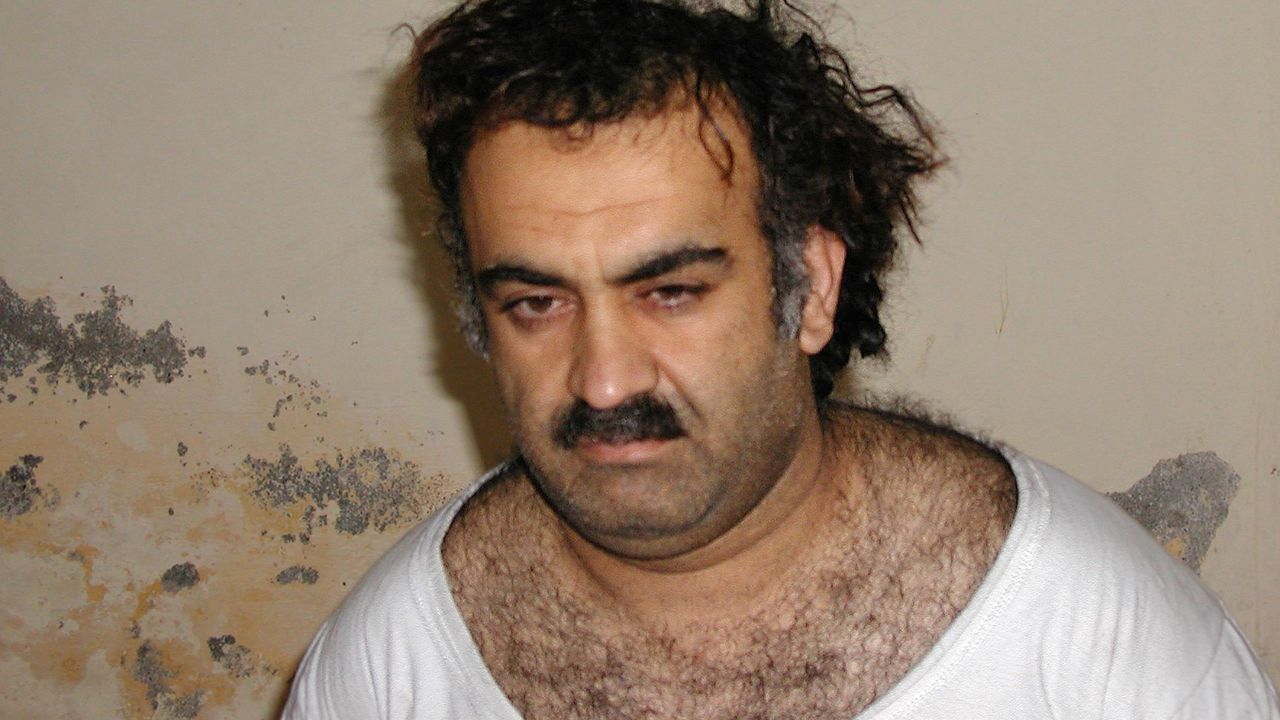
WASHINGTON (Diya TV ) — The U.S. Supreme Court on Monday rejected an appeal from Khalid Sheikh Mohammed and two other alleged Sept. 11 plotters who sought to enforce a plea deal that the government later canceled. The decision clears a legal obstacle to their planned military trial in 2028, where prosecutors could seek the death penalty.
Mohammed, the alleged mastermind of the Sept. 11, 2001, terrorist attacks, has been held at the U.S. military base at Guantanamo Bay, Cuba, since 2006. The ruling marks another step in a legal battle that has delayed the trial for more than two decades.
The Supreme Court’s decision leaves in place a lower court ruling that favored the government. As a result, the three defendants cannot use this appeal to force the military to honor the agreement that prosecutors reached with them in 2024.
The appeal involved Mohammed and two other alleged plotters, Mustafa Ahmed al-Hawsawi and Walid bin Attash. All three men remain in custody at Guantanamo Bay and face trial before a military commission.
In 2024, the men reached plea agreements with military prosecutors. A military commission judge approved the deals, which would have allowed the defendants to avoid trial and receive life sentences.
However, the agreement lasted only a few days before then-Defense Secretary Lloyd Austin intervened. Austin rejected the deals and argued that he had the authority to cancel them.
The defendants challenged that decision in military courts. Those courts ruled that Austin lacked the authority to withdraw the agreements. However, the U.S. Court of Appeals for the District of Columbia Circuit later sided with the government in an August ruling.
The defendants then asked the Supreme Court to review the case. They argued, among other points, that the appeals court lacked the authority to intervene in the dispute.
The Supreme Court rejected their appeal on Monday. The decision leaves the appeals court ruling intact and removes one legal hurdle facing the government’s effort to bring the men to trial.
Mohammed faces accusations that he helped organize the Sept. 11 attacks, which killed nearly 3,000 people in New York, Washington and Pennsylvania.
On Sept. 11, 2001, hijackers seized four commercial airplanes. Two planes struck the World Trade Center in New York City, while another hit the Pentagon near Washington. The fourth plane crashed into a field in Pennsylvania after passengers fought back against the hijackers.
U.S. authorities have described Mohammed as a central figure in planning the attacks. He has remained in American custody since his capture in Pakistan in 2003 and his transfer to Guantanamo Bay in 2006.
The military commission proceedings have faced years of delays. One major challenge involves evidence that the CIA obtained through torture during Mohammed’s detention.
That evidence has raised questions about what prosecutors can use at trial. It has also complicated efforts to move the case forward, making the Sept. 11 proceedings among the most closely watched military trials in U.S. history.
The Supreme Court’s decision does not resolve every legal question surrounding the case. However, it allows the government to continue pursuing a trial without honoring the disputed plea agreements.
The planned 2028 trial remains a major milestone for prosecutors and the families of Sept. 11 victims, who have waited years for the case to reach court.
The plea deals would have ended the long legal process without a full trial and would have ruled out the death penalty under their terms. Their cancellation reopened the possibility of capital punishment if prosecutors secure convictions and meet the applicable legal requirements.
Meanwhile, a fourth alleged plotter, Ali Abdul Aziz Ali, also known as Ammar al-Baluchi, was not part of the Supreme Court appeal. He remains among the defendants facing proceedings connected to the Sept. 11 attacks.
The latest ruling highlights the continuing legal challenges in the case. Although the Supreme Court has rejected the defendants’ appeal, the planned trial still faces questions about evidence, military court procedures, and the consequences of the CIA’s interrogation methods.
For now, the government has prevailed in the dispute over the plea agreements. The next major test will be whether prosecutors can move the long-delayed case toward trial while addressing the remaining legal challenges.