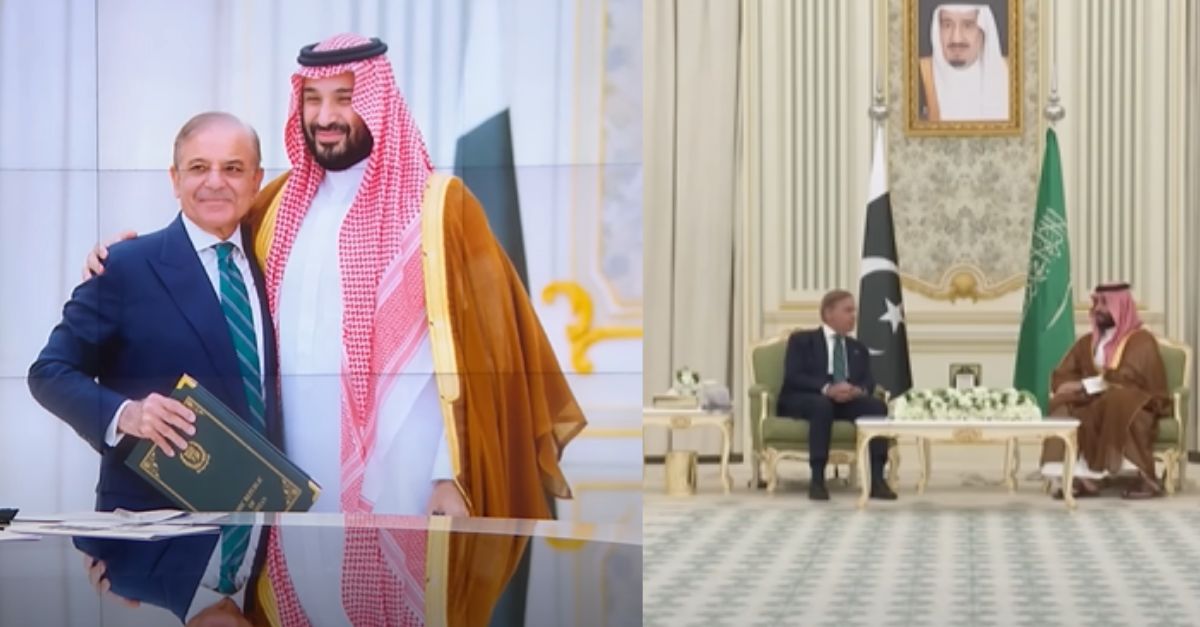
NEW DELHI (Diya TV) — Saudi Arabia and Pakistan have signed a new mutual defense agreement during Pakistani Prime Minister Shehbaz Sharif’s visit to Riyadh. The pact states that any attack on either country will be treated as an attack on both.
Sharif traveled to Riyadh on the invitation of Crown Prince Mohammed bin Salman. The two leaders met at the Al-Yamamah Palace and issued a joint statement highlighting their “historic and strategic relations.” Pakistan Army Chief, Field Marshal Asim Munir, also attended the meeting.
According to the statement, the pact builds on nearly eight decades of partnership between the two nations. It cites “brotherhood and Islamic solidarity” as the foundation of the relationship. Both sides said the agreement aims to strengthen joint deterrence, boost defense cooperation, and promote regional peace.
The clause declaring aggression against one country as aggression against both has drawn attention across the region. Observers noted that this language resembles the collective defense principle seen in other global alliances.
India reacted carefully to the announcement. The Ministry of External Affairs (MEA) said New Delhi was aware the pact had been under consideration.
“We will study the implications of this development for our national security as well as for regional and global stability,” the MEA said. The ministry stressed that India remains committed to safeguarding its national interests and ensuring comprehensive security in all domains.
The measured response underscores India’s cautious diplomacy with Riyadh. Under Indian Prime Minister Narendra Modi, India has strengthened ties with Saudi Arabia. Trade has grown rapidly, making India the kingdom’s second-largest trading partner.
The pact comes at a sensitive moment. Relations between India and Pakistan have sunk to new lows after the Pahalgam terror attack and India’s retaliatory Operation Sindoor.
During Modi’s state visit to Riyadh in April, Saudi Arabia strongly condemned the Pahalgam attack. A joint statement with India said terrorism could never be justified and called for swift action against perpetrators. The two countries also rejected cross-border terrorism and urged states to dismantle terror infrastructure.
This makes the new defense pact between Riyadh and Islamabad particularly significant. Analysts point out that Saudi Arabia’s public support for India against terrorism raises questions about how far it would go in backing Pakistan in a future conflict.
Pakistan may see the agreement as a potential guarantee of Saudi military support. In theory, the Royal Saudi Air Force could deploy its advanced F-15s and Eurofighter Typhoons to help Islamabad.
But experts argue that such expectations are unrealistic. Saudi Arabia’s priorities remain focused on its rivalry with Iran, the conflict in Yemen, and managing regional stability. Direct involvement in a South Asian war would risk its deepening economic and security ties with India.
“Pakistan may dream of Saudi jets coming to its aid, but the ground realities point elsewhere,” said one defense analyst. “The pact looks more like posturing, aimed at signaling strength against Israel and Iran rather than India.”
The agreement reinforces Pakistan’s reliance on Gulf allies. Saudi Arabia has long been a financial and political supporter of Islamabad. However, the kingdom has also expanded its cooperation with New Delhi in recent years, especially in energy, infrastructure, and counterterrorism.
For India, the new pact highlights the complex balance in the region. New Delhi must weigh Saudi Arabia’s symbolic support for Pakistan against its own growing partnership with Riyadh.
At the same time, the move adds another layer of uncertainty to South Asia’s fragile security environment. Any future conflict between India and Pakistan could now carry broader implications for the Gulf.
While the defense pact sounds dramatic, its practical impact remains uncertain. Both nations framed it as a step to ensure peace and stability. But the actual test will come if tensions between India and Pakistan flare again.
For now, the agreement signals solidarity more than a shift in military strategy. Saudi Arabia appears unlikely to jeopardize its ties with India, even while reassuring Pakistan of its brotherly bond.