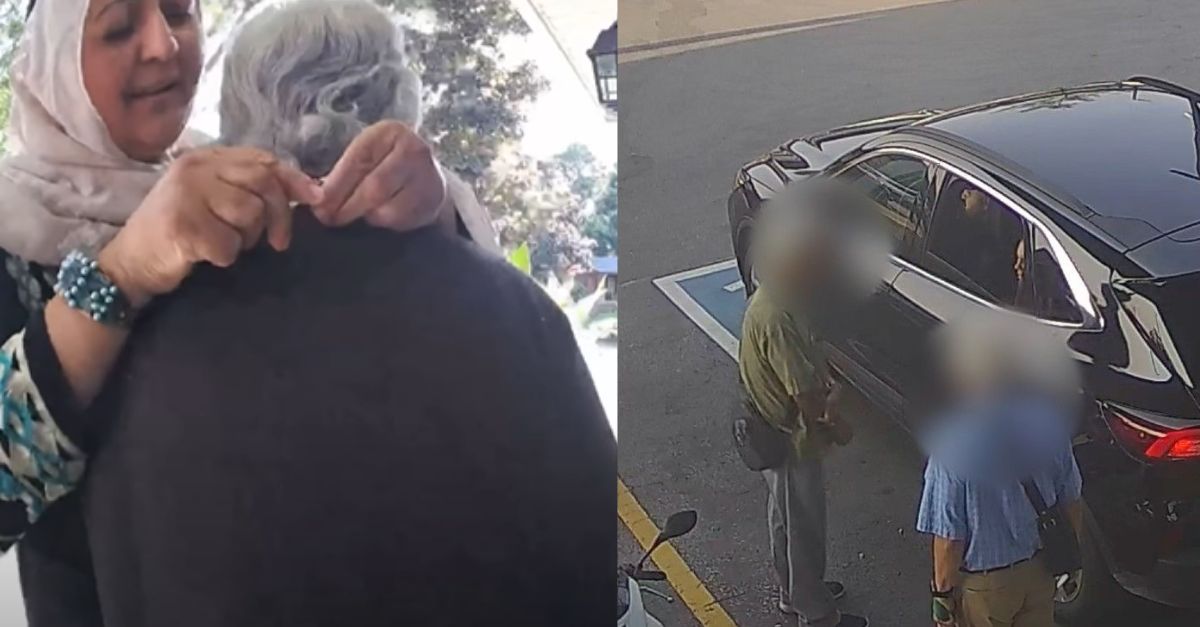
LONDON, Canada (Diya TV) — Police across Ontario, Canada are warning residents about a rise in distraction thefts, a crime that targets seniors and other unsuspecting victims through hugs, fake gifts, and pleas for help.
Gail Hoevenaars of London said she and her husband thought they were being Good Samaritans when they stopped to help the driver of a vehicle asking for directions to Costco.
The couple was walking in the White Oaks neighborhood on Sunday afternoon when a light grey car with three people pulled up beside them. While her husband gave directions to the driver, Hoevenaars spoke with two women inside the vehicle.
“This older woman asked me to come to the car, and she took my hand and started putting these chains around my wrists,” Hoevenaars recalled. A younger woman then hugged her and placed a chain around her neck. Moments later, the women drove away.
At first, Hoevenaars thought they had simply shared a prayer request. But minutes later, she realized her necklace and bracelet were missing.
The stolen necklace was purchased in Jerusalem 25 years ago. The bracelet was a gift from a neighbor 30 years ago. Hoevenaars said the sentimental loss far outweighs the monetary value.
Neighbor Isabel Capo witnessed the interaction from down the street. She said it looked like a normal conversation until she noticed the car had no front license plate and the back plate was obscured.
Capo approached the couple after the car left. “I told them you need to be careful when approaching a vehicle or talking to anyone because they can steal your jewelry in an instant,” she said. At that moment, Hoevenaars realized her jewelry was gone.
Police say distraction thefts have increased sharply in Ontario in recent years.
Edmonton police reported more than 60 cases between May and August. In Hamilton, cases rose from nine in 2021 to 54 in 2024. From January to August this year, 43 cases have already been reported.
In London, police have issued multiple warnings. Const. Matthew Dawson said thieves often follow the same pattern: a vehicle stops to ask for directions, suspects lure the victim closer, and someone distracts them with a gift or hug while removing jewelry.
“Lots of people ask for directions regularly, so it’s just being cognizant that if something seems odd, it’s probably odd,” Dawson said. “If someone’s trying to come into your personal space, offer you a gift, or hug you, then be wary of that. That’s not normal behavior.”
Hamilton police released a doorbell video this week showing a suspect hugging a senior outside her home. The woman distracted the victim by placing a fake necklace around her neck while removing her gold one in under 30 seconds.
The suspect, identified as a 40-year-old female, engaged the victim in constant conversation. The victim thanked her for the greetings and the gift, unaware that her jewelry was gone.
Police released the footage with the caption: “Can you help us identify this suspect?” They are urging the public to come forward with tips.
Authorities warn that victims are often chosen based on age, trust, or language barriers. Toronto police said people should never pursue suspects but instead call authorities right away.
Police advise residents to stay alert when approached by strangers, especially if someone tries to get into their personal space. If approached, people should keep a safe distance, note physical details of suspects, and look for identifying features such as tattoos, scars, or vehicle descriptions.
“Get a good description of the suspect(s), including physical and clothing descriptions, any tattoos, scars, and other prominent features,” police said. “If they were in a vehicle, try to get the license plate number, color, and make of the vehicle. This information can help the police identify and recover your property.”
For Hoevenaars, the experience has been painful. While she lost jewelry with deep personal meaning, she hopes her story helps others avoid becoming victims.
Police say awareness is one of the best defenses against distraction theft. By staying cautious and keeping distance from strangers offering unexpected gifts or embraces, residents can protect themselves from this growing crime.