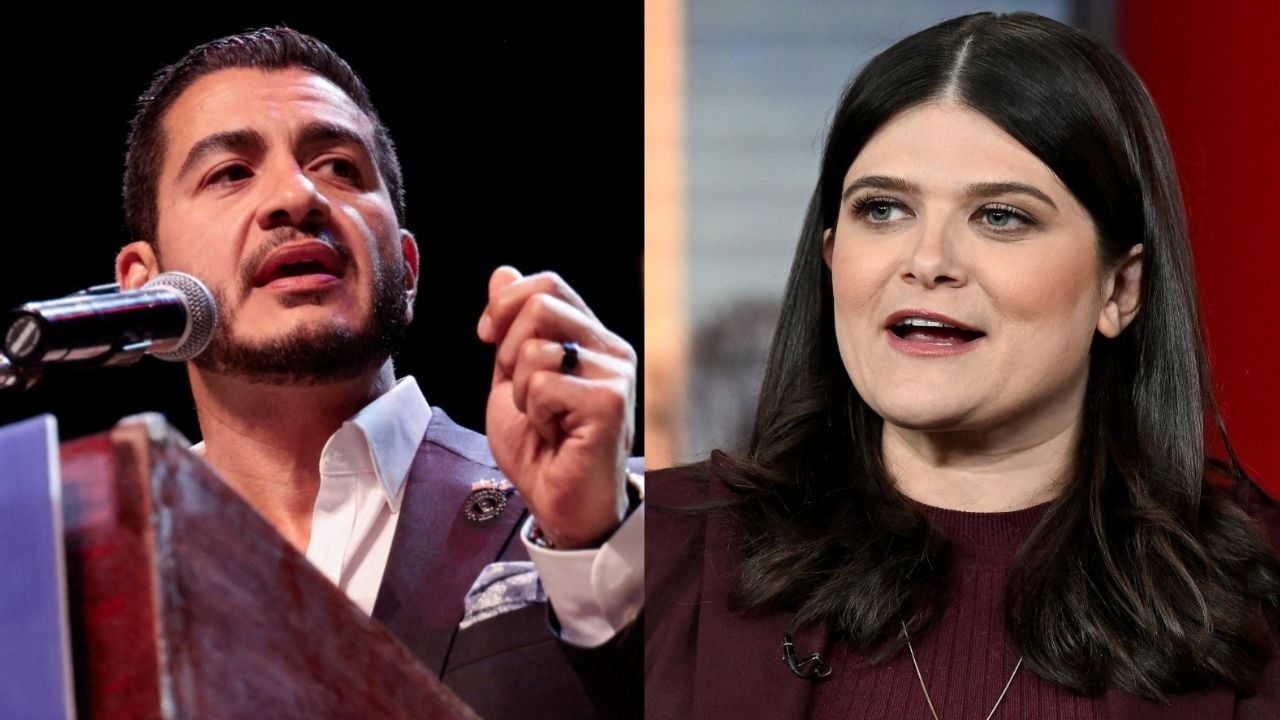
LANSING, Mich.(Diya TV) — Michigan Democratic Senate nominee Abdul El-Sayed is working to rebuild support among Jewish Democrats as he prepares for a closely watched November election.
El-Sayed met with Jewish party leaders and members over the weekend. He also apologized for past comments about a deadly attack at a Michigan synagogue. His efforts come as Democrats seek to unite after a divisive primary.
El-Sayed defeated U.S. Rep. Haley Stevens in the Democratic primary earlier this month. He now faces Republican former Rep. Mike Rogers in the November midterm election.
The Michigan Senate race could play a major role in determining control of the chamber. Democrats need a net gain of four seats to win the Senate majority. They also need to protect Michigan’s seat after Democratic Sen. Gary Peters announced his retirement.
At a Michigan Democratic Party convention Saturday in Lansing, El-Sayed received strong support from delegates. The crowd applauded his criticism of Rogers and President Donald Trump.
Norma McDaniel, a 79-year-old delegate from Inkster, said she had opposed El-Sayed during the primary. However, she said his convention speech changed her view.
McDaniel praised his ability to connect with voters. She also said Democrats must unite against the Trump administration.
El-Sayed also changed his approach toward some issues that divided Democrats during the primary. He did not directly attack the American Israel Public Affairs Committee, or AIPAC, during his speech.
AIPAC-backed spending played a major role in the primary. El-Sayed referred to more than $60 million spent against him but did not name the group.
His softer tone came as he sought support from Jewish Democrats. Earlier this year, tensions grew at a Michigan Democratic Party gathering. Progressive activists booed Democrats who they believed did not criticize Israel strongly enough.
State Attorney General Dana Nessel skipped Saturday’s convention. She said she feared another confrontation with activists.
Nessel had also criticized El-Sayed over his response to the March attack on Temple Israel in West Bloomfield Township near Detroit.
Authorities said Ayman Ghazali drove a vehicle loaded with explosives into the synagogue. The building caught fire, and Ghazali died at the scene. Officials said he had lost family members in an Israeli airstrike in Lebanon shortly before the attack.
El-Sayed condemned the attack and antisemitism at the time. However, he also said that “violence is a cycle” and that “hurt people hurt people.” Some critics viewed those comments as an attempt to explain or justify the attack.
On Saturday, El-Sayed apologized to the Michigan Democratic Jewish Caucus. He said his remarks were not intended to justify the violence.
El-Sayed said he wanted to provide context for the attack. However, he acknowledged that the moment called for a direct condemnation rather than an explanation.
Several Jewish Democrats viewed the apology as sincere. Daniel Rivkin, a University of Michigan communications staffer and convention delegate, said it marked the first time he heard El-Sayed address the issue so directly.
El-Sayed plans to meet Jewish Democrats again at a private Michigan Democratic Jewish Caucus event Sunday. He said voters may disagree on foreign policy but can still work together on issues affecting Michigan.
At the same time, El-Sayed rejected concerns about his relationship with Hasan Piker, a Twitch streamer who supported his primary campaign.
Piker has faced criticism for comments about Israel and American Jews. He recently suggested that support for Israel could contribute to antisemitism and violence. Piker has denied that his remarks were antisemitic.
El-Sayed said Piker does not speak for his campaign. He also argued that the election should focus on Michigan issues such as affordability, religious freedom and the economy.
Rogers, however, has continued to attack El-Sayed over his associations and past remarks. He said El-Sayed has not changed his views.
With the November election approaching, El-Sayed faces a difficult balancing act. He must maintain support among progressive voters while reaching Jewish Democrats and other moderates. His ability to unite those groups could shape the outcome of the Michigan Senate race.