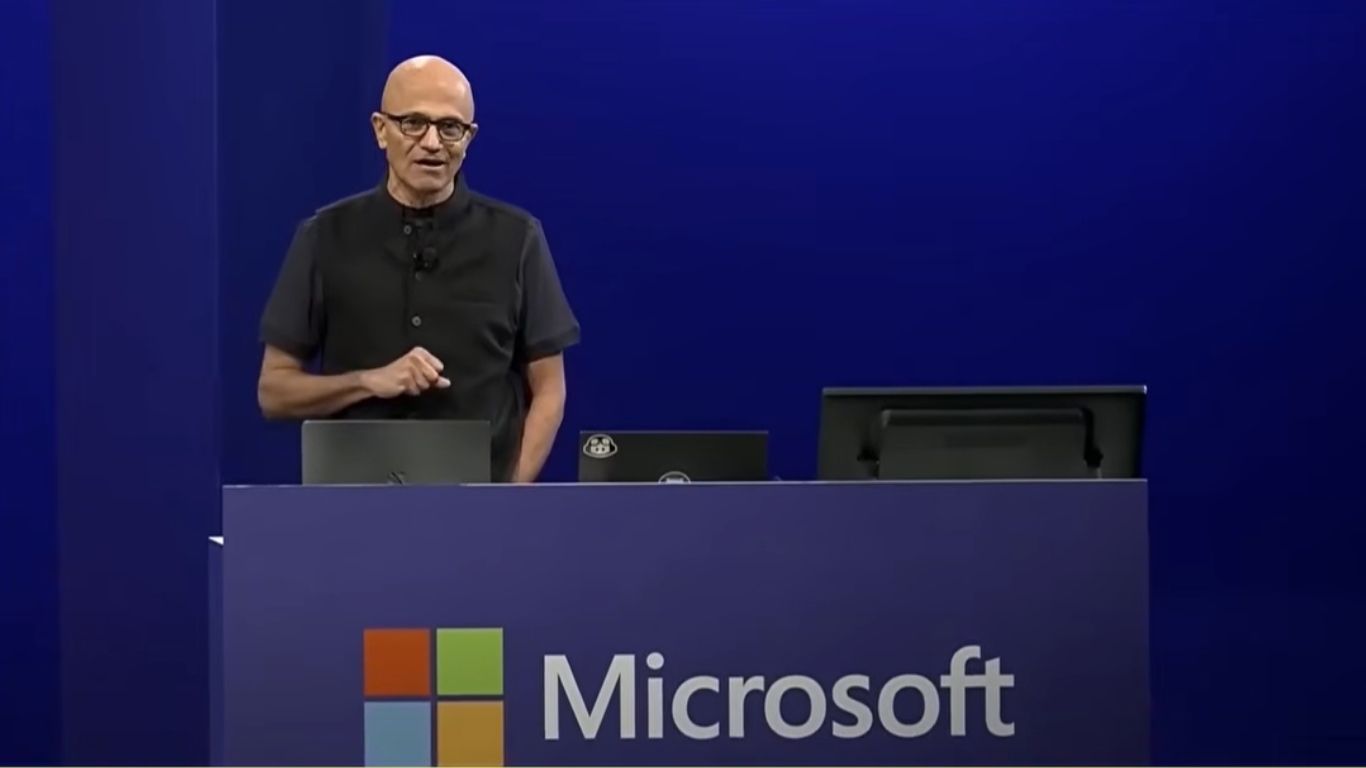
MOUNT PLEASANT, Wis. (Diya TV) — Microsoft CEO Satya Nadella defended the environmental impact of artificial intelligence infrastructure during his keynote address at Microsoft Build 2026, arguing that the company’s newest AI data center in Wisconsin uses no more water each year than a neighborhood restaurant.
The remarks come as technology companies face growing scrutiny over the environmental costs of powering AI systems. Critics have raised concerns about water use, electricity demand, and the impact of large data centers on local communities. Nadella used the conference to showcase what he described as a new generation of sustainable AI data centers. He pointed to Microsoft’s Fairwater facility in Mount Pleasant, Wisconsin, as a leading example.
The Fairwater campus covers 315 acres and serves as one of Microsoft’s most ambitious AI infrastructure projects. According to Nadella, the facility uses a two-story vertical design that allows the company to place thousands of processors in a compact space. The layout helps reduce the distance between computing systems. It also lowers resource consumption compared with traditional data center designs.
Nadella said Microsoft built the facility around a closed-loop cooling system. Engineers filled the system with water during construction and continue to recycle that same water throughout operations. As a result, the data center does not require a continuous supply of fresh water from the local community, he said.
“The amount of water we use annually is roughly equivalent to a single neighborhood restaurant,” Nadella told attendees during the keynote.
The water-use claim quickly attracted attention as debates over AI’s environmental footprint continue to intensify. On the way to the conference, protesters gathered outside the event and called on Nadella and Microsoft President Brad Smith to address the company’s environmental impact. Demonstrators used chants inspired by anti-war protests from the Vietnam War era to draw attention to their concerns.
Environmental advocates have increasingly questioned whether the rapid growth of AI infrastructure could place additional pressure on local resources. Large data centers often require significant amounts of electricity and cooling. Communities near these facilities have also raised concerns about noise levels, light pollution, and increased demand on public utilities.
Microsoft’s expansion has accelerated alongside growing demand for AI services. Nadella said the company’s Azure cloud platform now operates across more than 500 data centers in 80 regions worldwide. He described Azure as the largest hyperscale cloud footprint in the industry. Microsoft has added more data center capacity during the past 18 months than it built during Azure’s entire first decade, according to Nadella.
That rapid growth reflects the increasing demand for generative AI tools, cloud computing services, and advanced machine learning applications. The Fairwater facility plays a central role in Microsoft’s AI strategy. Nadella has previously described it as the world’s most powerful AI data center. The site reportedly contains hundreds of thousands of NVIDIA GB200 processors working together as a single computing cluster. Microsoft completed the project ahead of schedule and had committed $7.3 billion to the facility by September 2025.
Nadella acknowledged that technology companies must do more than improve efficiency. He said companies also need to build trust with the communities that host large-scale infrastructure projects. He identified several priorities, including protecting local electricity prices, creating jobs, supporting local tax revenue,s and funding nonprofit organizations. According to Nadella, those commitments should be standard requirements for future data center developments.
“We have to earn trust,” he said, emphasizing the importance of long-term community partnerships.