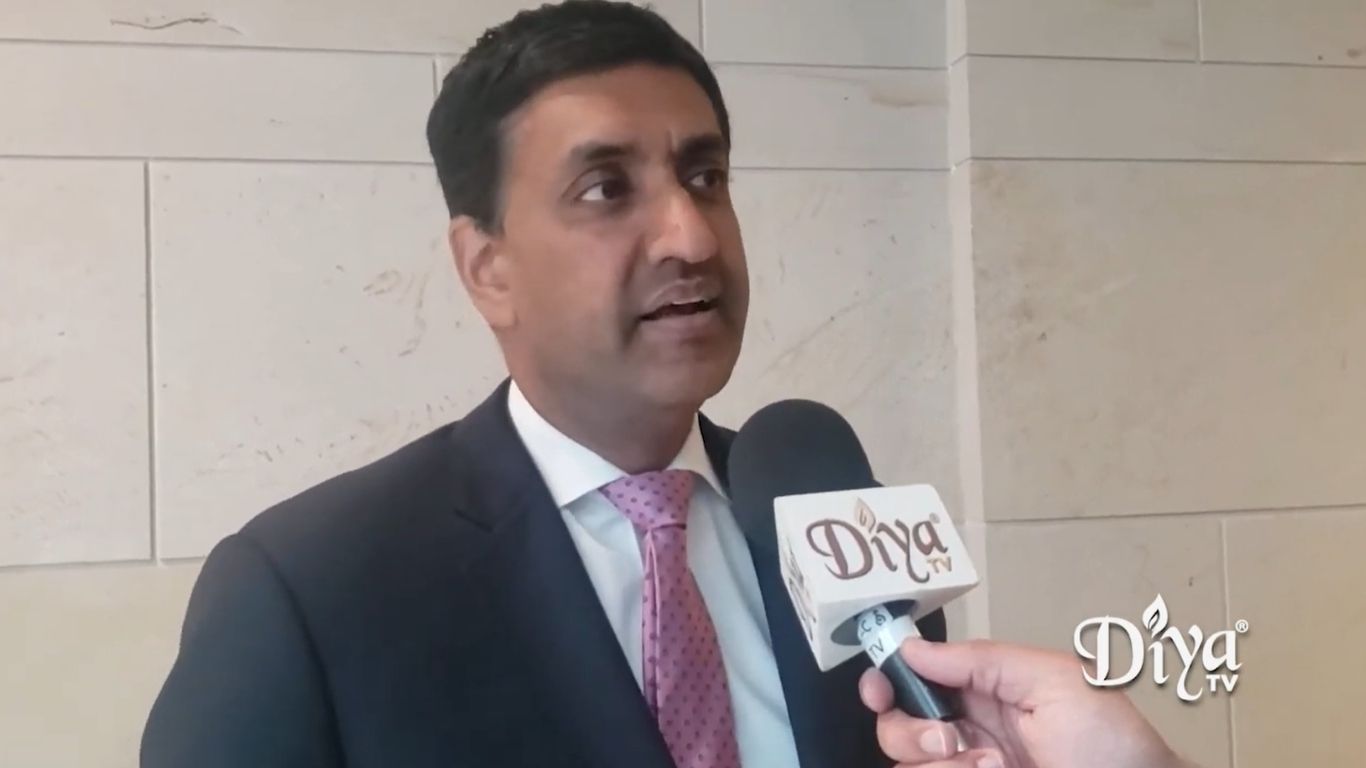
WASHINGTON (Diya TV) — Ro Khanna is calling for a major reset of the American economy, warning that rising inequality and falling trust in government are putting U.S. democracy at risk. Speaking April 14 at the National Press Club, the California Democrat said the country faces a “crisis in self-government.” He argued that many Americans no longer believe the system works for them.
Khanna said public confidence has eroded due to economic pressure and perceived corruption among elites. He pointed to wealth concentration and job insecurity as key drivers of frustration. He described what he called the “Epstein class,” a term he used to criticize powerful figures who avoid accountability while ordinary Americans struggle.
“Many communities are not seeing the benefits of economic growth,” Khanna said. “People feel left behind.”
He added that globalization and automation have changed the job market faster than policies can keep up. As a result, many workers face uncertainty about their future.
Khanna compared today’s economy to the late 19th century, often called the Gilded Age. That era saw rapid growth but also sharp inequality. He said the U.S. is again at a turning point. Without action, he warned, economic divides could deepen and further weaken trust in democratic institutions.
“The American Dream is out of reach for many,” Khanna said.
Khanna proposed what he called “New Economic Patriotism,” a plan aimed at rebuilding the middle class and strengthening domestic industries. The framework focuses on investing in U.S. manufacturing, expanding job opportunities, and supporting workers through education and training. He called for a stronger role for government in shaping economic growth. At the same time, he stressed the need for cooperation with businesses and workers.
“This is about building an economy that works for everyone,” he said.
A key part of Khanna’s plan includes a federal jobs program inspired by past initiatives like the Works Progress Administration. He also proposed creating a National Industrial Bank. The bank would invest in sectors such as semiconductors, advanced manufacturing, and emerging technologies. Khanna said the U.S. must prepare workers for industries like artificial intelligence and robotics. He called for expanding trade schools and technical education programs nationwide.
“These are the jobs of the future,” he said. “We need to make sure Americans are ready.”
Khanna highlighted the importance of the care economy, including childcare and eldercare. He said these services are both essential and a major source of stable jobs. He argued that investing in care work would support families while also creating employment opportunities. In addition, Khanna promoted worker ownership models, such as profit-sharing. He said these ideas could help workers benefit more directly from economic growth, especially in an AI-driven economy.
The proposal also includes elements of an “Economic Bill of Rights.” Khanna outlined policies such as universal health care, free public college and trade education, and subsidized childcare. He also called for steps to address the nation’s housing affordability crisis. Khanna said these measures would help reduce inequality and give more Americans a fair chance to succeed.
Khanna said the plan would be funded by shifting federal priorities. He suggested reducing defense spending and increasing taxes on billionaires.
“It is patriotic to pay our fair share,” he said. “This is not anti-business. This is pro-America.”
He argued that the changes would strengthen the economy over time and rebuild trust in government.
Khanna said his proposals aim to restore faith in democratic institutions and create a more inclusive economy. He called for bold action from leaders across government, business, and labor.
“We don’t need to be a nation in fear,” he said. “We need a dynamic government that works for the people.”
Khanna has also said he is considering a run for president in 2028, a move that could bring his economic vision to a national stage. For now, he is urging lawmakers and voters to rethink the direction of the U.S. economy — before public trust erodes even further.