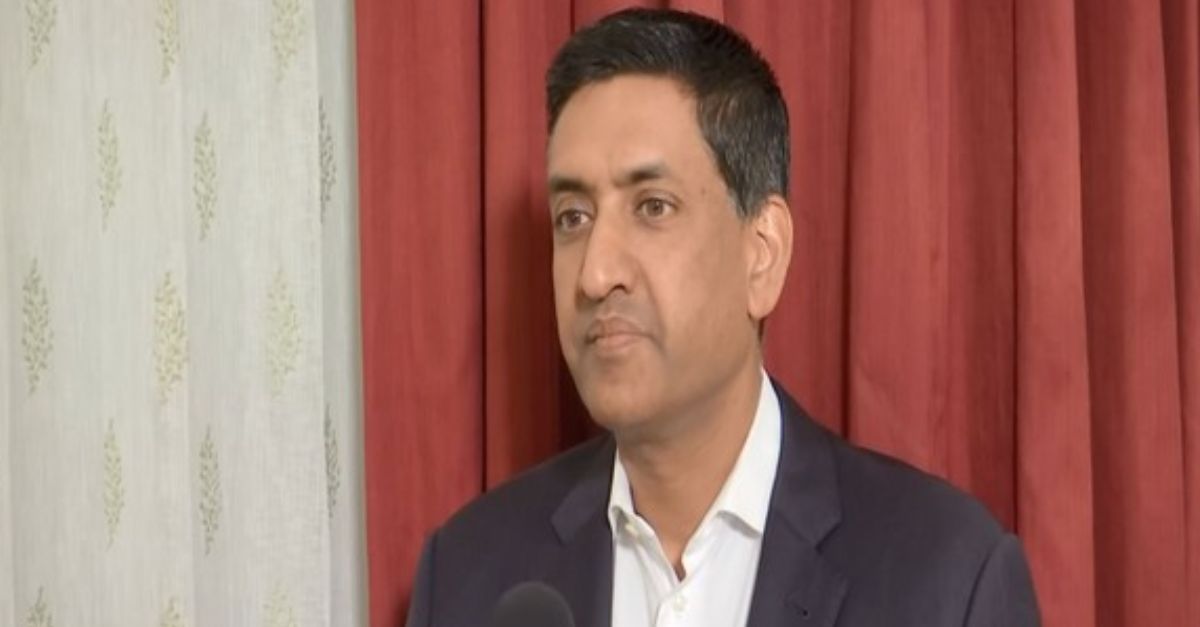
SAN JOSE, Calif. (Diya TV) — Rep. Ro Khanna said California can thrive without tech billionaire Peter Thiel. The Silicon Valley congressman dismissed warnings that a proposed wealth tax could drive innovators out of the state. Khanna argued that a small levy on extreme wealth is a fair price to fund healthcare and preserve the American dream.
“If we pass a 1 percent tax on billionaires for five years to pay for healthcare for the working class facing steep Medicaid cuts, the state should not blink,” Khanna wrote on social media.
Thiel, a prominent Trump supporter and tech billionaire, threatened to leave California if the tax is enacted. He has publicly supported Trump since 2016 and donated millions to related causes. Thiel has also funded and mentored right-wing and populist figures. Khanna mocked Thiel’s threat, quoting former President Franklin D. Roosevelt: “‘I will miss them very much.’” Khanna stressed that democracy should not bow to pressure from billionaires.
The clash stems from the proposed 2026 Billionaire Tax Act. The ballot initiative, filed in October 2025 and amended in November, would impose a temporary wealth tax on the state’s richest residents. Supporters need close to 900,000 signatures to bring it to voters in November 2026.
Khanna, representing a district at the heart of Silicon Valley, emphasized the region’s role in U.S. innovation. “My district is $18 trillion,” he wrote. Nearly a third of the U.S. stock market is within 50 miles of his district. He noted that five companies in his area have market caps over $1 trillion. Khanna argued that if a lawmaker in the center of the tech economy supports a billionaire tax, others can too.
Khanna rejected claims that the tax would stifle new tech companies. He cited NVIDIA founder Jensen Huang, who started the company in Khanna’s district. “Jensen wasn’t thinking I won’t start this company because I may have to one day pay a 1 percent tax on my billions,” Khanna said. He stressed that talent, universities, and venture networks drive innovation—not the absence of taxes.
He credited public institutions like Stanford, UC Berkeley, San Jose State, and federal programs such as NSF and DARPA for building the foundation of Silicon Valley. Public investment, he argued, predates today’s billionaires and enables U.S. technological leadership.
Khanna framed the billionaire tax as a solution to rising economic inequality. “We cannot have a nation with extreme concentration of wealth in a few places,” he said. He cited that 70 percent of Americans believe the American dream is out of reach and face high costs for healthcare, childcare, housing, and education.
Khanna linked the tax to ensuring that the AI revolution benefits all Americans, not just the tech elite. “A billionaire tax is good for American innovation,” he wrote, “because innovation depends on a strong and thriving American democracy.”
The proposal drew strong reactions from Silicon Valley. Entrepreneurs like David Friedberg criticized the tax as government overreach. Y Combinator CEO Garry Tan warned that the tax would “destroy innovation in California.” Paul Graham accused Khanna of misleading voters by linking the tax to healthcare funding. Coinbase CEO Brian Armstrong cited Khanna’s political alliances with politicians like Zohran Mamdani as a concern.
Criticism also came from fellow Democrats. State Sen. Josh Becker questioned Khanna’s claims of $70 billion in state fraud. Becker said there was “no rigor” behind the figures, pointing to vague accusations related to COVID relief and high-speed rail spending.
Khanna’s office defended his position. Spokesperson Sarah Drory emphasized that Khanna has long supported technology and entrepreneurship. She noted his involvement in the Silicon Valley Bank bailout and the CHIPS and Science Act. Drory said Khanna’s wealth tax proposal includes safeguards for startup founders with illiquid stock and non-profitable companies.
The billionaire tax highlights a growing divide in California between tech leaders and progressive policymakers. Supporters argue it is a necessary step to fund healthcare and reduce inequality. Critics warn it could drive wealthy residents and innovation out of the state.
Khanna, however, remains firm. He believes California can survive without a few billionaires and that public investment, talent, and innovation networks are far more important for long-term growth.