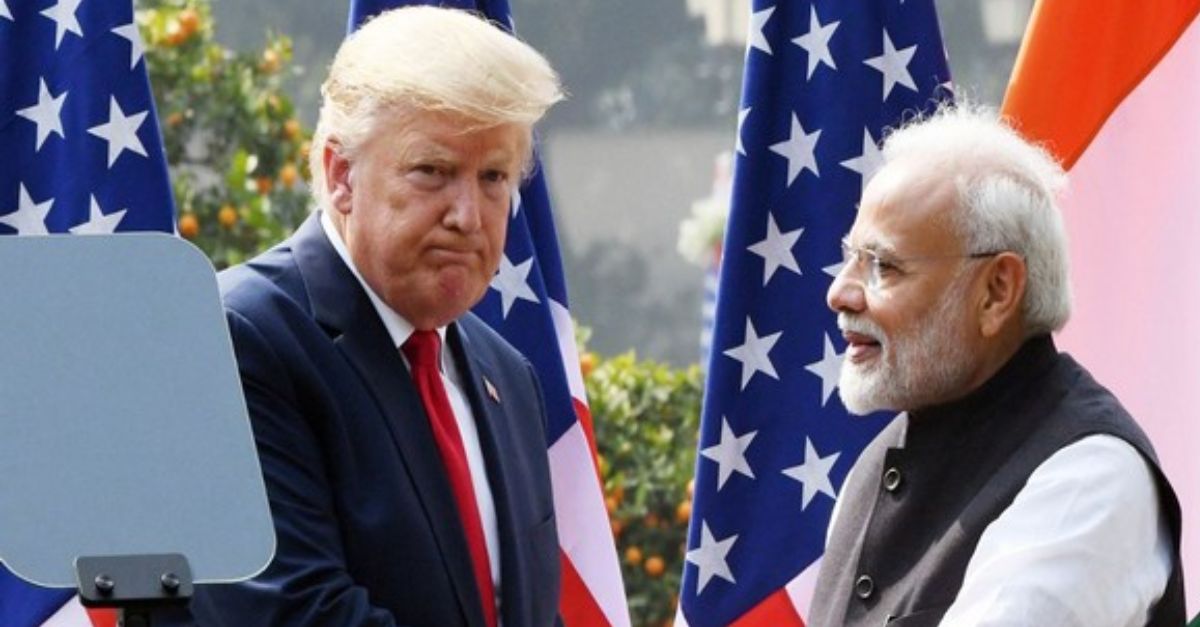
NEW DELHI (Diya TV) — President Donald Trump tried four times in recent weeks to speak with Indian Prime Minister Narendra Modi, but Modi refused to take his calls, according to German daily Frankfurter Allgemeine Zeitung (FAZ). The report suggests Modi’s silence reflects both anger and caution in the face of growing tensions between New Delhi and Washington.
FAZ reported that Trump sought to engage Modi even as his administration imposed 50% tariffs on Indian goods, the second-highest level after Brazil. Despite the pressure, Modi declined to respond. The newspaper described this as a sign of the Indian leader’s frustration but also his deliberate caution.
Trump has often used personal diplomacy to extract concessions. He once renegotiated a trade deal with Vietnam’s General Secretary To Lam during a single phone call, later declaring on social media that an agreement was reached. Modi, FAZ argued, does not want to risk falling into a similar trap.
Tensions rose after Trump criticized India’s economy. “I don’t care what India does with Russia. They can take their dead economies down together,” Trump said on July 31. Days later, on August 10, Modi appeared to respond indirectly by highlighting India’s steady rise toward becoming one of the world’s top three economies.
FAZ noted that Modi was “offended” by Trump’s remarks. Experts say Modi resisted U.S. economic pressure during Trump’s first term, seeking cooperation without compromising India’s trade interests.
The Indian Ministry of External Affairs (MEA) confirmed that Modi spoke with Trump by phone on June 17 and again on July 17 at Trump’s request. During those conversations, Modi discussed counterterrorism efforts and Operation Sindoor following an April 22 terror attack in Pahalgam.
But New Delhi strongly rejected Trump’s claim that he mediated a ceasefire between India and Pakistan in May. The MEA clarified that India and Pakistan negotiated directly, with no U.S. role. Modi told Trump that India would never accept foreign mediation in its disputes with Pakistan.
FAZ reported that Modi’s government was angered when Trump claimed he would develop oil reserves with Pakistan and that India would buy from its archrival. Hosting Pakistan’s army chief, Gen. Asim Munir, for dinner at the White House further inflamed tensions in New Delhi.
These frictions come as India deepens ties with China. Modi has said that after meeting Chinese President Xi Jinping last year, he felt a sense of “respect.” This week, Modi is set to attend the Shanghai Cooperation Organization summit in Tianjin. Analysts suggest Trump’s policies may be pushing India closer to Beijing.
“India needs China more than China needs India,” said Mark Frazier, co-director of the India-China Institute at the New School in New York. He argued that India’s engagement with China is part of a long-term strategy, not just a response to U.S. tariffs.
FAZ also highlighted the controversies around Trump’s real estate ventures in India. Near Delhi, luxury towers branded with the Trump name sold 300 apartments in a single day in May. The project sparked debate in India, where critics questioned the overlap between Trump’s business and political dealings.
The FAZ report underlines the growing rift between Washington and New Delhi during Trump’s tenure. India resisted U.S. pressure to align against China and rejected repeated offers of mediation with Pakistan. Modi’s refusal to take Trump’s calls shows the depth of the tension.
While U.S.-India ties remain vital in areas such as trade and security, the FAZ report suggests Trump’s aggressive approach may have pushed India to seek more balance in its global partnerships. Whether this shift strengthens India’s role in Asia—or fuels closer ties with China—remains a key question in global politics.