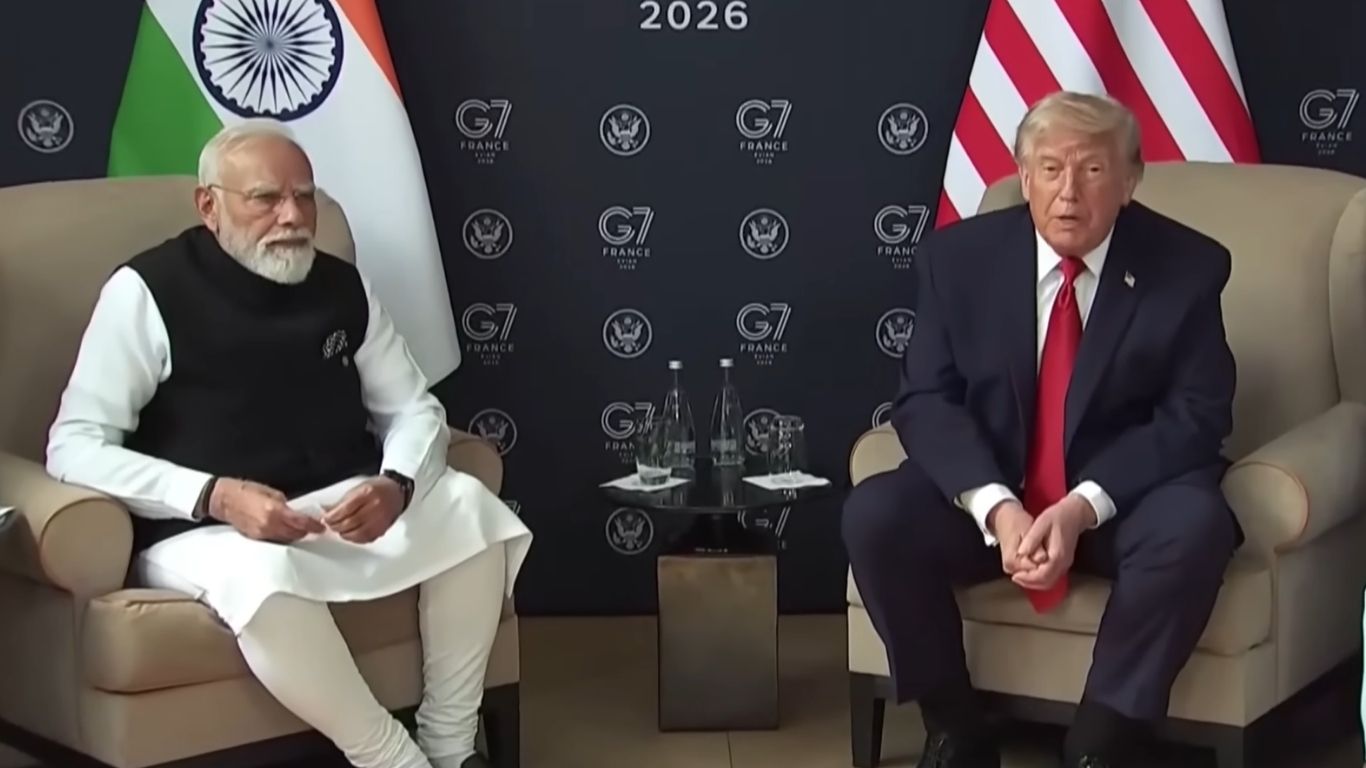
NEW DELHI (Diya TV) — India has decided not to rush into a trade agreement with the United States after recent negotiations failed to produce an interim deal. Instead, New Delhi wants stronger guarantees before accepting any agreement. Officials and trade experts say Prime Minister Narendra Modi now feels more confident because of stronger export growth, new trade partnerships, and a stable economic outlook.
Trade officials from both countries spent months trying to reach an interim agreement. However, talks during U.S. Trade Representative Jamieson Greer’s visit to New Delhi last month ended without a breakthrough. Although both sides expected progress, they failed to settle key differences.
Indian officials said the United States did not provide clear assurances on New Delhi’s main demands. India wants better tariff treatment than competing countries, including China. It also wants protection from additional U.S. tariffs after any agreement takes effect. As a result, India chose not to move forward.
Officials in New Delhi said the government will not compromise on important issues, especially agriculture. India has long protected its farmers and rural economy during trade negotiations. Therefore, leaders believe any final agreement must support those interests instead of weakening them.
Meanwhile, Washington hoped to secure faster trade concessions from India before President Donald Trump’s proposed tariffs take effect later this month. The administration plans to introduce higher tariffs through trade investigations focused on industrial overcapacity. India has rejected claims that it creates excess production.
At present, most Indian goods entering the United States face a 10% tariff. However, the Trump administration has also proposed tariffs of up to 12.5% on several countries, including India, over allegations involving goods linked to forced labor. Those measures could increase costs for Indian exporters if both countries fail to reach an agreement.
Even so, India believes it has enough economic strength to wait for better terms. Trade Minister Piyush Goyal recently said that India would accept a deal only if it clearly benefits the country. His remarks reflected New Delhi’s tougher negotiating position.
U.S. officials continue to express optimism despite the slowdown. One American official said both governments remain engaged and still expect an agreement. However, the official also described India’s negotiating process as slow and highly bureaucratic. Likewise, White House spokesman Kush Desai said the Trump administration continues discussions with Indian officials and hopes to complete what it calls a historic trade agreement.
At the same time, India’s economy has strengthened its bargaining position. During the April-to-June quarter, the country’s goods exports increased by about 15% compared with the same period last year. Higher petroleum prices helped drive that growth despite disruptions caused by conflict involving Iran.
In addition, exports to Gulf nations recovered to prewar levels. Shipments reached $5.3 billion in May after falling to $2.62 billion in March. Traders adjusted quickly by using alternative shipping routes. Exports to the United States also increased to $17.29 billion during April and May.
Furthermore, India continues to expand trade with other major markets. A free trade agreement with the United Kingdom is expected to take effect this month. Meanwhile, officials expect a trade agreement with the European Union early next year. These developments reduce India’s dependence on any single export market and strengthen its negotiating position.
Trade experts believe these changes give India more flexibility. Wendy Cutler, senior vice president at the Asia Society Policy Institute and a former U.S. trade official, said India’s strong economy, diversified trade strategy, and growing global influence have improved its leverage during negotiations.
Economic conditions have also supported New Delhi’s confidence. Goldman Sachs recently raised its 2026 growth forecast for India to 6.8% after an interim U.S.-Iran peace agreement helped lower oil prices. The bank also reduced its inflation and current account deficit estimates. In addition, a weaker rupee has made Indian exports more competitive in global markets.
Political factors also play a role. Modi’s recent state election victories have strengthened his position at home. Leaders from the ruling Bharatiya Janata Party continue to argue that trade agreements must protect farmers and small businesses. Those groups remain politically important across India.
Some Indian officials also believe legal challenges in the United States could delay or weaken future tariff measures. Several Democratic state attorneys general have already challenged parts of the Trump administration’s proposed tariff policy in court. That uncertainty gives India another reason to remain patient.
For now, both governments continue discussions. However, India appears willing to wait until it receives stronger guarantees on tariffs and market access. Until then, businesses in both countries will continue watching the negotiations closely as one of the world’s most important trade relationships remains unfinished.
India’s Commerce and Industry Minister Piyush Goyal on Monday rejected a Reuters report claiming India had turned down a quick trade agreement with the United States in recent negotiations, calling it “completely false, baseless and misleading.”
The Reuters report, citing an unnamed Indian government official and analysts, said India had declined to pursue a swift interim trade agreement with Washington and was instead holding out for more favorable terms, buoyed by Prime Minister Narendra Modi’s growing confidence from expanding ties with other trading partners, reduced economic vulnerabilities and domestic political gains. The report also cited a U.S. official who said India had “been difficult in the negotiations,” and said New Delhi remained unwilling to compromise on sensitive sectors, particularly agriculture. According to the report, the two countries failed to finalize an interim agreement during U.S. Trade Representative Jamieson Greer’s visit to New Delhi in June, despite expectations on both sides that a limited deal was within reach.
In a post on X, Goyal disputed the account directly. “This news is completely false, baseless and misleading,” he wrote. “I had fantastic meetings with USTR Jamieson Greer, @USTradeRep, when he visited Delhi in June. Both sides reaffirmed their commitment to an agreement that is balanced, commercially meaningful, and delivers tangible benefits for businesses, farmers, workers, and consumers in both countries. Our teams remain fully engaged in achieving this objective.”
Commerce Secretary Rajesh Agrawal also pushed back on the report, saying India saw “no challenge” in concluding the trade agreement. He said an Indian delegation visited the United States in May and a U.S. team visited India in June, with talks continuing within an agreed framework. “Talks are going on in a proper framework,” Agrawal said, adding that both sides had maintained a positive tone and that the deal was “ready” for signing.