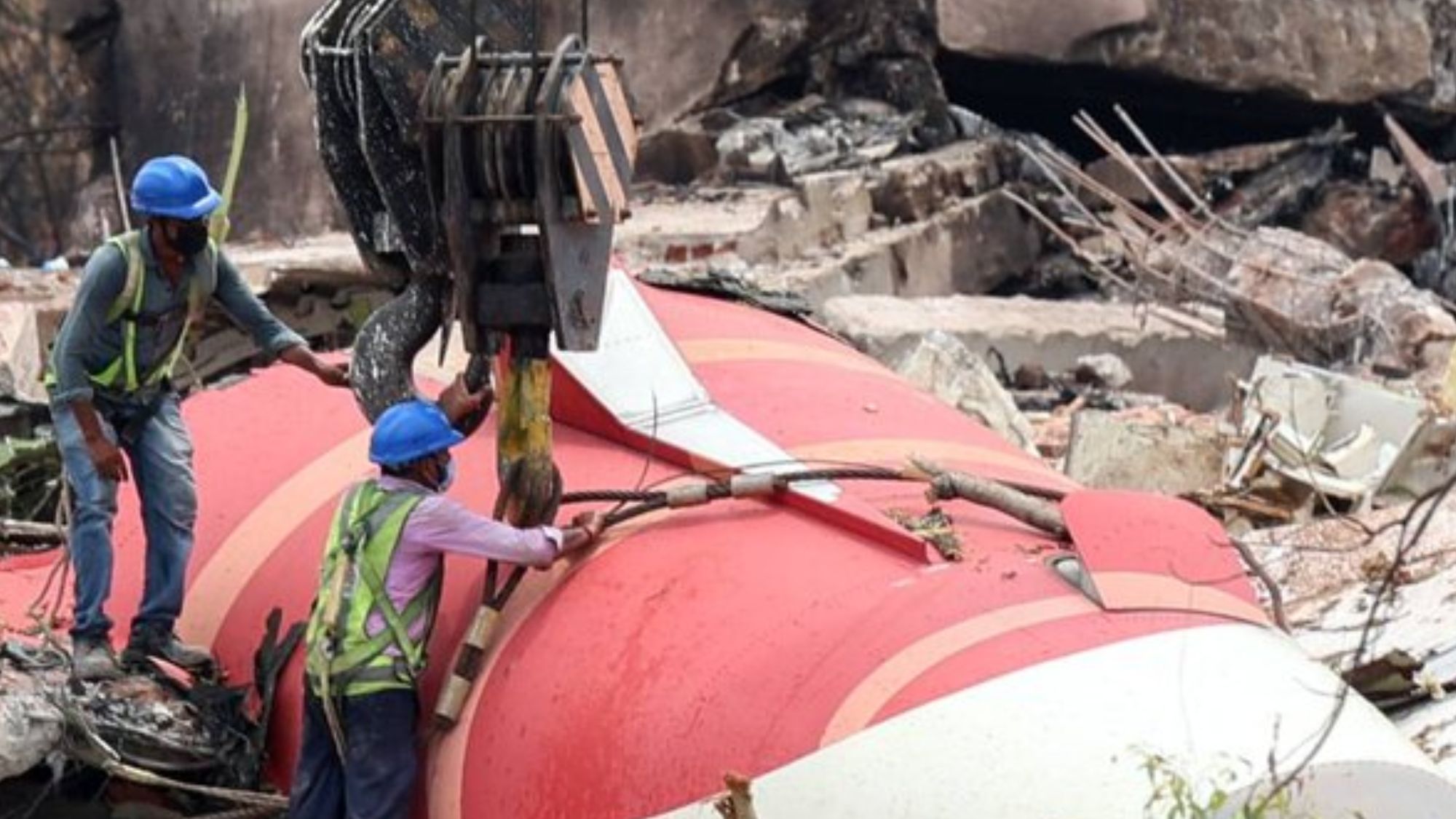
NEW DELHI (Diya TV) — A cockpit recording suggests the captain of the Air India flight that crashed in June may have accidentally turned off the plane’s fuel supply, according to a report by The Wall Street Journal citing U.S. investigators. The AI171 crash killed all 260 people onboard. Investigators now believe the disaster may have started seconds after takeoff when both engines suddenly lost power.
U.S. officials reviewing the black-box data discovered a shocking detail. According to a preliminary report, the plane’s fuel cutoff switches were flipped from “RUN” to “CUTOFF” within one second of each other. That shut off fuel to both engines. The report noted that the switches appeared to be manually operated. This means a pilot likely triggered the fuel shutoff.
Cockpit audio reveals one of the pilots asking why the cutoff switches were flipped. The other pilot replied that he didn’t do it. Sources familiar with the U.S. investigation told The Wall Street Journal that the captain appears to have turned off the fuel supply while staying calm. In contrast, the first officer panicked as the engines failed.
The crash happened shortly after the flight lifted off from a major Indian airport. Within seconds, both engines stopped. The aircraft then plunged to the ground, killing everyone aboard. Experts say turning off fuel to both engines is a rare and dangerous move. It is usually done only during emergencies or after landing. Flight data shows no other mechanical issues before the engines failed. That points investigators toward human error as a likely cause.
Aviation experts are now questioning how and why such a mistake could happen. The captain, whose name has not been released, had thousands of hours of flight experience. Investigators are exploring whether the captain confused the fuel cutoff switches with other nearby controls.
Aviation safety analyst Capt. Mohan Reddy said, “Turning off the fuel to both engines is an extremely unusual action in flight. It raises serious concerns about cockpit procedure and situational awareness.” The first officer’s reaction on the recording also suggests confusion in the cockpit. “Why did you hit the cutoff?” one voice asks. “I didn’t,” the other responds, according to the preliminary report.
India’s Directorate General of Civil Aviation (DGCA) and the U.S. National Transportation Safety Board (NTSB) are working together on the investigation. Both agencies are reviewing the airline’s training procedures and cockpit protocols. Air India has not released a statement about the fuel cutoff claim. The airline has said it is fully cooperating with investigators.
The final crash report may take months to complete. Officials want to be certain about the sequence of events and what caused the fatal mistake. The crash has devastated families across India and abroad. Many are demanding full transparency and accountability.
“We just want to know what happened and why,” said Suresh Sharma, who lost his daughter in the crash. “How could a plane crash just after takeoff with no warning?”
As investigators work to uncover the truth, the aviation world is watching closely. If pilot error caused the crash, it could prompt major changes to training and safety protocols. Crashes caused by fuel cutoff in flight are extremely rare. Experts say modern aircraft have safety features to prevent accidental shutdowns. But human mistakes can still override systems. The tragedy has sparked new calls for better cockpit monitoring and fail-safes to avoid such deadly errors.
The Air India crash stands as one of the deadliest in recent years. As new details emerge, the focus will remain on what went wrong in those first few seconds—and how it might have been prevented. Keyword optimization: Air India crash, Air India flight engine failure, black box Air India, cockpit voice recording Air India, fuel cutoff Air India, Air India captain error, plane crash investigation India, June Air India crash, aircraft accident India 2025.