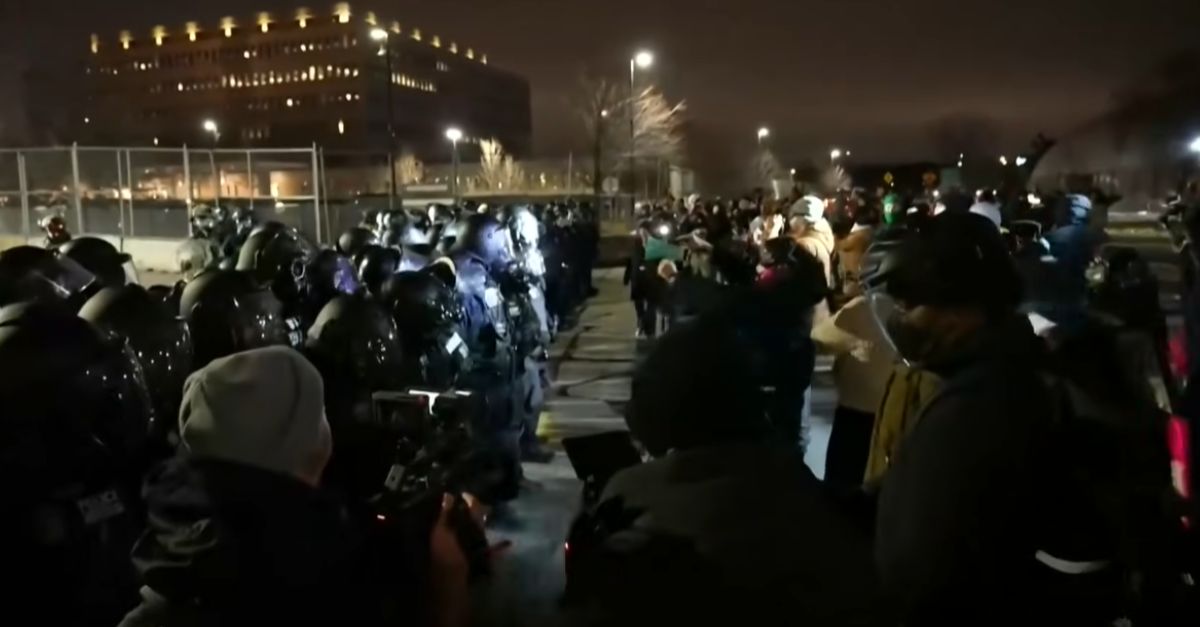
MINNEAPOLIS, Minn. (Diya TV) — The Pentagon has ordered about 1,500 active-duty soldiers to prepare for a possible deployment to Minnesota after President Donald Trump threatened to invoke the Insurrection Act in response to ongoing unrest, according to U.S. defense officials. The move comes as tensions remain high following clashes between federal immigration agents and protesters in the state. Officials stressed that the order does not mean the troops will deploy. They described it as standard contingency planning in case the situation worsens.
Defense officials said the soldiers belong to two infantry battalions with the Army’s 11th Airborne Division. The division is based in Alaska and specializes in cold-weather operations. The Army placed the units on prepare-to-deploy status late Saturday. Officials said they acted out of caution. They added that commanders want to remain ready if violence escalates and federal authorities require support. The officials spoke on the condition of anonymity to discuss sensitive military planning.
The White House said the Pentagon routinely prepares for all potential presidential decisions. Sean Parnell, a spokesman for Defense Secretary Pete Hegseth, said the department stands ready to carry out lawful orders from the commander in chief. Officials also said the preparations have no connection to Trump’s recent remarks about Greenland.
Minneapolis Mayor Jacob Frey criticized the possible deployment of active-duty troops. He said the federal government appears to be provoking protesters rather than calming tensions.
“We’re not going to give them an excuse,” Frey told CNN on Sunday. He said he never expected the city to face what he described as an invasion by its own federal government. Gov. Tim Walz has urged protesters to remain peaceful. On Saturday, he activated the Minnesota National Guard to support local authorities. He has not deployed Guard members to the streets.
The Insurrection Act dates back to 1807. It allows a president to deploy active-duty troops or take control of a state’s National Guard during rebellions or severe civil unrest. Presidents rarely invoke the law. The last time a president used it was in 1992, when President George H.W. Bush sent troops to Los Angeles during riots that followed the Rodney King verdict.
Trump threatened Thursday to invoke the act unless Minnesota officials stopped protesters from confronting Immigration and Customs Enforcement agents. He said he would act quickly to end what he called a “travesty” in the state. On Friday, Trump softened his tone. He said there was no reason to invoke the law “right now.” He added that he would use it if necessary.
The Trump administration has increased pressure on Minnesota’s Democratic leadership. The Justice Department has launched an investigation into whether Walz and Frey obstructed federal immigration enforcement.
Both leaders deny the claim. They argue the investigation aims to intimidate critics of the administration. Frey said Sunday that his office has not received a subpoena. He called the probe deeply concerning. Minnesota officials have also sued the federal government over Operation Metro Surge. The Department of Homeland Security launched the immigration crackdown in December. The operation has led to hundreds of arrests and repeated confrontations.
ICE agents have shot two people in Minnesota this month. One shooting killed Renée Good, an American citizen. Another wounded Julio Cesar Sosa-Celis, a Venezuelan migrant, during a detention attempt. Attorney General Keith Ellison called the operation unconstitutional. He said the state seeks a restraining order to halt what he described as a politically motivated federal invasion.
Trump has previously ordered domestic military deployments that faced court challenges. In June, he seized control of the California National Guard over the objections of Gov. Gavin Newsom. Troops were deployed to Los Angeles after some ICE protests turned violent. In December, Trump said he would end National Guard deployments in several cities after a Supreme Court ruling. The court found the administration failed to show how troops could enforce civilian law without violating the Posse Comitatus Act.
Trump has also deployed National Guard members to Washington, D.C. That mission now runs through 2026 and remains under legal review. As Minnesota braces for potential escalation, federal and state leaders remain locked in a tense standoff over authority, public safety, and the limits of presidential power.