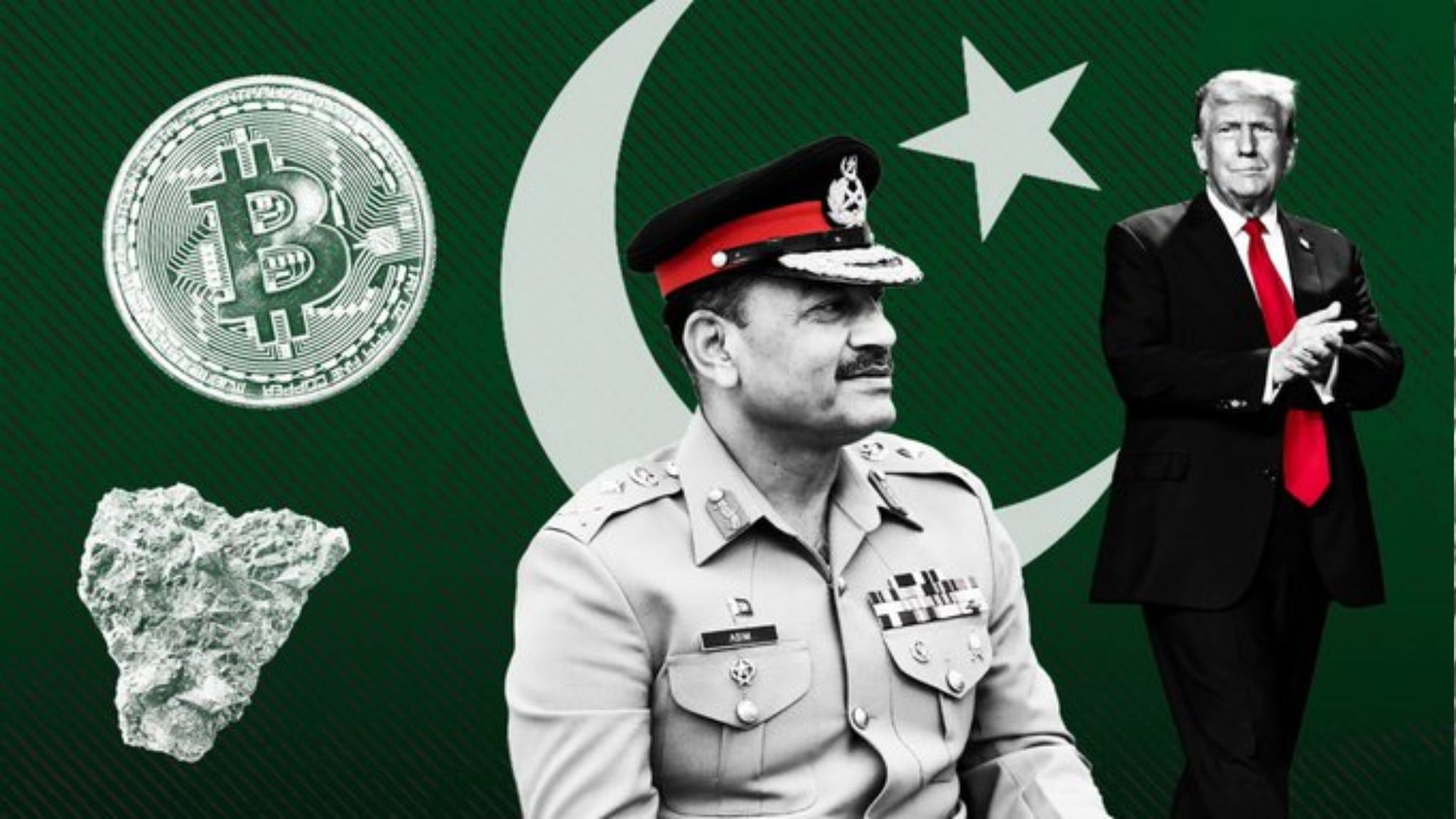
ISLAMABAD, Pakistan (Diya TV) — Pakistan is courting favor with Donald Trump’s White House in a bid to avoid U.S. trade tariffs and attract foreign investment. The country is pitching itself as a hub for bitcoin mining, a source of rare earth minerals, and even publicly backing Trump for a Nobel Peace Prize.
With looming trade tariffs that could reach 29% by July 9, Islamabad is making strategic moves according to the Financial Times. U.S. tariffs could heavily impact Pakistan’s key export sectors, especially textiles. The United States is Pakistan’s top export market, accounting for about 20% of its total exports.
Pakistani officials believe crypto and mining efforts could catch Trump’s attention. Their strategy includes naming a “crypto minister,” launching blockchain councils and creating partnerships with Trump-linked digital asset groups.
In April, Pakistan named Bilal bin Saqib as its crypto minister. Saqib, also an adviser to Trump-backed World Liberty Financial, has been central to this charm offensive. In May, he praised Trump as “the president who saved crypto” during a Las Vegas event attended by U.S. Vice President JD Vance and Eric Trump.
Saqib later visited the White House and met high-profile business leaders, including Brandon Lutnick of Cantor Fitzgerald. He has also invited Tron founder Justin Sun, known for his ties to the Trump family, to visit Pakistan.
In March, Trump announced the creation of a U.S. Bitcoin reserve. Pakistan followed suit. Officials in Islamabad said they would allocate 2,000 megawatts of electricity for cryptocurrency mining and create their own bitcoin reserve to attract investment and create jobs.
Beyond crypto, Pakistan is highlighting its vast mineral wealth. Army Chief Asim Munir met with Trump last month to discuss rare earth minerals and bitcoin mining. Sources say Munir received a MAGA hat and a symbolic “key to the White House” during the visit.
Pakistan claims to hold trillions of dollars worth of untapped minerals in its western regions. These areas are rich in antimony, a critical mineral used in flame retardants and batteries. However, they are also plagued by violence and insurgency.
Zach Witkoff, co-founder of World Liberty Financial and son of Trump envoy Steve Witkoff, visited Pakistan in April. “By tokenizing these minerals, you can make a liquid market and bring enormous wealth to the youth,” he said during a speech in Lahore.
Talks are ongoing between U.S. and Pakistani officials to formalize a mining partnership. Robert Seiden, a lawyer representing Pakistan in Washington, confirmed that discussions include a potential mineral agreement.
Pakistani officials say their crypto diplomacy is more than just an economic maneuver—it’s a chance to rebrand the country globally. “This strategy has allowed us to rebrand Pakistan as a builder, not just a beneficiary, in the global innovation ecosystem.”
In February, Islamabad formed a national crypto council to regulate blockchain and digital assets. By April, it appointed Changpeng Zhao, former Binance CEO, as a strategic adviser. Zhao, who served jail time in the U.S. for regulatory violations, is seeking a pardon from Trump.
The finance ministry has also pledged to establish a digital assets authority to oversee the country’s blockchain infrastructure.
Despite all efforts, analysts are cautious. Michael Kugelman, a senior fellow at the Asia Pacific Foundation of Canada, said Pakistan’s outreach may help keep it on Trump’s radar. But he warned that Islamabad may not see immediate rewards.
“Pakistan has been smart in tapping into the administration’s interests,” Kugelman said. “But that doesn’t guarantee results. Trump’s support often comes with conditions.”
With time running out before tariff decisions, Pakistan is racing to seal a trade deal. Negotiators are in Washington holding talks with U.S. Trade Representative Jamieson Greer. Proposed agreements could include new purchases of American cotton and soybeans, alongside a strategic investment plan in mining.
As of now, the White House has declined to comment on any deal.
Whether this charm offensive yields concrete results or not, Pakistan’s pivot to crypto and critical minerals marks a new chapter in its global engagement strategy. The country is betting that innovation, not just diplomacy, will shape its future with the United States.