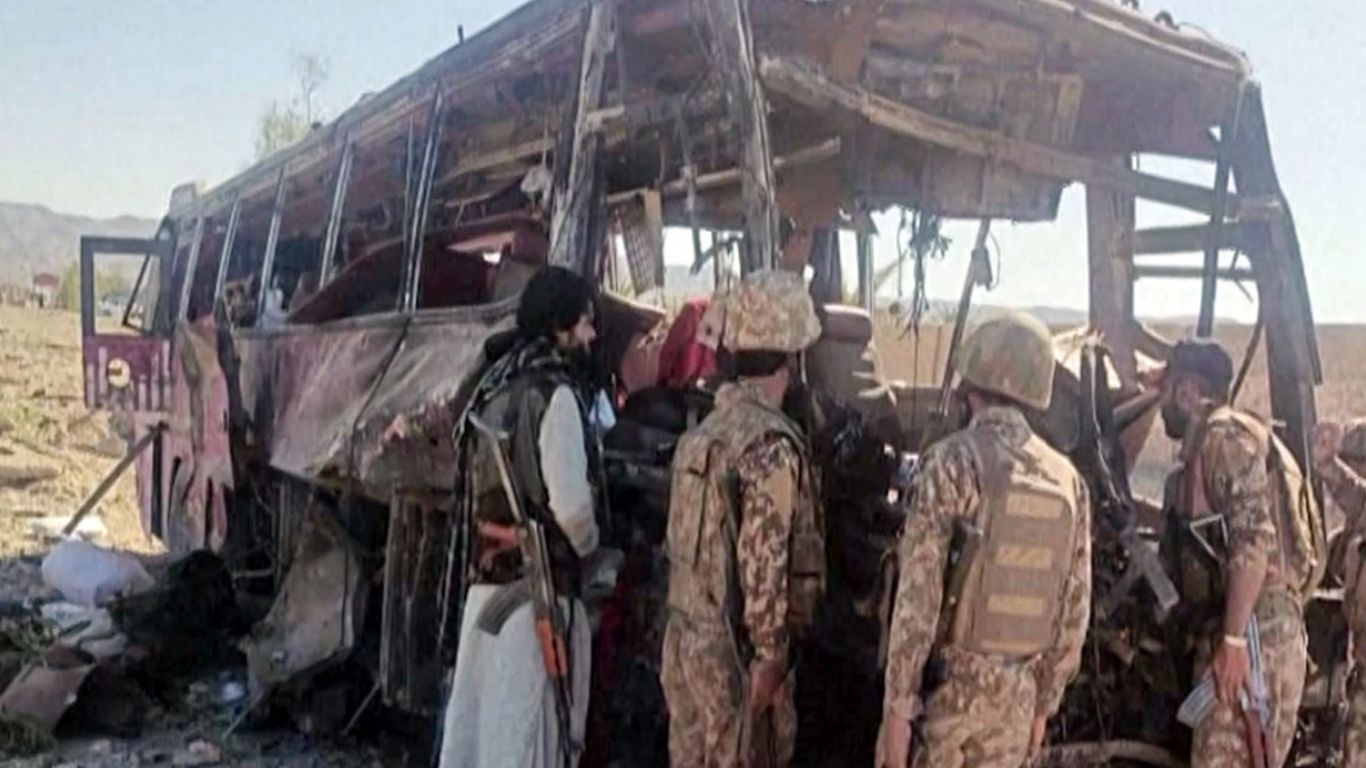
ISLAMABAD, Pakistan (Diya TV) — Pakistan has ranked as the world’s most terror-affected country for the first time, according to the latest Global Terrorism Index 2026. The report highlights a sharp rise in terrorist attacks and deaths across the country in 2025, raising concerns about regional stability and security.
The Global Terrorism Index (GTI) 2026 places Pakistan at the top spot, surpassing Burkina Faso. The country recorded more than 1,045 terrorist incidents in 2025. These attacks killed 1,139 people and injured 1,595 others. Authorities also reported 655 hostages during the year.
Pakistan’s score of 8.574 marks its worst performance since 2013. The report notes that terrorist incidents increased by 6 percent compared to 2024. This rise continues a troubling trend, making 2025 the sixth consecutive year of increasing violence. Across South Asia, Pakistan stands out as the only country where terrorism worsened in 2025. Other countries in the region showed improvement during the same period.
The report identifies Tehrik-i-Taliban Pakistan (TTP) as the deadliest group operating in the country. In 2025 alone, the TTP carried out 595 attacks. These attacks caused 637 deaths, accounting for more than half of all terrorism-related fatalities in Pakistan.
The group has expanded its tactics. It now uses drones and conducts more targeted killings. The report says targeted assassinations rose by 450 percent, while police casualties also increased. An estimated 6,000 to 6,500 TTP fighters operate from within Afghanistan. These militants use Afghan territory to launch cross-border attacks. About 85 percent of TTP attacks occur within 10 to 50 kilometers of the Afghan border.
Violence remains heavily concentrated in two provinces: Khyber Pakhtunkhwa and Balochistan. Together, they account for 74 percent of all attacks and 67 percent of total deaths.
The GTI highlights the role of Pakistan’s tribal border regions. These areas have long served as safe havens for militant groups. The report links this to decades of weak governance and porous borders. It also points to historical ties between militant networks and regional dynamics. Ethnic and geographic links across the Durand Line have allowed fighters to move freely between Pakistan and Afghanistan.
The largest terrorist attack of 2025 came from the Baloch Liberation Army (BLA). In March, the group seized a passenger train and took 442 hostages. The GTI describes it as the biggest single terrorist incident recorded globally that year.
The BLA has shifted its strategy in recent years. It now targets not only Pakistani security forces but also Chinese nationals and infrastructure linked to the China-Pakistan Economic Corridor (CPEC). The report calls this shift a sign of growing anti-state terrorism in the region.
While Pakistan’s situation worsened, other countries showed progress. Afghanistan dropped out of the top 10 for the first time, ranking 11th. The country saw a 95 percent reduction in terrorism-related deaths. Similarly, Iraq recorded a 99 percent drop in deaths linked to terrorism since 2007. These improvements highlight a contrasting trend compared to Pakistan’s rising violence.
The GTI links Pakistan’s current crisis to long-term policy choices. For decades, the country supported certain militant groups as part of its regional strategy. Officials often labeled them as “good” or “bad” based on their targets.
The report suggests this distinction has now collapsed. Groups once seen as strategic assets have turned into major internal threats. Tensions with India have also played a role. The report mentions strained relations following recent attacks and military responses, including Operation Sindoor. It notes that ongoing hostility has contributed to instability in the region.
Pakistan’s rising terrorism levels present a serious challenge for its government and security forces. The steady increase in attacks over six years suggests that past military strategies no longer work effectively.
The Global Terrorism Index warns that without major policy changes, the country may continue to face high levels of violence. The findings highlight the urgent need for stronger governance, regional cooperation, and long-term counterterrorism strategies. As Pakistan confronts this growing crisis, the world will watch closely. The country’s next steps could shape the future of security across South Asia.