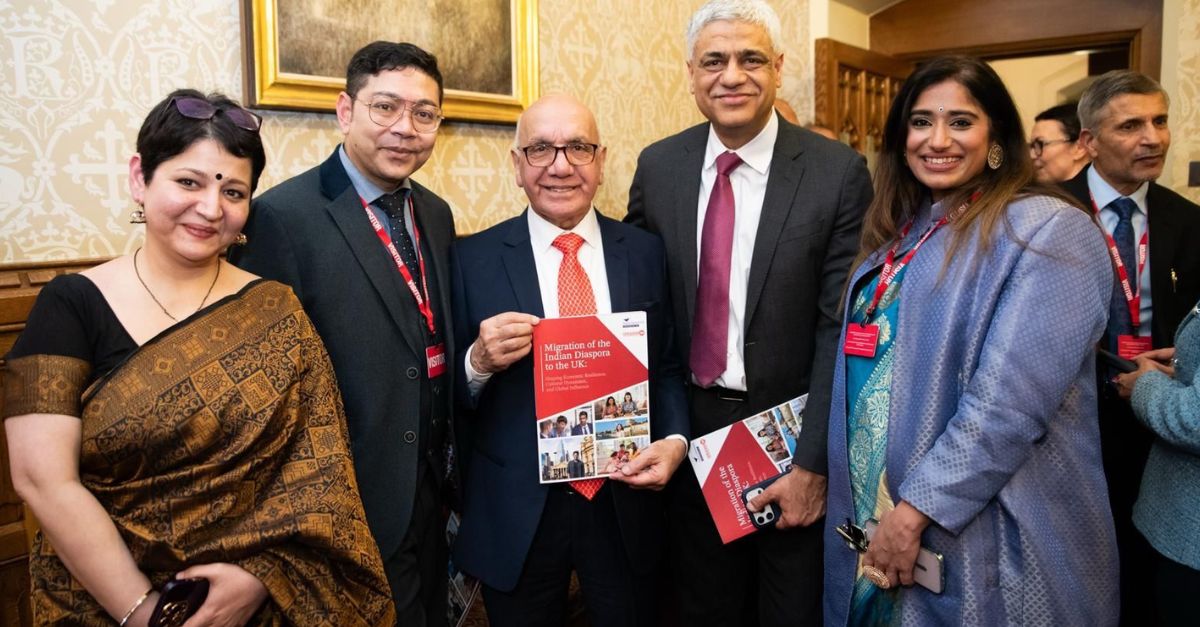
LONDON (Diya TV) — The Indian diaspora is the most economically successful migrant community in the United Kingdom, according to a new report that highlights its deep and lasting impact on modern Britain. The findings come from a white paper titled Migration of the Indian Diaspora to the UK. The report was launched Feb. 5 at the House of Lords. It was produced by multicultural advertising agency Here & Now 365 in partnership with the Aston India Centre at Aston University.
The study traces decades of Indian migration and shows how the community helped shape Britain’s economy, public services, and global standing. Researchers say Indian migrants have played a key role in rebuilding the country after war, reviving local businesses, strengthening the knowledge economy, and supporting the nation during recent crises.
The report identifies four major waves of Indian migration since India gained independence in 1947. Each wave brought skills and labor that matched Britain’s changing needs. The first wave arrived after World War II. Britain faced severe labor shortages at the time. Indian workers filled critical roles in manufacturing, transport, and the newly formed National Health Service. Their work helped stabilize the economy and support a recovering nation.
The second wave followed the expulsion of Asians from Uganda in the early 1970s under dictator Idi Amin. Many East African Indians settled in the UK. They brought strong business experience and an entrepreneurial mindset. Their arrival helped revive struggling high streets and local economies across the country.
The third wave marked a shift toward highly skilled professionals. Indian migrants entered sectors such as finance, medicine, engineering, and education. Their expertise strengthened Britain’s competitiveness in global markets and reinforced its reputation as a center for talent and innovation.
The most recent wave emerged during Brexit and the Covid-19 pandemic. During this period, Indian professionals played a critical role in sustaining the healthcare system and driving digital growth.
Indian-born workers now make up about 15% of the UK’s technology workforce, the report says. Their contributions span software development, data science, fintech, and digital infrastructure. The paper notes that Britain’s tech sector ranks behind only the United States and China worldwide, with Indian talent playing an outsized role in that success. In healthcare, Indian doctors, nurses, and care workers helped keep services running during the pandemic. Their presence eased pressure on the NHS at a time of historic strain.
Using labor market and economic data, the report shows that the Indian community leads among migrant groups in employment rates, education levels, and business ownership. Indian Britons are more likely to hold university degrees and professional qualifications. Many run small and medium-sized businesses that create jobs and support local economies. The paper argues that these outcomes reflect long-term investment in education, skills, and community networks.
The study describes the Indian diaspora as “woven into the UK’s growth story.” It highlights the community’s role in supporting public services, boosting innovation, and strengthening ties between the UK and India.
Manish Tiwari, founder of Here & Now 365, said Indian migrants have shaped Britain at every stage of its modern history.
“Indian migrants helped rebuild Britain after the war, powered its digital revolution, and strengthened its health and care systems in times of crisis,” Tiwari said. “The Indian diaspora has played a defining role in building the tech superpower Britain is today.”
The report features forewords from leaders across politics, academia, and business. Contributors include Labour MP Navendu Mishra, Conservative MP Sir Oliver Dowden, and Aston University Vice-Chancellor Professor Aleks Subic.
The House of Lords launch event included a panel discussion on the future of diaspora-led growth. Professor Pawan Budhwar moderated the session. Speakers from media, culture, and technology discussed how Indian Britons can continue to drive innovation and economic resilience.