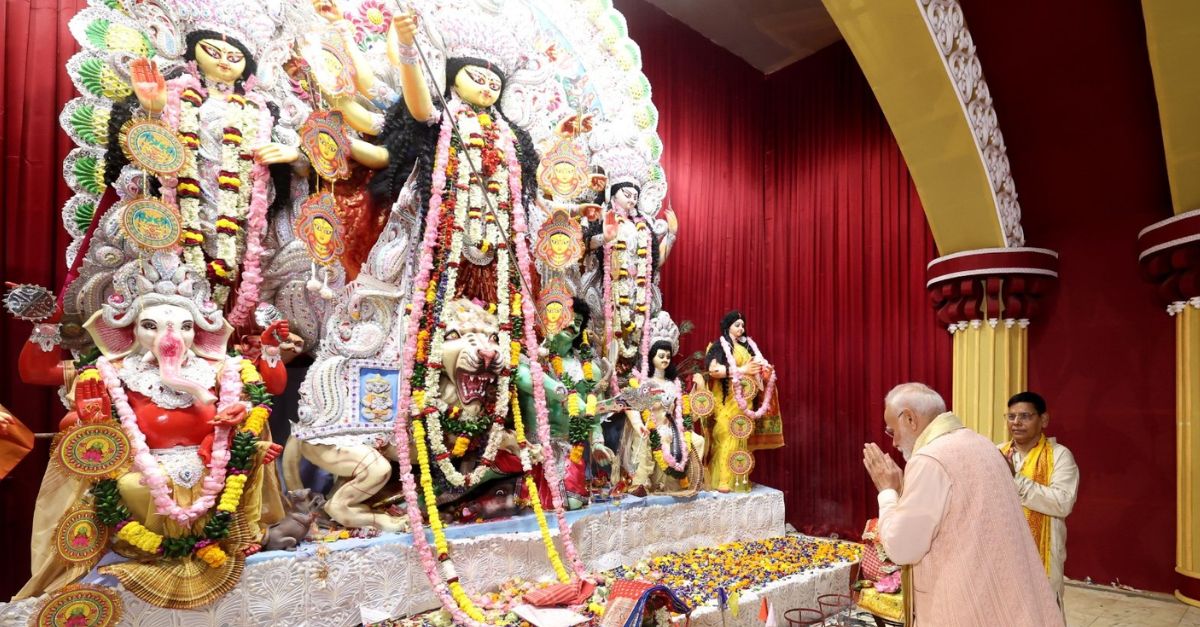
NEW DELHI (Diya TV) — The narrow lanes of Chittaranjan Park, known as New Delhi’s “Mini Bengal,” came alive Tuesday evening as Indian Prime Minister Narendra Modi made a surprise visit on Maha Ashtami. The visit added a special spark to one of the capital’s most celebrated Durga Puja festivities.
Modi arrived amid tight security and the sound of dhaak drums, stepping into the cultural heart of South Delhi. Nearly every park in the neighborhood hosts a pandal during the nine-day Navratri festival. His presence quickly turned an already vibrant evening into a historic one for residents and devotees.
Crowds, many dressed in traditional Bengali attire, gathered to watch. The Prime Minister joined priests in offering pushpanjali to Goddess Durga. Chanting of mantras filled the pandal as people watched the moment with reverence.
After the puja, Modi walked to the nearby Kali Bari temple. The temple is a spiritual anchor for Delhi’s Bengali community and holds a deep place in the city’s cultural history. There, he performed an aarti, holding the ceremonial lamp while conch shells and bells echoed across the courtyard.
“The celebrations at Chittaranjan Park truly reflect the spirit of unity and cultural vibrancy in our society. Prayed for everyone’s happiness and well-being,” Modi later wrote on X, posting photos of the evening.
Residents described the visit as more than political. Many said it felt like an emotional bridge between the leader and the community. Families, students, and seniors spoke of the joy of seeing the Prime Minister take part in traditions that define their identity.
“This was not just about security or politics,” said one resident. “It was about respect for our culture. For us, it felt very personal.”
The Bengali community in Chittaranjan Park has long preserved its cultural roots through Durga Puja, food, music, and literature. Modi’s presence, locals said, gave national recognition to their traditions.
Traffic diversions and security checks were in place throughout the day. Resident Welfare Associations asked locals to cooperate with the protocols. Despite the barricades, the festive mood never dimmed.
Food stalls selling kathi rolls, fish fry, and mishti doi remained packed. Children danced to folk drumbeats just meters from the VIP enclosure. Lanterns lit up the lanes, while the fragrance of incense and flowers spread across the neighborhood.
Many visitors noted how the Prime Minister’s visit did not overshadow the community’s joy but added to it. “It felt like a shared celebration,” one stall owner said.
Chittaranjan Park, often called CR Park, is home to one of the largest Bengali communities outside West Bengal. Every year, its Durga Puja pandals draw thousands of visitors, making it one of Delhi’s biggest cultural events.
Each block of the colony sets up its own elaborate pandal. Artists, artisans, and volunteers work for months to create themes that mix tradition with modernity. The celebrations are known for their scale, creativity, and inclusiveness.
Modi’s visit on Maha Ashtami marked the first time in recent years that a sitting Prime Minister has joined the rituals at CR Park. For many, the moment will remain a proud memory of community and culture coming together.
Durga Puja in Delhi is more than a religious event. It is a symbol of unity across cultures. People of all faiths visit the pandals to admire the decorations, enjoy the food, and take part in the spirit of celebration.
Modi’s words on X reflected that spirit. By calling the festival a mirror of “unity and cultural vibrancy,” he acknowledged what many residents already believe: that Durga Puja in Chittaranjan Park represents both heritage and harmony.
As the nine-day Navratri festival continues, the buzz in CR Park is set to grow. More pandals will welcome visitors through Vijayadashami. For the community, Modi’s surprise visit has already become one of the most talked-about highlights of this year’s celebrations.
For many in Delhi, it was a reminder that festivals are not just about rituals. They are about shared joy, cultural pride, and the belief that traditions can bring people together across boundaries.