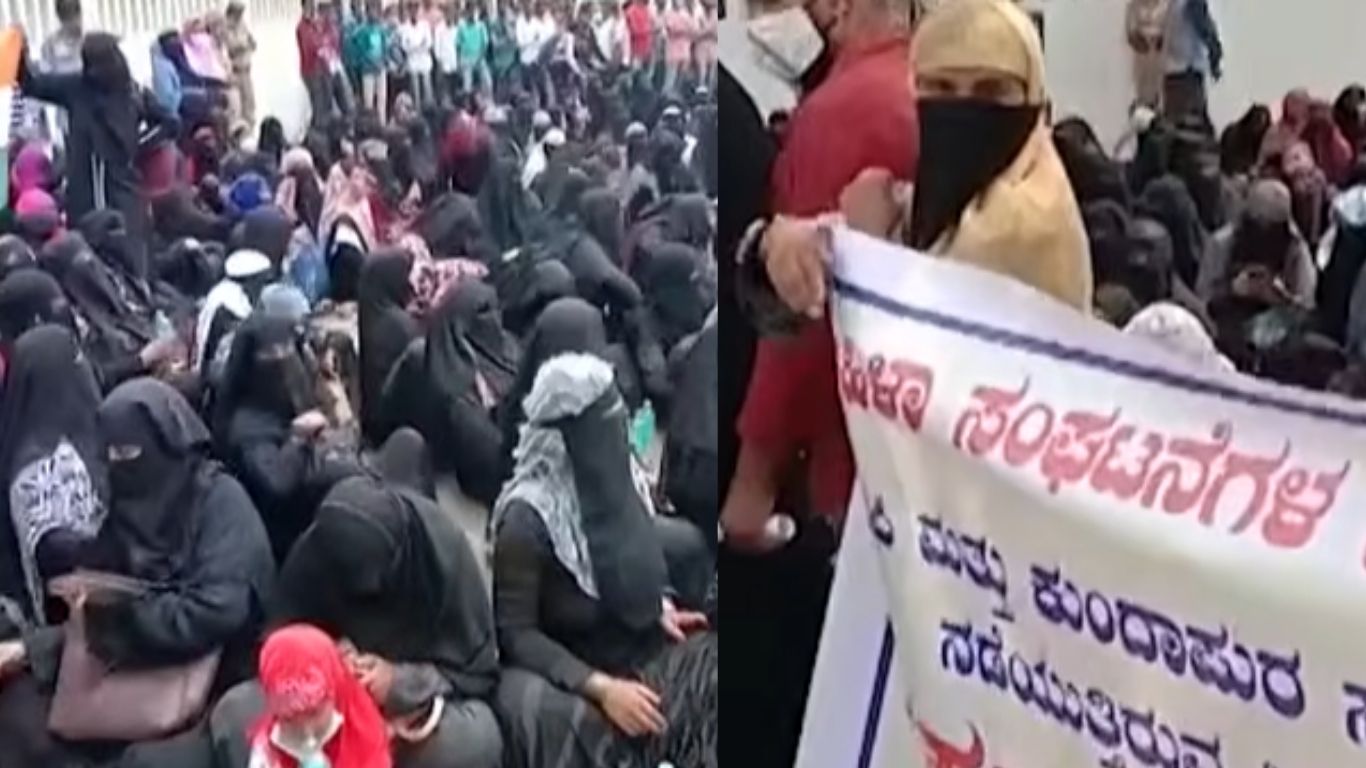
BENGALURU, India (Diya TV) — The Karnataka government has issued new rules that allow students in schools and pre-university colleges to wear limited religious and traditional symbols along with prescribed uniforms. The move reverses a 2022 policy introduced by the previous BJP government after the Udupi hijab controversy.
The new order applies to government, aided, and private educational institutions across the state. Students can now wear items such as hijabs, turbans, sacred threads, rudraksha beads, and peta if they match the uniform and do not affect discipline, safety, or identification.
The Congress-led government said the decision aims to protect students from humiliation and exclusion over religious practices. Officials also said no student should lose access to education because of personal faith-based symbols.
The latest Karnataka school uniform policy marks a major shift from the earlier BJP government order. In 2022, the state enforced strict uniform rules after protests erupted over Muslim students wearing hijabs in classrooms. The dispute began in Udupi and quickly spread across Karnataka. Several colleges barred students from wearing hijabs. Counter-protests also emerged, with some students demanding permission to wear saffron shawls.
The Karnataka High Court later upheld the BJP government’s order. The court ruled that wearing the hijab was not an essential religious practice under Islam. The case later reached the Supreme Court of India, which has not yet delivered a final verdict. Despite the pending legal decision, the Karnataka government has now changed its approach. The new rules allow religious symbols as long as they do not disrupt classroom discipline or school administration.
Karnataka Education Minister Madhu Bangarappa said the government acted after several incidents involving students being asked to remove religious items. He referred to an April 24 incident in which a child was reportedly asked to remove a sacred thread in an educational institution. The incident upset the student and drew criticism from parents and community groups.
“Things like earrings or religious accessories should not come in between education and a student’s future,” Bangarappa said while explaining the policy change.
Karnataka Health Minister Dinesh Gundu Rao also supported the move. He said students should not feel hurt or excluded because of religious practices. Officials said the policy ensures that no child is forced to wear or remove any religious symbol. They added that schools and colleges must implement the rules fairly and without discrimination.
The government also said the new guidelines follow constitutional values such as equality, dignity, and fraternity.
The Karnataka government’s decision has triggered sharp criticism from BJP leaders and members of the Vishva Hindu Parishad.
Opposition leaders accused the Congress government of using religion for political gain and targeting Muslim voters through appeasement politics. Some BJP leaders warned that the new rules could create fresh tensions inside educational institutions. Several critics also revived earlier demands for allowing saffron shawls in schools and colleges. Similar demands emerged during the 2022 hijab protests.
Opposition parties argued that schools should maintain a single dress code for all students to avoid conflict and confusion. They claimed the new policy could weaken discipline in classrooms. However, the Karnataka government rejected those concerns. Ministers said the order only allows limited religious symbols and does not remove the importance of school uniforms.
The Karnataka hijab controversy remains one of the most debated education and religious freedom issues in India in recent years. The protests sparked national discussions about secularism, personal liberty, and students’ rights in classrooms. The new Karnataka rules on hijabs and religious symbols show how the debate continues to influence state politics and education policy.
Supporters of the move say schools should focus on learning rather than policing personal faith practices. Critics argue that educational institutions should stay completely free from religious displays. With the Supreme Court yet to issue a final ruling in the hijab case, the larger legal and constitutional debate remains unresolved.