WASHINGTON (Diya TV) — Indian American lawmakers are slamming the Trump administration’s decision to cancel nearly $500 million in federal funding for mRNA vaccine development. They say the move is dangerous, unscientific, and puts millions of lives at risk.
The announcement came from the U.S. Department of Health and Human Services (HHS) on Aug. 5. The department said it would terminate 22 existing contracts related to the research and development of mRNA vaccines.
Health Secretary Robert F. Kennedy Jr., who made the announcement, said the data no longer supports continued investment in the technology for respiratory viruses like COVID-19 and flu. His decision sparked strong backlash from health experts and lawmakers alike.
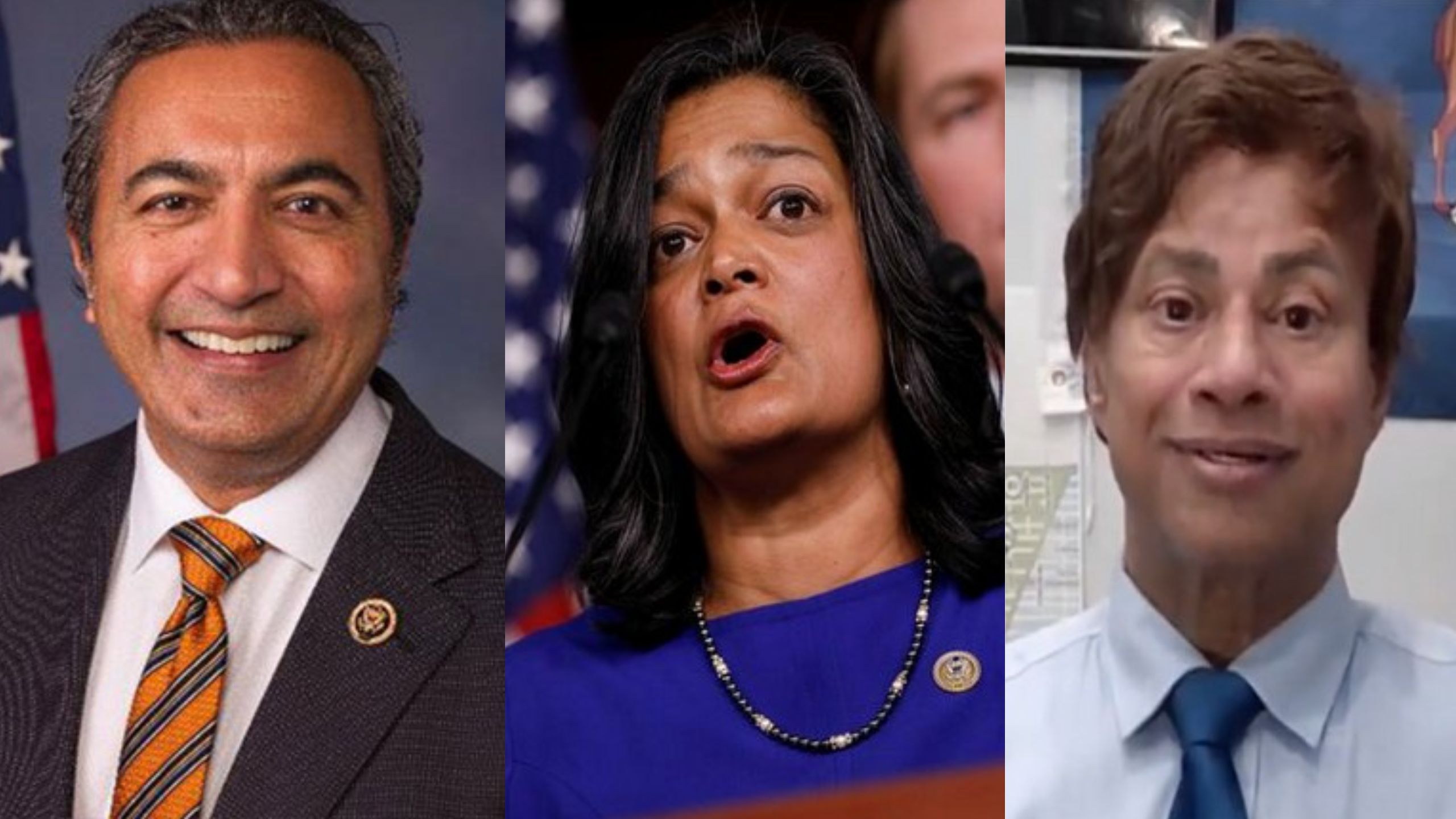
Rep. Dr. Ami Bera, a California Democrat and former physician, called the decision misguided and dangerous. “This isn’t based on science,” Bera said. “Vaccines developed using mRNA technology saved millions of lives during the COVID-19 pandemic.”
He warned that cutting off funding weakens America’s ability to respond to future health threats. “Canceling nearly $500 million in mRNA vaccine funding undermines our public health readiness, weakens our national security, and abandons innovation,” Bera said.
Rep. Pramila Jayapal, a Democrat from Washington state, described the decision as “absolutely horrifying.” She said it was “complete malpractice that will lead to countless preventable American deaths.”
Michigan Rep. Shri Thanedar also blasted the move. “Kennedy’s claims aren’t just false, they’re deadly,” he said. Thanedar accused the administration of rejecting science and facts. “For this administration, facts are the enemy. Their war on truth is putting America at risk,” he said.
Medical and public health experts say ending the contracts will harm the country’s ability to fight future pandemics and respond to bioterror threats.
“This may be the most dangerous public health judgment that I’ve seen in my 50 years in this business,” said Michael Osterholm, director of the Center for Infectious Disease Research and Policy at the University of Minnesota. “It is baseless, and we will pay a tremendous price.”
Jennifer Nuzzo, head of the Pandemic Center at Brown University, echoed the concern. “This is a profoundly disappointing development. When the next pandemic hits, we’ll be caught flat-footed,” she said.
Chris Meekins, a biodefense expert from the first Trump administration, also weighed in. He said the move “puts the U.S. at a strategic national security disadvantage.”
HHS Secretary Kennedy defended the cutbacks, saying the department reviewed the science before acting. “BARDA is terminating 22 mRNA vaccine investments because the data show these vaccines fail to protect effectively against upper respiratory infections,” he said.
He added that HHS will redirect funds toward more traditional vaccine platforms, such as whole-killed virus vaccines. Kennedy claimed these options offer “natural immunity” and perform better against evolving viruses.
However, many scientists say this is the wrong approach. mRNA technology, they argue, is faster, safer, and more adaptable than older methods. “It is irresponsible to strip funding from future technologies and shift it toward outdated approaches,” said Rick Bright, former head of BARDA.
mRNA vaccines teach the body to recognize and fight viruses by delivering a small genetic code that produces a harmless protein. The technology helped bring COVID-19 vaccines to market in record time. It was praised globally and won a Nobel Prize in 2023.
Experts say the speed of mRNA development makes it the best defense against fast-moving outbreaks. “Speed is the name of the game in a pandemic,” Bright said.
Critics fear this decision will also hurt trust in mRNA research, which is showing promise beyond infectious diseases, including in cancer treatment.
Dr. Peter Hotez, a vaccine expert at Baylor College of Medicine, said the administration is promoting misinformation. “This is a proven technology. It is extremely safe and has been incredibly effective,” he said.
Many health leaders worry that canceling mRNA vaccine funding sends the wrong message and makes the country more vulnerable.
As the debate continues, public health experts, lawmakers, and researchers are calling for a reversal. They argue that supporting innovation in vaccine technology is not just a smart policy’s a matter of national security.