LONDON (Diya TV) — India and the United Kingdom signed a historic Comprehensive Economic and Trade Agreement (CETA) on Thursday, July 24, during Indian Prime Minister Narendra Modi’s visit to the U.K. The deal aims to double bilateral trade to $120 billion by 2030 and significantly boost market access for both nations.
The agreement was signed by India’s Commerce Minister Piyush Goyal and U.K. Secretary of State for Business and Trade Jonathan Reynolds. It follows more than three years of negotiations, which resumed in 2022.
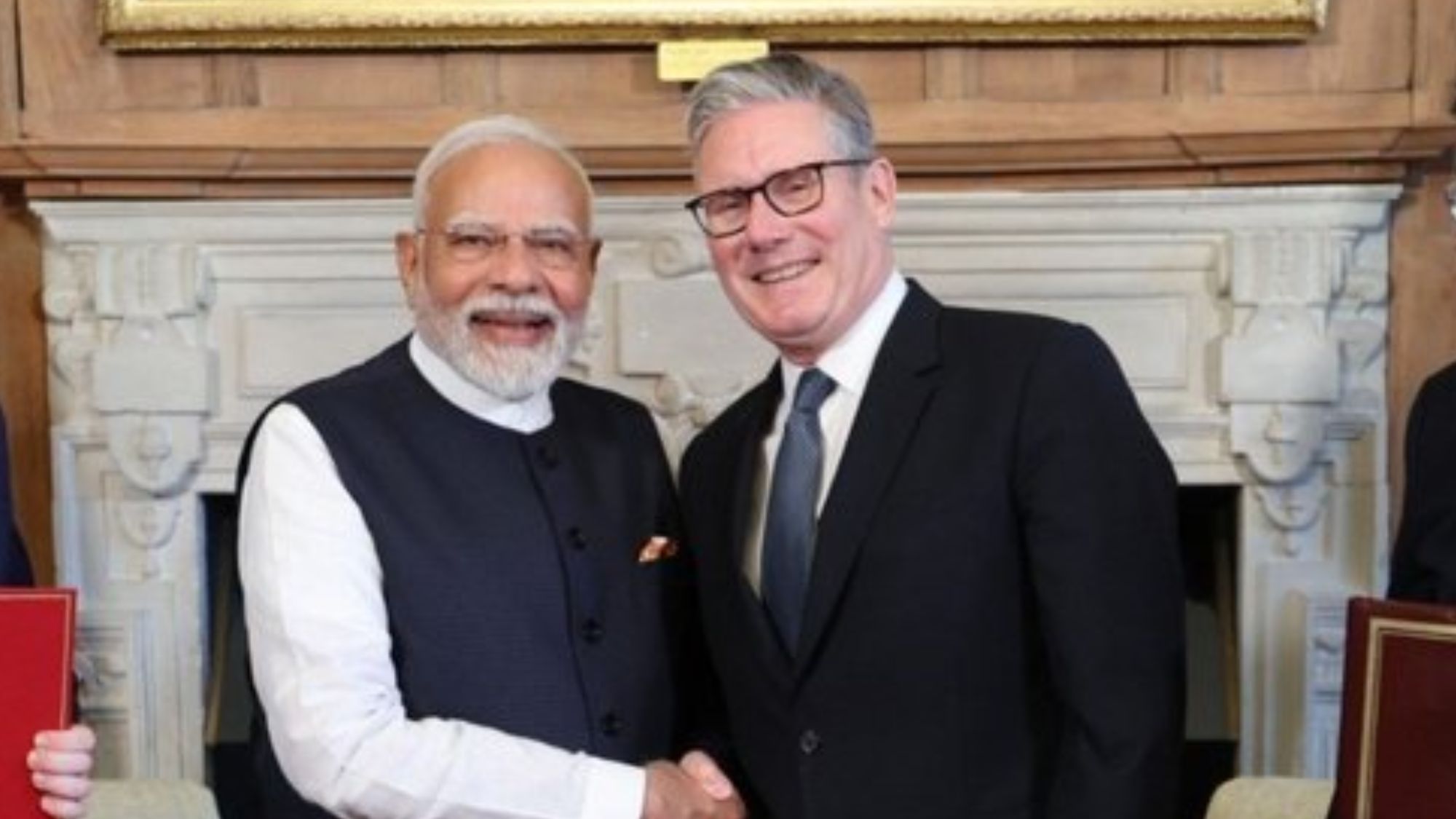
Standing alongside U.K. Prime Minister Keir Starmer at Chequers, the British leader’s country residence, Modi called the deal a “historic day in our bilateral relations.” Starmer hailed it as Britain’s “biggest and most economically significant trade agreement since Brexit.”
Both leaders emphasized the mutual benefits of the pact. Modi highlighted gains for India’s farmers, youth, small businesses, and the fisheries sector. Starmer praised the benefits for U.K. manufacturers, whiskey distillers, and service providers in cities like London, Manchester, and Leeds.
Officials say the deal will remove tariffs on 99% of Indian exports to the U.K. This includes products like textiles, footwear, gems and jewelry, seafood, engineering goods, and agricultural produce.
Key Indian exports such as turmeric, pepper, cardamom, mango pulp, pickles, and pulses will now enter the U.K. duty-free. Modi said this would significantly boost income for Indian farmers and improve profit margins. The deal will especially help producers in coastal states like Andhra Pradesh, Odisha, Kerala, and Tamil Nadu, where shrimp and tuna are major exports. U.K. import duties on these goods—once as high as 8.5%—will now be eliminated.
The MSME sector, which drives much of India’s economy, is also expected to benefit from new market opportunities in the U.K.
On the other side, Indian consumers and industries will see lower prices on British imports. Items like medical devices, aerospace components, cars, and whiskey will become more affordable in India due to reduced tariffs.
Modi noted that the agreement offers British firms an improved pathway to India’s large and growing market. He added that the deal is not just economic, but “a plan for shared prosperity.”
Along with the trade deal, both countries agreed to begin talks on a Double Contributions Convention. This will ensure that employees working across borders only pay social security in one country at a time, easing business operations and reducing costs.
The leaders also discussed several strategic issues, including migration, climate change, and defense cooperation. Modi thanked Starmer for the U.K.’s support after the April 22 Pahalgam terror attack in India.
“We are united in the belief that there is no place for double standards in the fight against terrorism,” Modi said. He stressed that those misusing democratic freedoms to promote extremism must be held accountable.
Modi also mentioned joint efforts to extradite economic offenders. The U.K. currently hosts several individuals wanted by Indian authorities, including Nirav Modi, Lalit Modi, and Vijay Mallya.
The agreement is being seen as a major foreign policy win for both leaders. It follows India’s earlier trade deals with Australia, the UAE, and the European Free Trade Association (EFTA).
India continues to negotiate with the United States and the European Union for similar trade agreements. Analysts say the India-U.K. deal sets a benchmark for future negotiations.
Modi expressed his condolences to the U.K. families affected by the recent Ahmedabad plane crash. He described the Indian diaspora in Britain as a “living bridge” between the two nations, contributing not just to the economy but also to British culture, sports, and public service.
The India-U.K. free trade agreement marks a significant step in global trade relations. With tariff reductions across nearly all product lines and expanded access to major markets, the pact is set to transform economic ties between two of the world’s largest democracies.