BANGALORE, India (Diya TV) — India has long relied on imported magnetic resonance imaging systems, or MRI machines, which are costly to acquire and operate. Most high-field MRI scanners require liquid helium for cooling and consume significant amounts of electricity, limiting their availability to well-funded urban hospitals.
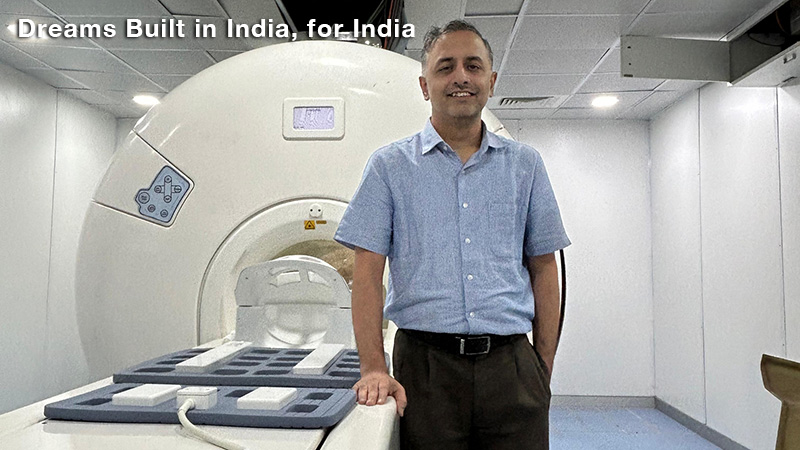
A Bengaluru-based startup, VoxelGrids, has now introduced what it describes as India’s first fully indigenous 1.5-tesla MRI scanner. The system is currently operational at a cancer care centre in Chandrapur, Maharashtra, marking a notable step in domestic medical device manufacturing.
The 1.5-tesla MRI is designed to meet standard clinical imaging requirements while addressing infrastructure constraints commonly faced by Indian healthcare facilities. According to the company, the system eliminates dependence on liquid helium, reduces overall power consumption, and is priced at approximately 40 percent lower than comparable imported alternatives.
MRI scanners typically use superconducting magnets cooled by liquid helium to maintain extremely low operating temperatures. Global helium supply constraints and rising costs have added to operational challenges for hospitals. By engineering a system that does not rely on helium, VoxelGrids aims to reduce maintenance complexity and long-term operating expenses.
In addition to lowering capital costs, the company offers a pay-per-use model for hospitals that may not be able to purchase high-value imaging equipment outright. This approach is intended to expand access to advanced diagnostic imaging in smaller cities and underserved regions where upfront investment remains a barrier.
The initiative is led by founder Arjun Arunachalam, who previously worked in research in the United States before returning to India to focus on domestic healthcare technology development. The project received support from institutions including Tata Trusts, and the company reports that it spent several years on research, testing, and refinement before deploying the first unit.
India has been working to strengthen its medical device manufacturing sector as part of broader efforts to reduce dependence on imported healthcare technology. Advanced imaging systems have historically been dominated by multinational manufacturers, with domestic production limited in high-field MRI categories.