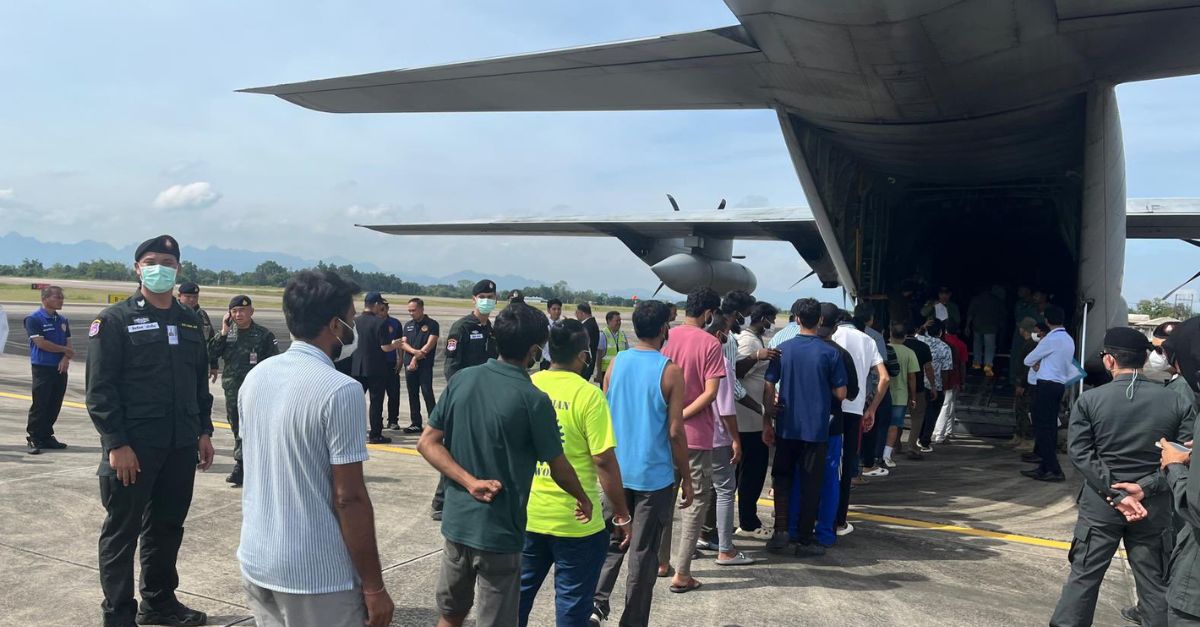
NEW DELHI (Diya TV) — At least 270 Indian nationals, including 26 women, have been deported from Thailand after being rescued from cyber scam centers in Myanmar’s conflict-hit Myawaddy region, officials said on Thursday. The Indian Air Force operated two special flights to bring them back home from Chiang Mai to Hindon Airbase in Uttar Pradesh on November 6. The deported group had entered Thailand illegally after fleeing Myanmar’s Myawaddy region, where they were reportedly working in cybercrime hubs. Thai authorities detained them for immigration violations before coordinating their return with the Indian Embassy in Bangkok.
The Indian Embassy confirmed the deportation, saying it had worked closely with both Thai and Myanmar officials to facilitate the repatriation. “Indian nationals are strongly advised to verify the credentials of foreign employers and check the antecedents of recruiting agents and companies before taking up a job offer overseas,” the embassy said in a statement posted on X.
Officials also warned Indian citizens against misusing Thailand’s visa-free entry policy, which is meant strictly for tourism and short business visits, not employment. Government sources said the repatriated citizens will be questioned by Indian investigating agencies to determine their roles in the online scam operations. The individuals will remain in government custody for verification and investigation before being allowed to return home.
“The idea behind the questioning is not just about finding out how these scam centers operate but also to identify how to prevent more people from joining such transnational networks,” said an official familiar with the process.
Authorities are focusing on uncovering how recruiting networks lured young Indians into cyber scam compounds in Myanmar. Investigators will also examine potential Indian accomplices who may have facilitated these illegal job placements abroad. The Myawaddy region, located near the Thai border, has become a hotspot for cybercrime operations run by international criminal syndicates. These scam centers exploit workers from India, China, and other countries, forcing them to participate in online fraud schemes targeting victims worldwide.
In late October, Myanmar’s military carried out a series of operations in Myawaddy, leading many foreign workers—including hundreds of Indians—to flee the area. Thai Prime Minister Anutin Charnvirakul said on October 29 that about 500 Indian nationals had entered Thailand from Myanmar following the crackdown. He announced that India would soon airlift them back. The cybercrime hub, known as the K.K. Park in Myawaddy, has been linked to large-scale scams defrauding victims across Asia and beyond. Thai authorities have called these operations a “threat to Thailand’s economic stability and national credibility.”
The Indian government, through its embassies in Thailand and Myanmar, has been coordinating efforts to rescue and repatriate its citizens trapped in cyber scam centers. Many of the workers had been deceived by fake job offers promising lucrative employment in Southeast Asia. Officials said the embassy continues to track and assist Indian nationals who remain stranded in Myanmar’s scam compounds. “We are working with host governments to secure the repatriation of those Indians still in Myanmar,” the Indian Embassy in Bangkok stated.
The embassy’s warning underscores growing concern about human trafficking and job fraud targeting Indians seeking overseas employment. Officials have urged citizens to stay cautious, verify employer credentials, and use only authorized recruitment agencies. In recent weeks, both India and China have repatriated nationals who were employed in Myanmar’s cyber scam sector. China has carried out its own rescue operations to bring back citizens from Thailand and Myanmar involved in similar schemes.
Security experts say the crackdown in Myanmar is part of a broader regional effort to dismantle transnational cybercrime networks operating in Southeast Asia. These groups have exploited weak border controls and poor digital regulations to run large-scale online scams. Indian authorities reiterated that visa-free travel to Thailand should only be used for legitimate tourism and short business trips. They cautioned that those misusing it for employment could face legal consequences.
The Ministry of External Affairs has also urged job seekers to stay vigilant about overseas recruitment scams, especially those involving social media advertisements or unverified agents. Officials emphasized that India’s recent repatriation efforts are not only about bringing citizens home but also about preventing future exploitation. “We must stop young people from falling into the same trap again,” said an Indian government source.
As investigations continue, the government hopes to dismantle the recruitment networks that led hundreds of Indians into Myanmar’s cyber scam web — and to raise awareness about the dangers of illegal overseas employment.