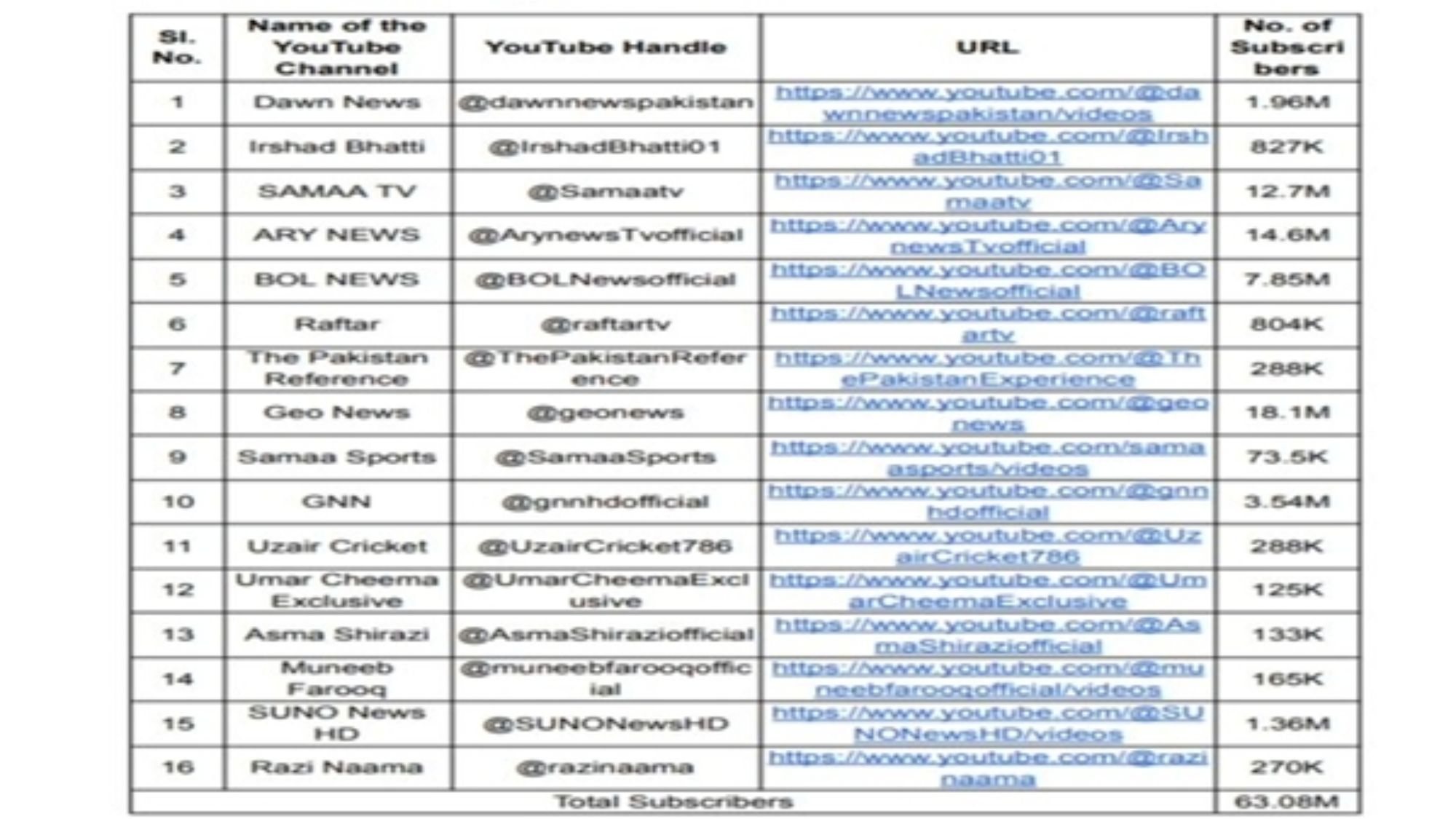
NEW DELHI (Diya TV) — India has banned 16 Pakistani YouTube channels, collectively amassing around 63 million subscribers, for allegedly spreading provocative, communally sensitive content and misinformation following the deadly terror attack in Pahalgam earlier this month, government sources said Monday.
The crackdown, initiated on the recommendation of the Ministry of Home Affairs, targeted channels accused of disseminating false narratives against India, its Army, and security agencies after 26 people — 25 tourists and one Kashmiri local — were shot dead by terrorists in Baisaran Valley on April 22.
Among the platforms banned are major Pakistani news outlets such as Dawn News, Samaa TV, ARY News, Bol News, Raftar, Geo News, and Suno News. YouTube channels operated by journalists Irshad Bhatti, Asma Shirazi, Umar Cheema, and Muneeb Farooq were also blocked. Other banned channels include The Pakistan Reference, Samaa Sports, Uzair Cricket, and Razi Naama. In addition, former Pakistani cricketer Shoaib Akhtar’s YouTube channel, which has over 3.5 million subscribers, has been banned in India, according to government sources.
Users attempting to access the blocked channels within India are now greeted by a message stating: “This content is currently unavailable in this country because of an order from the government related to national security or public order,” citing YouTube’s policy and directing viewers to the Google Transparency Report.
Government sources told NDTV that the decision to block the channels was based on their consistent spread of “provocative and communally sensitive content, false and misleading narratives, and misinformation,” particularly at a time when tensions between India and Pakistan remain high following the Pahalgam tragedy.
In the immediate aftermath of the attack, India suspended the Indus Water Treaty and halted visa services for Pakistani nationals, further escalating tensions between the neighboring countries. Islamabad has warned that it may suspend all bilateral agreements with India, including the landmark Simla Agreement.
Indian Prime Minister Narendra Modi, speaking after the attack, vowed harsh retaliation. “From Kargil to Kanyakumari, there is grief and rage,” he said. “This attack was not just on innocent tourists; it was an audacious attack on India’s soul. The time has come to raze whatever is left of the terror haven.”
Meanwhile, the Indian government has formally protested to the BBC over its coverage of the Pahalgam terror attack. Officials objected to the broadcaster describing the perpetrators as “militants” rather than terrorists. A strongly worded letter was sent to Jackie Martin, BBC’s India head, conveying India’s “strong sentiments” about the terminology used, according to sources cited by NDTV. The government will continue to monitor the BBC’s reporting on the incident.
The BBC also faced backlash for a headline that read, “Pakistan suspends visas for Indians after deadly Kashmir attack,” which critics said incorrectly implied Indian involvement in the attack.