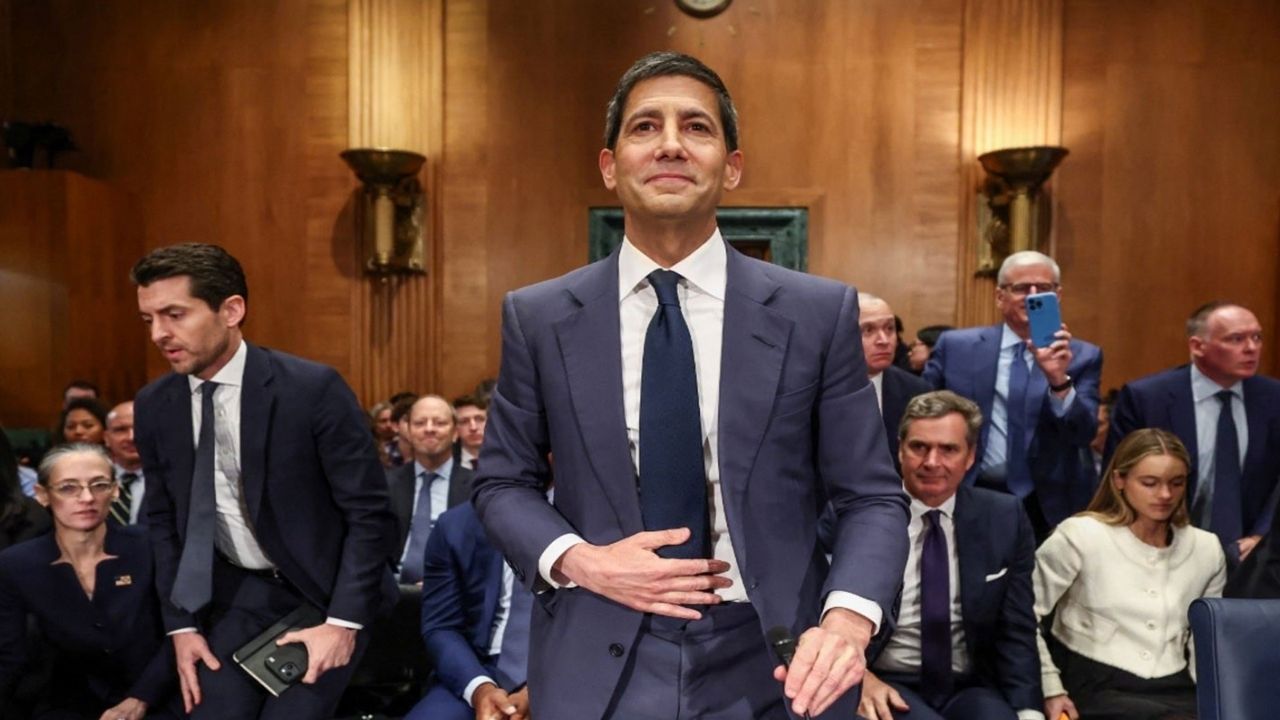
JACKSON HOLE, Wyo. (Diya TV) — Federal Reserve Chair Kevin Warsh said Friday that inflation remains too high and warned that the central bank may need to raise interest rates in the coming months.
The comments marked a stronger warning on inflation than Warsh had offered before. However, he did not signal that the Federal Reserve will raise rates at its next meeting.
Speaking at the Fed’s annual conference in Jackson Hole, Wyoming, Warsh said recent data show some cooling in inflation. Still, he said the figures do not show enough progress in underlying price trends.
“We must be confident that underlying inflation is moving to our objective, clearly and at sufficient speed,” Warsh said. “Otherwise, we have work to do.”
Warsh took over as Fed chair in late May after Jerome Powell’s term ended. Since then, investors have closely watched his views on interest rates and inflation.
His latest remarks appeared to reassure Wall Street that fighting inflation remains a key priority. At the same time, Warsh avoided giving a clear timetable for future rate moves.
The bond market showed growing concern that the Fed could raise rates. The yield on the two-year Treasury note rose from 4.22% to 4.30%. That yield often reflects expectations for the Fed’s short-term interest rate decisions.
Meanwhile, longer-term Treasury yields stayed mostly flat. That suggests investors do not expect higher rates to remain necessary for an extended period.
Jon Faust, an economist at Johns Hopkins University and former adviser to Powell, said Warsh delivered a tougher message on inflation without offering detailed guidance on future policy.
Michael Strain, director of economic policy studies at the American Enterprise Institute, took a more cautious view. He said Fed officials have previously used strong language on inflation without following it with a rate increase. He also said Warsh did not clarify when the Fed might act.
Warsh has repeatedly questioned the value of “forward guidance.” He does not want to commit the central bank to raising, cutting or holding rates at future meetings. Instead, he wants the Fed to respond to economic data as conditions change.
Still, Warsh offered some insight into his current thinking. He said interest rates do not appear to be restricting economic activity enough to bring inflation down quickly.
He pointed to strong consumer spending and heavy business investment in artificial intelligence equipment and infrastructure. Normally, higher interest rates can reduce borrowing and spending. That can help slow price increases.
The Fed will meet Sept. 15-16. Warsh’s speech does not mean the central bank will raise rates at that meeting. However, his comments suggest that he does not believe current rates are clearly high enough to return inflation to the Fed’s 2% target.
Warsh said inflation concerns now look greater than concerns about the labor market. The unemployment rate remains low. However, he argued that inflation may not fall back to the Fed’s target without additional action.
He noted that 54% of goods and services tracked by the government recorded price increases of at least 3% over the past year. That figure has fallen from the pandemic period but remains well above the 32% average recorded during the two decades before the pandemic.
Inflation eased in June and July after rising sharply in May. However, the Fed’s preferred inflation measure reached 3.7% in July. That remains significantly above the central bank’s 2% goal.
Warsh also clarified comments from a July news conference. He said short-term interest rates remain the Fed’s main tool for reducing inflation.
Trump has defended Warsh but has criticized other Fed officials who support higher rates.
Trump has also renewed efforts to remove Fed Governor Lisa Cook, who was appointed by former President Joe Biden.