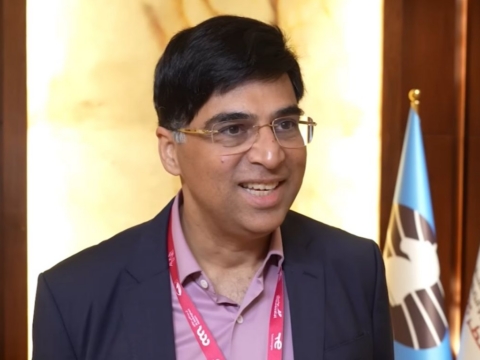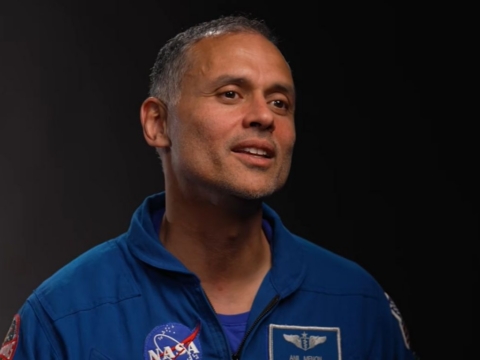
SAN FRANCISCO (Diya TV) — Mallikarjun “Mallik” Tatipamula, a chief technology officer at Ericsson Silicon Valley and longtime collaborator with Purdue University, has been elected a Fellow of the Royal Society — the United Kingdom’s oldest and most prestigious scientific academy.
Purdue University confirmed the announcement on June 30. The university emphasized the significance of this honor, noting that only about 90 individuals worldwide are elected each year. Tatipamula’s election to the Royal Society places him among the world’s most distinguished scientific minds. Previous fellows include legendary figures like Isaac Newton, Charles Darwin, and Albert Einstein.
Tatipamula, an Indian-origin tech leader and alumnus of the Indian Institute of Technology (IIT), now holds an unprecedented distinction. He is the first Indian to be elected to all three top U.K. academies: the Royal Society, the Royal Academy of Engineering, and the Royal Society of Edinburgh.
This rare achievement highlights his lasting contributions to science, engineering, and international research collaboration.
“Being elected a Fellow of the Royal Society is deeply humbling,” Tatipamula told Purdue. “It’s not just about recognition — it’s a reminder of what becomes possible when passion meets purpose.”
He said the world is seeing a powerful convergence of artificial intelligence, cloud computing, and communications technologies, and called for more collaboration across borders and disciplines to address real-world problems.
Tatipamula has played a key role at Purdue University for many years. He has delivered guest lectures in courses such as IP Generation and Management: An Inventor’s View and Ideas to Innovation. His guidance has helped students connect with industry trends and explore real-world applications of technology.
“Mallik’s engagement with Purdue goes beyond lectures or projects — it’s mentorship, partnership, and shared purpose,” said Milind Kulkarni, head of Purdue’s Elmore Family School of Electrical and Computer Engineering. “He brings the world to our students and connects our students with the world.”
Tatipamula’s impact has been felt across Purdue’s major initiatives. As CTO at Ericsson, he has led strategic partnerships involving the university and national organizations. These include the NSF Future of Semiconductors initiative, the NSF/Department of Defense 5G Security Convergence Accelerator, and the Ericsson-Saab-Purdue 5G test bed for digital aviation.
His ability to build global partnerships has positioned Purdue and its students at the forefront of emerging technologies.
Tatipamula has spent more than three decades shaping the future of telecommunications. His work has transformed how people connect and communicate.
He helped introduce Internet Protocol (IP) networking into mobile systems, which laid the foundation for today’s connected world. He also played a major role in expanding global infrastructure using IP over Dense Wavelength Division Multiplexing (IPoDWDM) — a technology that boosts internet speeds and capacity.
More recently, he has led advancements in software-defined 5G networks and is contributing to the development of sustainable 6G technologies.
“His contributions to our academic community have been significant, productive, and multifaceted,” said Santokh Badesha, Distinguished Professor of Electrical and Computer Engineering at Purdue.