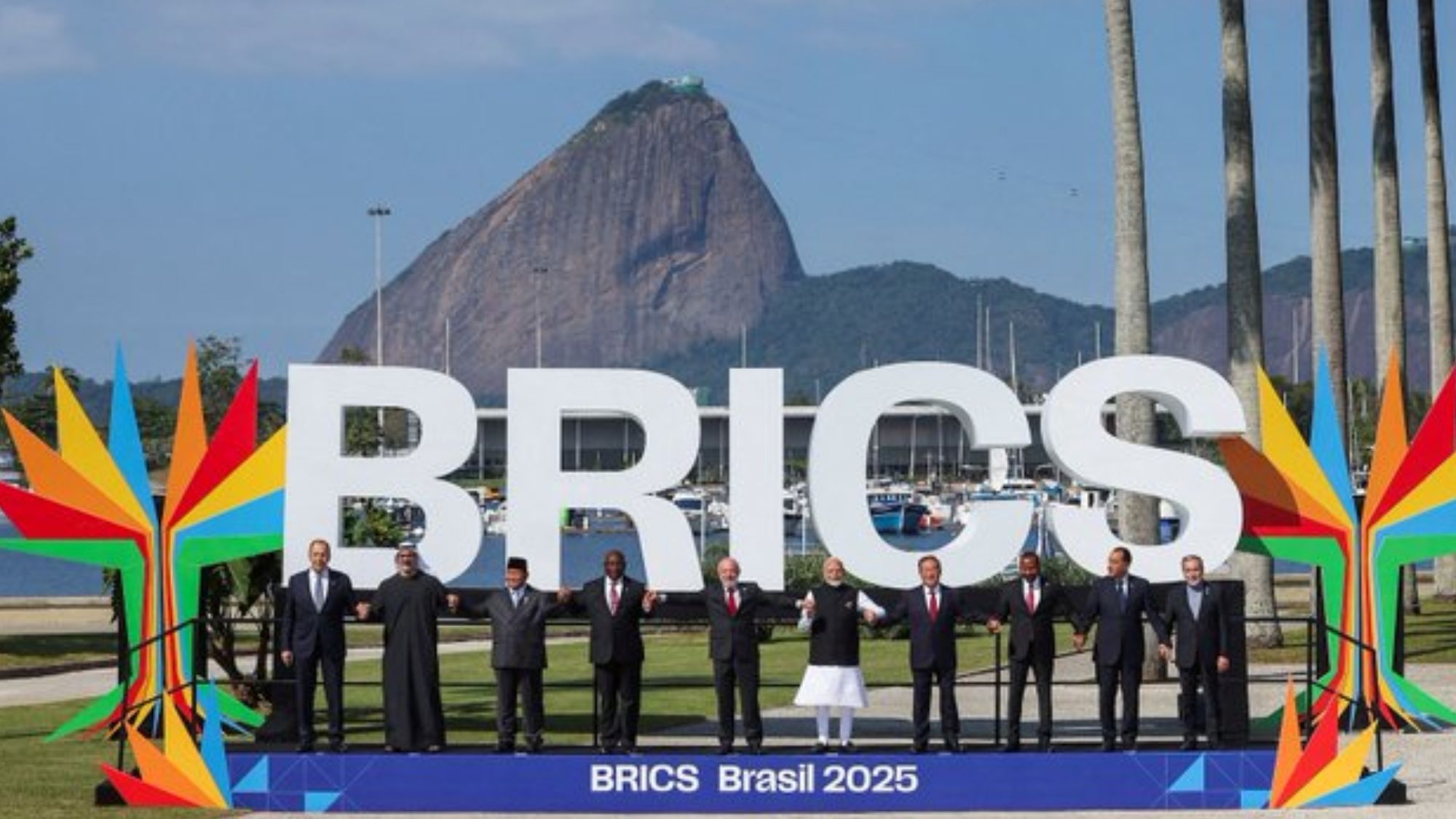
RIO DE JANEIRO (Diya TV) — Leaders of the BRICS group of developing nations gathered in Rio de Janeiro on July 6, calling for urgent reforms in global institutions and condemning violence in Gaza, Iran, and Kashmir. The summit showcased the bloc’s growing influence, positioning BRICS as a powerful voice for the Global South amid global tensions and trade wars.
Brazilian President Luiz Inácio Lula da Silva opened the summit by comparing BRICS to the Cold War-era Non-Aligned Movement. He said the group stands for independence and diplomacy in a world-facing division.
“BRICS is the heir to the Non-Aligned Movement,” Lula said. “With multilateralism under attack, our autonomy is in check once again.”
The group now includes Brazil, Russia, India, China, South Africa, Egypt, Ethiopia, Indonesia, Iran, Saudi Arabia, and the United Arab Emirates. This year marked Indonesia’s first participation in a BRICS summit.
BRICS now represents more than half the world’s population and 40% of global economic output. Lula emphasized the need for BRICS to lead global institutional reform, especially at the United Nations and the International Monetary Fund.
In a joint statement, BRICS leaders condemned attacks on Iran’s civilian infrastructure and peaceful nuclear facilities, calling them a “violation of international law.” They also expressed “grave concern” over Israel’s actions in Gaza and condemned a recent terrorist attack in Kashmir.
The bloc called terrorism “criminal and unjustifiable” and stressed that such acts should not be linked to religion, nationality, or ethnicity. They urged the international community to adopt a “zero tolerance” approach to terrorism and finalize the long-pending Comprehensive Convention on International Terrorism at the United Nations.
The leaders reaffirmed their commitment to fighting terrorism in all forms, including the financing and movement of terrorists. They backed the ongoing efforts of the BRICS Counter-Terrorism Working Group and its five subgroups under the group’s Action Plan.
On the economic front, BRICS warned that rising tariffs and protectionism threaten global trade. The statement subtly criticized the trade policies of former U.S. President Donald Trump and stressed the need to restore the World Trade Organization’s ability to resolve disputes.
BRICS also supported Ethiopia and Iran’s bids to join the WTO. The group promoted a new Multilateral Guarantees initiative under the BRICS-led New Development Bank. The plan aims to lower financing costs and increase investment among member states.
During talks on artificial intelligence, BRICS leaders called for strong safeguards against unauthorized AI use. They pushed for limits on excessive data collection and called for fair compensation for data use.
The summit also addressed climate change. Brazil, set to host the next U.N. climate summit, emphasized how developing countries are taking serious climate action. Lula highlighted a new initiative called the Tropical Forests Forever Facility, which aims to protect endangered forests. Brazil, China, and the UAE have expressed interest in funding the project.
While the summit demonstrated BRICS’ growing clout, it also revealed challenges. Chinese President Xi Jinping did not attend, sending his premier instead. Russian President Vladimir Putin joined virtually because of an arrest warrant from the International Criminal Court.
Despite these absences, Indian Prime Minister Narendra Modi and South African President Cyril Ramaphosa were present in Rio. The leaders met at the Museum of Modern Art for key discussions. As more than 30 countries express interest in joining the bloc, questions remain about BRICS’ ability to form a unified agenda. The group’s diversity brings both strength and complexity.
The BRICS nations aim to fill the gap left by traditional global powers. As forums like the G7 and G20 face internal divisions, BRICS is stepping forward as a platform for the Global South. “The vacuum left by others ends up being filled almost instantly by the BRICS,” said a Brazilian diplomat familiar with the talks.
The summit made it clear that BRICS plans to be a major player in shaping the future of global governance. From trade to climate, and terrorism to AI, the bloc is setting its sights on long-term influence. As the world becomes more multipolar, BRICS is preparing to lead—not just follow—on the global stage.