WASHINGTON, D.C. (Diya TV) — South Asian American candidates emerged from Tuesday’s midterm elections with a series of significant victories across the United States, winning congressional seats, retaining statewide offices and making gains in state legislatures.
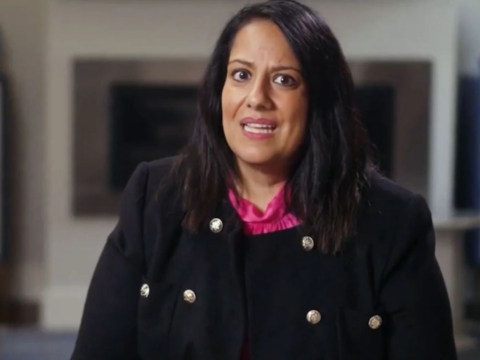
The night’s biggest breakthrough came in Florida, where Democrat Pia Dandiya defeated Republican Casey Askar in the state’s 22nd Congressional District, becoming the first South Asian American elected to represent Florida in Congress.
Dandiya, 39, a former educator and high school principal raised in Palm Beach County by Indian immigrant parents, won approximately 52% of the vote in a district redrawn earlier this year as part of Florida’s congressional redistricting process. The newly configured constituency had favored President Donald Trump in the 2024 election, making her victory particularly consequential in the national fight for control of the House of Representatives.
Her campaign emphasized affordability, education, healthcare and economic opportunity. Having previously served as a White House Fellow and worked in the technology sector, Dandiya presented herself as a candidate whose experience extended beyond traditional electoral politics.
Her victory was more than another Democratic pickup. For Florida’s substantial and growing Indian American population, it marked the arrival of the state’s first South Asian voice in the U.S. House.
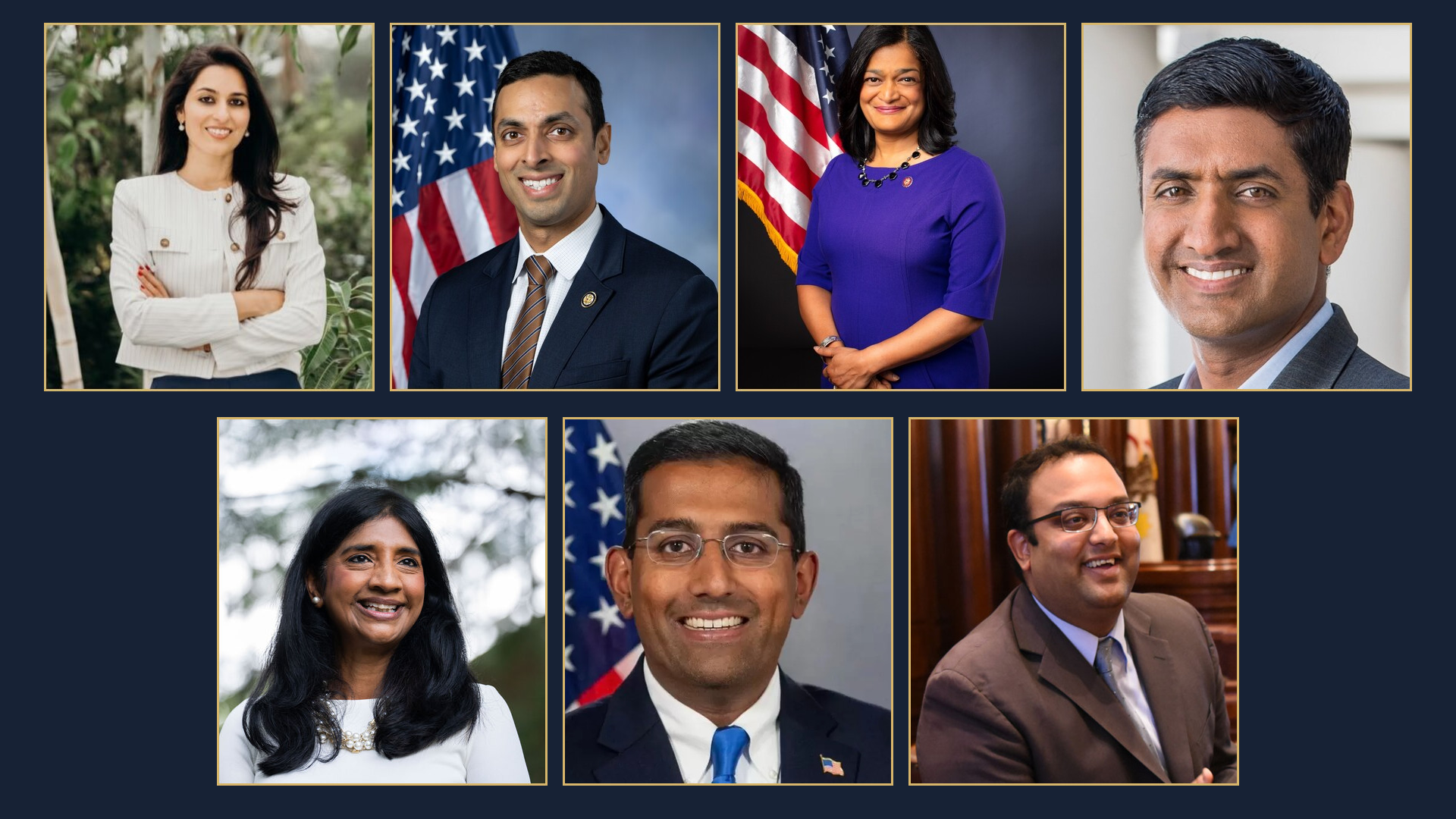
In Virginia, Democratic Representative Suhas Subramanyam comfortably secured a second term in the state’s 10th Congressional District, defeating Republican Dave Beckwith and independent candidate Ahsen Malik. Subramanyam, a former Obama administration adviser who previously served in both chambers of Virginia’s legislature, made history in 2024 as the first Indian American elected to Congress from Virginia.
His reelection consolidates his position in a district encompassing parts of Northern Virginia, one of the country’s most economically dynamic and ethnically diverse regions.
Maryland Lieutenant Governor Aruna Miller also won another four-year term alongside Democratic Governor Wes Moore. Miller, who became the first South Asian woman elected lieutenant governor in the United States in 2022, remains among the highest-ranking Indian American officeholders in the country.
Born in India and raised in the United States, Miller previously served in Maryland’s House of Delegates. Her continued presence in the state’s executive leadership represents an important milestone for a community historically underrepresented in statewide elected office.
On the West Coast, two of the country’s most prominent Indian American members of Congress secured projected victories.
Democratic Representative Ro Khanna won reelection in California’s 17th Congressional District, which includes portions of Silicon Valley, defeating Republican Ritesh Tandon. Khanna has developed a national profile through his work on technology, economic policy, manufacturing and congressional oversight.
In Washington state, Representative Pramila Jayapal was projected to win another term in the 7th Congressional District, defeating Republican Nirav Sheth. Jayapal, first elected in 2016, was the first Indian American woman to serve in the U.S. House and has become a prominent progressive voice on healthcare, immigration and economic policy.
The Jayapal–Sheth contest also reflected the ideological diversity of South Asian American political participation, with two candidates of Indian origin competing on opposing party tickets.
Beyond Washington, several South Asian American candidates recorded important victories or substantial election-night leads in state legislatures.
In Wisconsin, Democratic Attorney General Josh Kaul defeated Republican Eric Toney to win a third term as the state’s chief legal officer. Kaul, whose father immigrated from India, has held the position since 2019. His reelection preserves Indian American representation in a major statewide law enforcement and legal office in a closely contested battleground state.
In Pennsylvania, Democratic state Representative Arvind Venkat, an emergency physician, won reelection in House District 30 against Republican Libby Blackburn. Venkat became the first Indian American elected to Pennsylvania’s legislature in 2022 and has emphasized healthcare access, public health and patient protections during his tenure.
Illinois state Senator Ram Villivalam also secured another term representing District 8, continuing his service as one of the state’s prominent Indian American lawmakers.
Georgia delivered several particularly noteworthy developments.
Democratic state Representative Saira Draper won a state Senate seat in District 44, defeating Republican Ngozi Orabueze. Draper, who previously served in Georgia’s House of Representatives, will move to the upper chamber of the state legislature.
In Georgia House District 105, Democrat Farooq Mughal held a commanding lead over Republican incumbent Sandy Donatucci. With approximately 99% of the estimated vote counted, Mughal led by roughly 61% to 39%, positioning him to reclaim a seat he narrowly lost in 2024.
Another potentially historic Georgia result emerged in House District 97, where Democrat Jyot Singh led Republican Yassin Moghazy by approximately 68% to 32%, with more than 95% of the estimated vote counted.
A victory would make Singh Georgia’s first Sikh elected official, a milestone for the state’s Sikh and Punjabi American communities. Indian American Impact had identified Singh’s candidacy as a potential historic first earlier in the election cycle.
In Illinois, Democratic state Representative Nabeela Syed was leading Republican incumbent Darby Hills in the race for Senate District 26. Syed, who first attracted national attention when she won her state House seat in 2022 at age 23, was ahead by approximately 57% to 43% with more than 95% of estimated ballots counted.
If confirmed, her victory would move another young Indian American woman into a state legislature’s upper chamber.
In Texas, Democrat Pooja Sethi declared victory in the race for the open House District 47 seat against Republican Jennifer Mushtaler. Sethi, an attorney and former legislative chief of staff, would add another Indian American voice to the Texas Legislature. Her declaration awaited independent confirmation from election officials or major race-calling organizations.
Several other South Asian American candidates remained in closely watched contests as ballots continued to be counted.
In Arizona’s 1st Congressional District, Democratic physician and former state lawmaker Amish Shah led Republican Jay Feely, a former NFL kicker. Election-night figures showed Shah with approximately 55% of the vote against Feely’s 43%, with roughly three-quarters of the expected ballots counted. A confirmed victory would send another Indian American physician to Congress.
California Representative Ami Bera, one of the longest-serving Indian American members of Congress, was also leading his reelection contest in the state’s redrawn 3rd Congressional District.
In Los Angeles, Indian American City Councilmember Nithya Raman was competing against incumbent Mayor Karen Bass in a closely watched mayoral election. Born in Kerala, Raman has become a prominent figure in Los Angeles politics through her work on housing, homelessness and municipal policy.
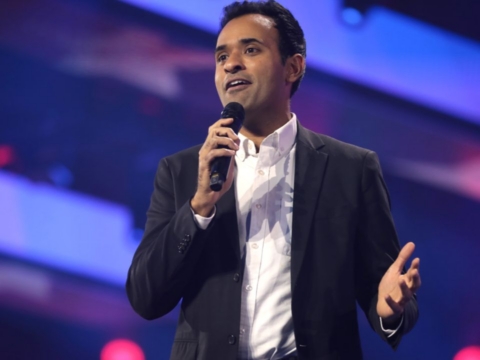
The results were not uniformly favorable to South Asian American candidates. In Ohio, Republican Vivek Ramaswamy, the biotechnology entrepreneur and former presidential contender endorsed by Trump, lost the governor’s race to Democrat Amy Acton. Republican Saritha Komatireddy also lost her challenge against incumbent New York Attorney General Letitia James.
The midterm results arrive amid a changing political environment for Indian Americans.
A Carnegie Endowment for International Peace and YouGov survey released just before Election Day found that 62% of Indian American citizens surveyed intended to support Democratic congressional candidates, compared with 19% who favored Republicans. The findings suggested a widening Democratic advantage within the community following Republican gains in 2024.
Organizations such as Indian American Impact have worked to increase South Asian American political participation through candidate endorsements, fundraising, advocacy and voter mobilization. The organization endorsed dozens of candidates in the 2026 cycle, including candidates for Congress, state legislatures, judicial positions and local offices.
As additional races are called and outstanding ballots are counted, the final number of South Asian American officeholders elected Tuesday will become clearer.