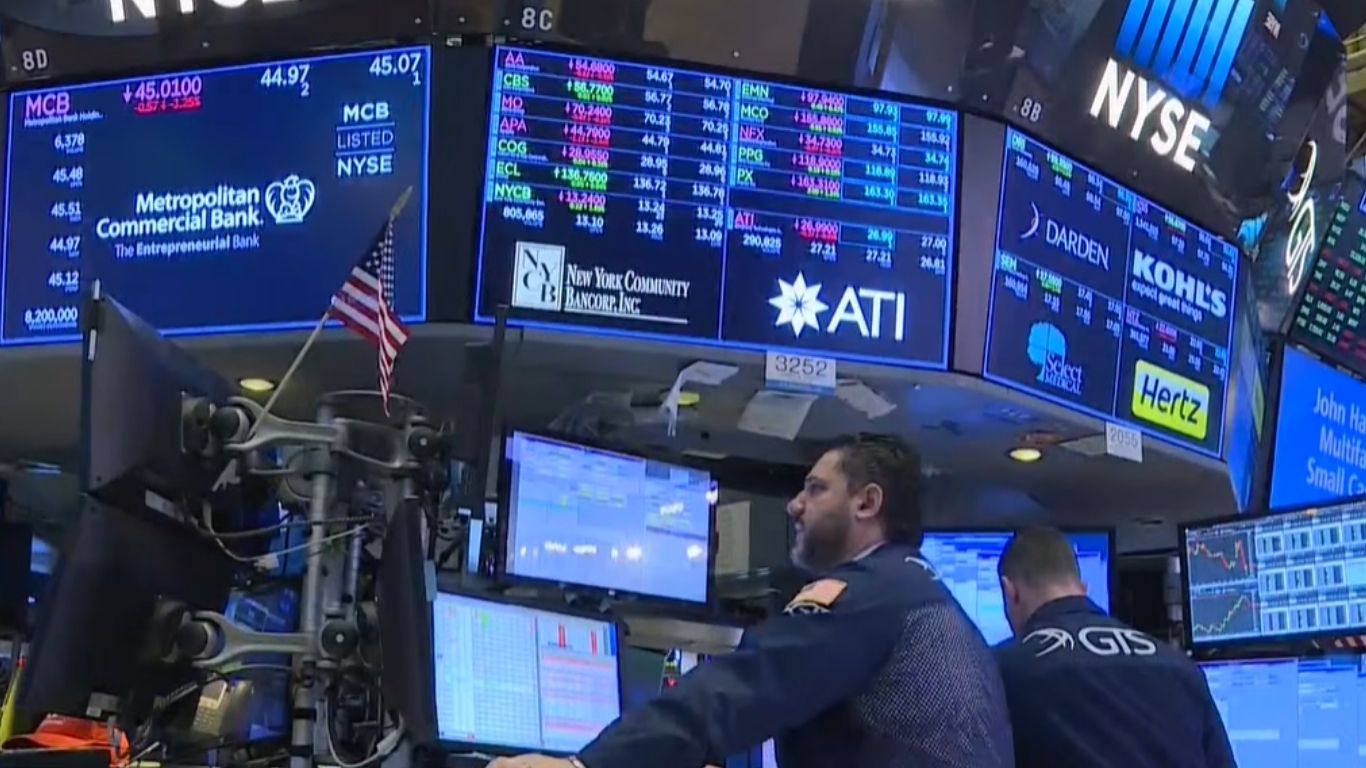
NEW YORK (Diya TV) — U.S. stocks surged Tuesday, posting their strongest gains in months as investor sentiment shifted from fear to cautious optimism over a possible end to the war with Iran. The rally pushed major indexes sharply higher and offered relief after weeks of volatility driven by geopolitical tensions and rising energy prices.
Wall Street delivered a powerful comeback. The S&P 500 jumped 2.9%, marking its biggest one-day gain since May. The Dow Jones Industrial Average soared 1,125 points, or 2.5%, while the Nasdaq composite climbed 3.8%.
The surge followed a steep drop earlier in the week. On Monday, concerns about the prolonged conflict had dragged the S&P 500 more than 9% below its record high set earlier this year. Investors responded quickly to signs that tensions could ease. Markets have swung sharply in recent weeks, reacting to every update tied to the conflict and its impact on global energy supplies.
Optimism grew after reports suggested the United States may be open to ending its military campaign against Iran. According to media reports, President Donald Trump signaled a willingness to halt operations even if the Strait of Hormuz remains partially restricted. Further support came from comments by Iran’s president, Masoud Pezeshkian, who indicated a readiness to end the war under certain conditions. These developments raised hopes that a resolution could be within reach. Investors viewed these signals as a potential turning point. Even tentative progress helped restore confidence in financial markets.
Oil prices dropped as hopes for de-escalation increased. Brent crude, the global benchmark, fell 3.2% to settle at $103.97 per barrel. U.S. crude declined 1.5% to $101.38 after earlier gains. Lower oil prices helped ease concerns about inflation. The conflict had threatened to disrupt supplies through the Strait of Hormuz, a critical route for global oil shipments. About one-fifth of the world’s oil passes through the narrow waterway.
Despite Tuesday’s decline, risks remain. Recent attacks on oil tankers highlight ongoing instability in the region. Any disruption could quickly send prices higher again. Higher energy costs have already affected economies worldwide. In Europe, inflation rose to 2.5% in March. In the United States, gasoline prices climbed above $4 per gallon for the first time since 2022, putting pressure on household budgets.
Technology stocks drove much of the rally. Chipmaker Marvell Technology surged 12.8% after announcing a major investment and partnership with NVIDIA. NVIDIA shares rose 5.6%, providing a strong boost to the broader market. Travel-related companies also benefited from falling fuel costs. United Airlines jumped 8.1%, while Norwegian Cruise Line gained 5.9%. Lower oil prices reduce operating expenses for these businesses, improving profit outlooks.
In another major move, Centessa Pharmaceuticals soared 44% after Eli Lilly announced plans to acquire the company. Lilly’s stock rose 3.7% following the news. Not all companies shared in the gains. McCormick fell 6.1% after announcing a major acquisition of food assets from Unilever in a deal valued at $44.8 billion.
The bond market also provided support. The yield on the 10-year Treasury note fell to 4.31% from 4.35% a day earlier. Lower yields can reduce borrowing costs for consumers and businesses, helping economic growth.
Yields had risen sharply in recent weeks due to fears that high oil prices would push inflation higher and delay interest rate cuts. Tuesday’s decline suggests investors see less pressure on prices if the conflict eases. Economic data released Tuesday added to the positive tone. Consumer confidence improved unexpectedly, and job openings remained higher than forecast, signaling resilience in the U.S. economy.
Markets outside the United States showed mixed results. European stocks rose, following Wall Street’s lead. However, Asian markets ended lower earlier in the day. South Korea’s Kospi dropped 4.3%, and Japan’s Nikkei 225 fell 1.6%. The divergence reflects ongoing uncertainty. Investors worldwide continue to monitor developments in the Middle East and their impact on global trade and energy supplies.
Despite Tuesday’s rally, risks remain. The situation in the Persian Gulf remains fragile, and any escalation could reverse gains quickly.