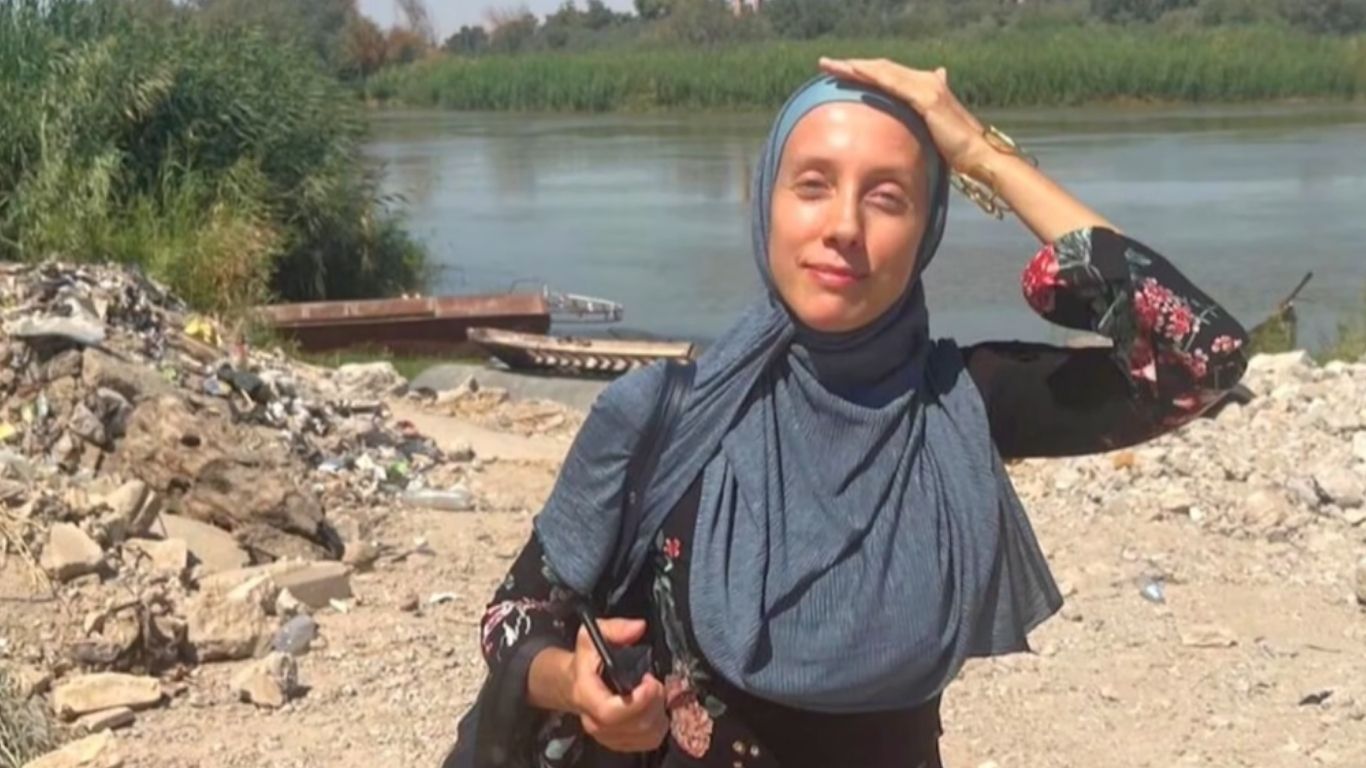
BAGHDAD, Iraq (Diya TV) — An American journalist was kidnapped in central Baghdad, Iraqi authorities confirmed, raising fresh concerns about the safety of foreign nationals amid rising tensions involving Iran-backed militias. Shelly Kittleson, a U.S. journalist, was abducted on March 31 in downtown Baghdad. Officials believe members of Kataib Hezbollah carried out the attack. The group is backed by Iran and is designated by the United States as a foreign terrorist organization.
The abduction took place on Al Saadoun Street, a busy area located across the Tigris River from Baghdad’s heavily fortified Green Zone. The zone houses key government institutions and the U.S. Embassy in Baghdad.
Videos circulating online appear to show Kittleson being forced into a vehicle by armed men. Iraqi media outlets reported that the incident unfolded quickly, with little chance for intervention by bystanders. The Iraqi Ministry of the Interior acknowledged the kidnapping and said security forces responded immediately. Authorities pursued the kidnappers and managed to intercept one of their vehicles.
According to officials, the chase led to a crash in Babil province, south of Baghdad. Security forces surrounded a vehicle used by the suspects, causing it to overturn as they tried to escape. Officers arrested one suspect and seized a vehicle connected to the crime. However, Kittleson was no longer in that car. Officials said the kidnappers had already transferred her to another vehicle, which managed to flee the scene. Despite early progress, authorities have not yet secured her release. The ministry described the attackers as “unknown individuals,” though U.S. officials have pointed to militia involvement.
The U.S. State Department confirmed it is aware of the kidnapping and is closely monitoring the situation. Dylan Johnson, assistant secretary of state for global public affairs, said Iraqi authorities had detained a suspect linked to Kataib Hezbollah.
Johnson stated that U.S. officials had previously warned Kittleson about potential threats. Intelligence suggested that Iran-aligned militias were targeting journalists, particularly women. Alex Plitas, a senior fellow at the Atlantic Council, also confirmed that Kittleson had been alerted. Plitas served as her designated U.S. point of contact and said the militia had shown interest in kidnapping or killing female journalists.
The kidnapping comes amid escalating security risks in Iraq. Iran-backed militias, including Kataib Hezbollah, have increased attacks on U.S. military and diplomatic targets since late February. In response, the U.S. government issued an evacuation advisory on March 3, urging American citizens to leave Iraq. Officials cited growing threats to U.S. personnel and interests in the region. The incident highlights the dangers faced by journalists working in conflict zones. Baghdad, while more stable than in previous years, still sees periodic violence linked to militia activity.
Kataib Hezbollah has a history of targeting foreign nationals. In March 2023, the group kidnapped Elizabeth Tsurkov, a researcher affiliated with Princeton University. Tsurkov, a Russian-Israeli citizen, was held for more than 900 days. She was released in September 2025 after diplomatic efforts by the U.S. government. The case drew international attention and highlighted the risks posed by non-state armed groups in Iraq. Analysts say such kidnappings serve multiple purposes. Militias may use hostages as bargaining tools or to send political messages.
Iraqi security forces continue to search for Kittleson. Authorities have not released details about her current location or condition. Officials say the investigation remains active, and additional arrests may follow. The U.S. government has pledged to work with Iraqi authorities to secure her safe return. Meanwhile, press freedom organizations have expressed concern and called for immediate action.