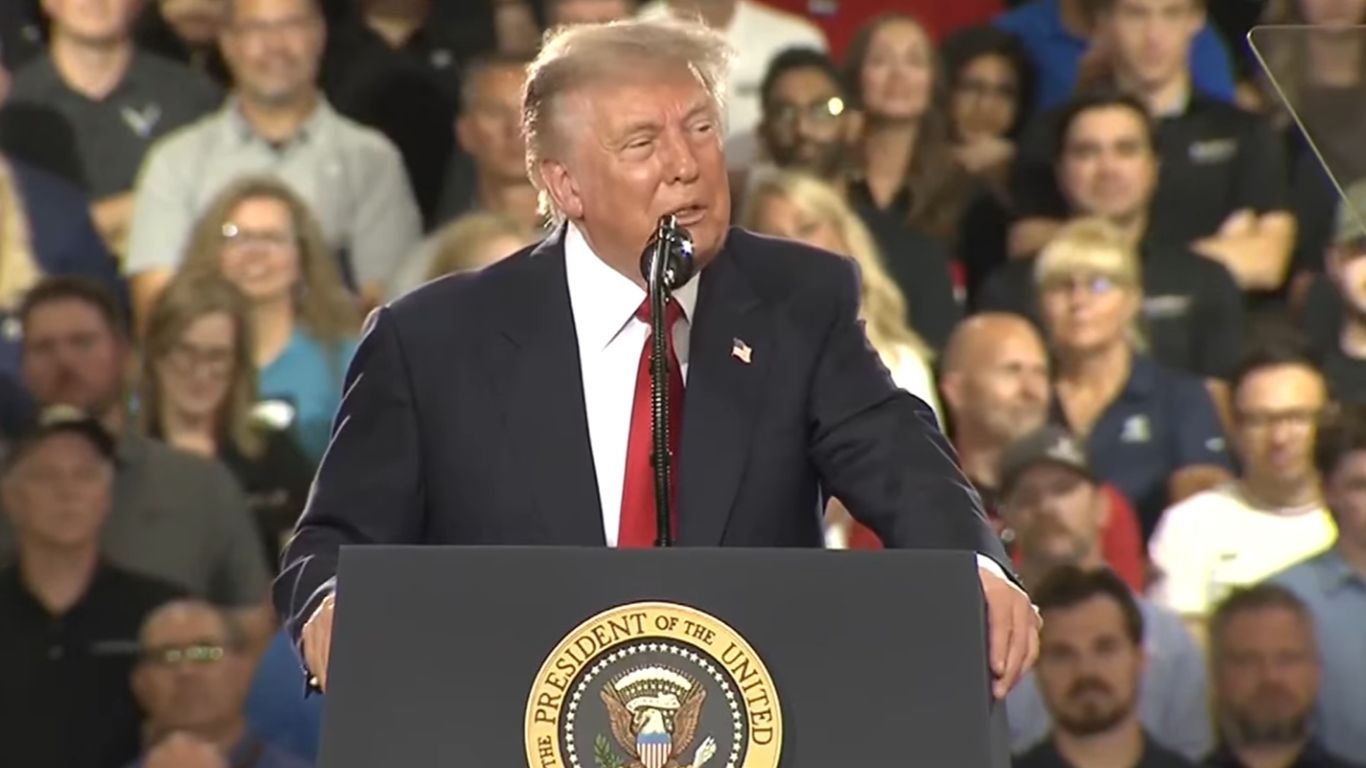
WASHINGTON (Diya TV) — President Donald Trump’s recent address to the nation, in which he alleged Chinese interference in American elections, has renewed attention on Beijing’s influence efforts across the United States. Although Trump’s claims remain unproven, public records show that Chinese government agencies, state-backed media outlets and major companies have spent millions of dollars on lobbying and foreign influence activities in recent years.
Federal records filed under the Foreign Agents Registration Act, or FARA, offer a partial view of those efforts. Meanwhile, lobbying disclosures submitted to Congress reveal additional spending by Chinese companies that describe their work as commercial rather than political. Together, the filings provide insight into how Chinese interests seek to shape public opinion, government policy and business decisions in the United States.
The U.S. Department of Justice recorded more than $20 million in FARA-related spending by private Chinese and Hong Kong-based entities during 2025. In addition, Chinese government organisations reported nearly $80 million in FARA expenses over the same period. However, experts note that these filings do not capture every influence activity linked to Beijing.
The debate also extends beyond registered organisations. Some groups, including the Chinese Students and Scholars Association, have drawn scrutiny from U.S. officials because of alleged links to the Chinese government. However, these organisations do not register under FARA. Likewise, critics argue that networks connected to China’s United Front Work Department often operate outside public disclosure requirements.
China rejected the allegations. A spokesperson for the Chinese Embassy said Beijing supports exchanges in trade, education and culture to strengthen mutual understanding. The spokesperson also argued that describing these activities as influence operations misrepresents legitimate international cooperation.
Chinese state media remain one of Beijing’s most visible tools in the United States. The U.S. State Department estimated in 2023 that China spends billions of dollars each year on global information campaigns. In the United States, five Chinese media organisations currently operate under FARA registration, including CCTV, Xinhua News and China Daily.
Court filings reviewed by Fox News Digital show that CCTV provided about $66.8 million in funding to CGTN America between February and November 2025. During that period, CGTN published reports on climate change, immigration, racial issues and the war in Gaza. The network also criticised Trump’s tariff policies and praised California Gov. Gavin Newsom on several occasions.
Academic researchers have argued that CGTN focuses less on influencing elections and more on shaping perceptions of the United States and China. A 2022 study from King’s College London concluded that the network often portrays America as unstable while presenting China as a stable and responsible global power.
Chinese officials rejected those characterisations. The embassy spokesperson said Chinese media organisations operate lawfully and criticised claims that they function as propaganda tools or foreign influence platforms.
Lobbying by Chinese companies has also drawn increasing attention in Washington. Several Chinese firms maintain active FARA registrations, including Huawei, Hikvision, BOE Technology America, Yangtze Memory Technologies, Futurewei Technologies, XH Smart Tech China and JinkoSolar. Other companies report their activities under the Lobbying Disclosure Act instead of FARA because they describe their work as commercial advocacy.
Hikvision provides one example. The video surveillance company faces U.S. sanctions over allegations that it supported human rights abuses against Uyghur Muslims in China. The company has hired American lobbying firms to urge officials to remove those restrictions. Because Hikvision files under FARA, the public can review many of its communications with government agencies.
Tencent has also increased its lobbying presence. The technology company has spent more than $10 million on lobbying since 2025, according to disclosure records. Earlier this year, the Pentagon added Tencent to its list of Chinese military companies. Tencent denied the designation and said it plans to seek reconsideration while pursuing discussions with the U.S. Department of Defense.
Some lawmakers continue to push for stricter oversight. Sen. Tom Cotton and other China critics argue that certain companies should register under FARA instead of the Lobbying Disclosure Act. They say stronger disclosure rules would give Americans a clearer picture of foreign influence activities.
China also promotes trade and investment through organisations such as the China Council for the Promotion of International Trade. The council reports receiving funding from Beijing to strengthen business ties between China and the United States. However, some researchers argue that the organisation also supports broader Chinese diplomatic goals. Chinese officials strongly reject that claim and maintain that its work focuses solely on expanding international trade and economic cooperation.