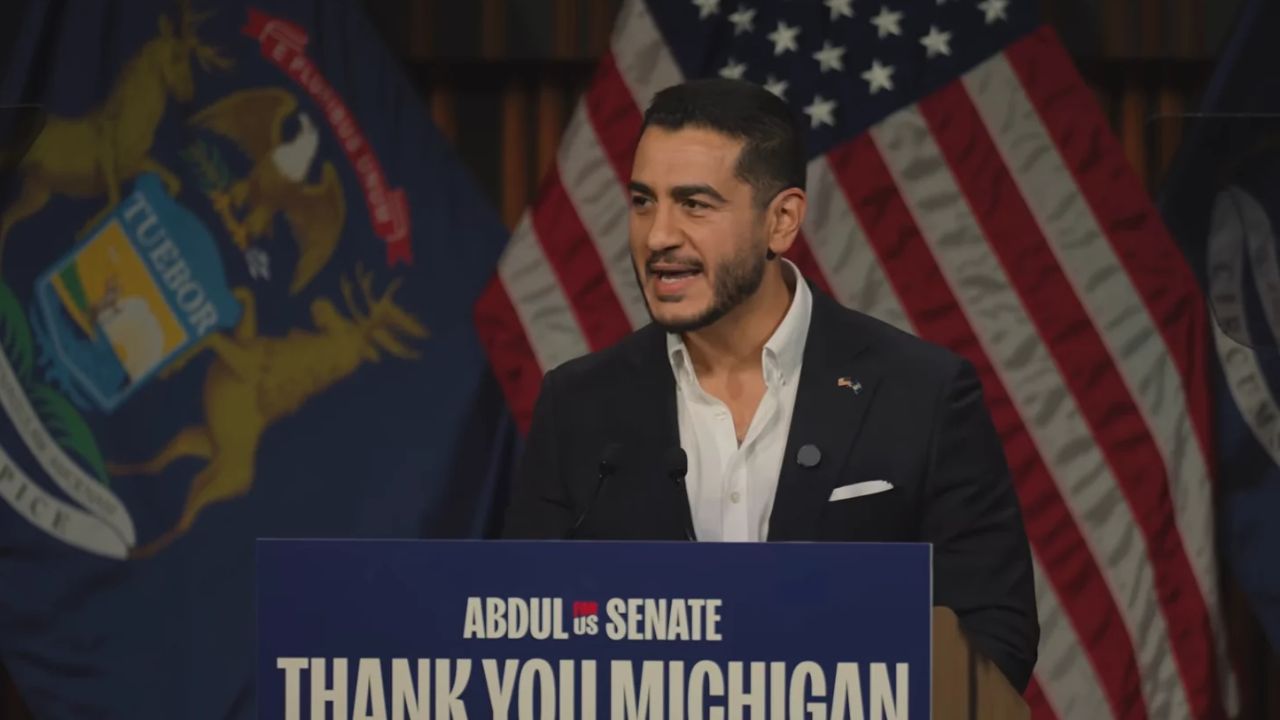
WASHINGTON (Diya TV) — Sen.-elect Abdul El-Sayed said the United States should not fund Pakistan’s military, linking the issue to his broader argument that Washington should apply the same standards to governments it supports.
El-Sayed made the comment Sunday on NBC’s Meet the Press during a discussion about Israel’s identity as a Jewish state. Host Kristen Welker asked him to clarify earlier remarks that Israel should guarantee equal rights to all citizens without defining itself by a particular faith or culture. She cited Pakistan, an Islamic republic, and Denmark, whose constitution recognizes the Evangelical Lutheran Church, and asked why Israel should give up its Jewish identity.
“I don’t believe in ethnostates generally,” El-Sayed replied. “I don’t think we should be in the business of funding the military of Pakistan either.” He said he wanted to apply his ideals consistently, then called for equal rights, peace and self-determination for Palestinians and Jewish Israelis.
His answer did not lay out a specific plan to end U.S. assistance to Pakistan. He named no program, funding amount or proposed legislation.
Federal data provide context for the statement. The latest fully reported figures show the United States obligated about $195.8 million in assistance for Pakistan in fiscal 2025. The government database classifies 2% as military assistance and 98% as economic assistance. Those figures cover multiple programs and do not indicate that all assistance went directly to Pakistan’s military.
El-Sayed’s position extends beyond Pakistan. In a separate interview earlier in the week, he called for an end to unconditional U.S. military aid to Israel, Egypt, Saudi Arabia and Pakistan. On Meet the Press, he connected that stance to his belief that Washington should expect governments receiving American support to uphold democratic principles and equal rights.
El-Sayed won Michigan’s open Senate seat in November and will take office in January. His comments preview his approach to foreign assistance, but he has not yet detailed how he would seek to change U.S. funding for Pakistan.