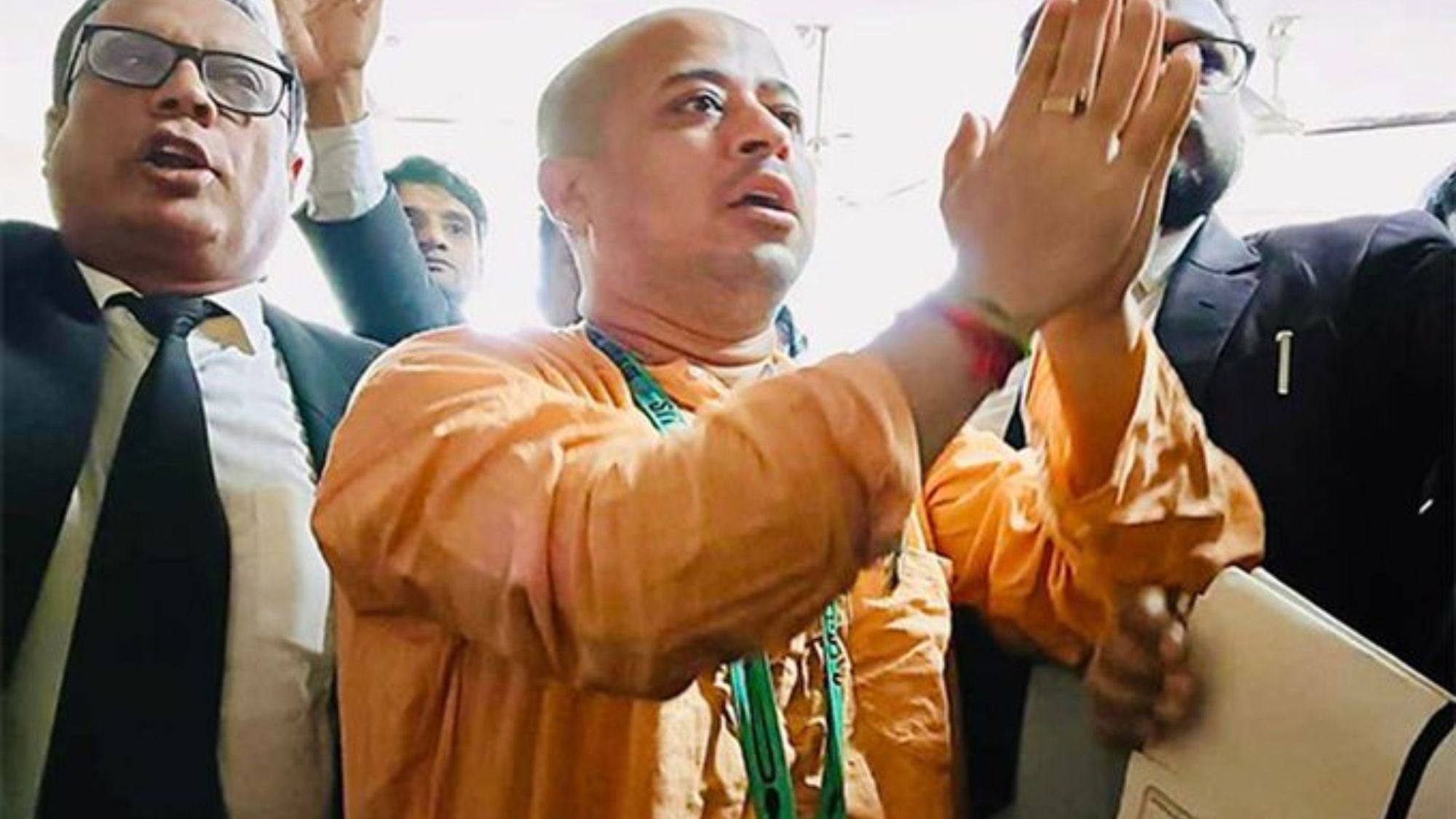
CHITTAGONG, Bangladesh (Diya TV) — Hindu spiritual leader Chinmoy Krishna Das was granted bail on Wednesday, April 30, by the Bangladesh High Court, five months after his controversial arrest on charges of defaming the national flag sparked protests and strained diplomatic relations with India.
The two-judge bench, comprising Justice Md Atoar Rahman and Justice Md Ali Reza, made absolute its earlier rule asking authorities to explain why Das should not be granted bail. The final hearing concluded with the court ordering his release, according to court officials.
Das, 39, was taken into custody on November 25, 2024, at Dhaka’s Hazrat Shahjalal International Airport. A case filed earlier on October 31 at Kotwali Police Station in Chattogram accused Das and 18 others of disrespecting Bangladesh’s national flag during a religious event. He was remanded the next day by a magistrate in Chattogram after his initial bail plea was rejected.
A former leader of ISKCON (International Society for Krishna Consciousness) and current president of Pundarik Dham, Das has long been known for his advocacy of religious freedom and protection of minority rights. He also serves as a spokesperson for the Sammilito Sanatani Jagaran Jote, a Hindu organization in Bangladesh.
His arrest ignited a wave of protests across Dhaka and other parts of the country. Demonstrations turned violent in Chattogram on November 27, resulting in the fatal stabbing of assistant government prosecutor Saiful Islam Alif just hours after Das was sent to jail (The Hindu, Nov. 27, 2024). The killing sparked a counter-campaign demanding a ban on ISKCON, although the organization publicly stated Das had been removed from all roles over six months prior.
The situation took on international dimensions when India’s Ministry of External Affairs (MEA) voiced concern on November 26, stating the charges against Das were “unfortunate” given his peaceful methods of protest. “It is unfortunate that while the perpetrators of attacks on minorities remain at large, charges are pressed against a religious leader presenting legitimate demands through peaceful gatherings,” the MEA said in an official statement.
The MEA further referenced widespread violence against minorities in Bangladesh, including “arson, looting of minority-owned properties, theft, vandalism, and desecration of temples and deities,” warning that such unchecked incidents threaten the region’s communal harmony.
The legal defense team for Das, led by former Deputy Attorney General Apurba Kumar Bhattacharya, consistently argued that the accusations were baseless. “The flag in question was not the national flag,” Bhattacharya said, adding that the case lacked merit and should not proceed. A total of 11 Supreme Court lawyers represented Das after several legal professionals reportedly declined involvement due to political pressure.
Das, born in May 1985 in Karianagar village in Satkania Upazila of Chattogram, took diksha (religious initiation) at age 12 and rose to prominence as a child orator within ISKCON by the late 1990s. Though no longer affiliated with the organization, he remains a prominent figure among Bangladesh’s Hindu minority.
His release comes in the wake of sweeping political change in Bangladesh. Just months earlier, Prime Minister Sheikh Hasina was ousted in a student-led movement on August 5, 2024. Former Nobel laureate Muhammad Yunus was appointed Chief Adviser of the interim government on August 8. Das’s case became a flashpoint in the political and religious landscape that followed the leadership transition.
As of now, it remains unclear whether the charges against Das will be formally dropped. However, his release marks a significant development in the broader struggle for minority rights and freedom of expression in Bangladesh.