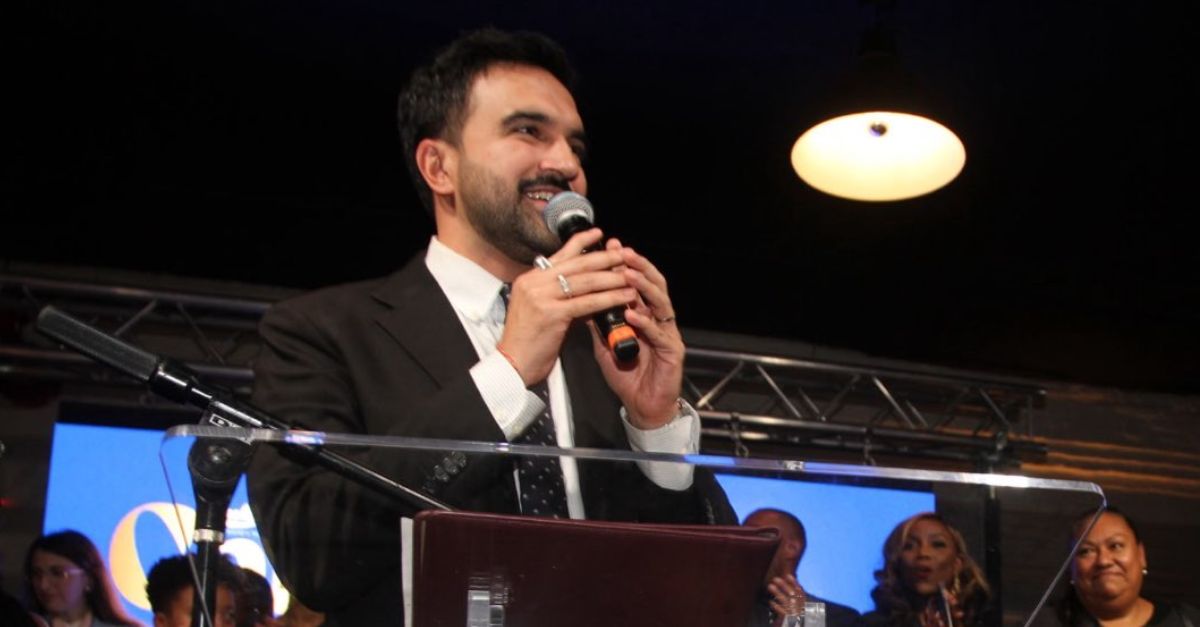
NEW YORK (Diya TV) — Zohran Mamdani’s victory in the New York mayoral race has deepened political divides among Jewish voters, highlighting a generational split that could reshape the city’s politics for years. Zohran Mamdani, a 34-year-old Democratic socialist and Muslim immigrant, won the mayoral race in a stunning upset over former Governor Andrew Cuomo, who ran as an independent.
Mamdani’s campaign focused on housing affordability, rising living costs, and economic inequality — issues that resonated strongly with younger and progressive voters across the city. But his outspoken support for Palestinians and criticism of Israel’s actions in Gaza fueled controversy. Accusations of antisemitism shadowed his campaign, though he repeatedly rejected them.
New York City is home to the largest Jewish population outside Israel, long a pillar of Democratic support. Yet Mamdani’s win revealed a widening divide between older Jewish voters and younger progressives within the community. A Pew Research Center poll last year found that only half of Jewish Americans under 35 approved of Israel’s handling of the Gaza war. In contrast, 68% of those aged 50 and older said Israel’s actions were acceptable.
Exit polls showed that about one-third of Jewish voters backed Mamdani — a striking figure in a community where many traditionally support moderate Democrats.
“The morning after the election, many members of our community woke up with a sense of unease,” said Hindy Poupko, senior vice president at the UJA-Federation of New York. “There’s a lot of uncertainty about how Mayor Mamdani might act once in City Hall.”
Soon after the election, antisemitic graffiti appeared on a Brooklyn Jewish day school. Mamdani swiftly condemned the act, vowing on social media to “stand steadfast with our Jewish neighbors to root the scourge of antisemitism out of our city.”
Despite his condemnation, some Jewish leaders remain wary. Critics point to his refusal to denounce the phrase “globalize the intifada,” which some interpret as a call for violence. According to a New York Times report, Mamdani privately told business leaders he would not use the slogan and would discourage others from doing so.
Mamdani has also voiced support for the Boycott, Divestment, Sanctions (BDS) movement, which calls for economic and cultural boycotts of Israel — a stance that has divided Jewish voters. The Anti-Defamation League (ADL) responded by launching a “Mamdani Monitor” to track his appointments and policies for potential harm to the Jewish community. “Our job is quite simple — to protect the Jewish people,” said ADL CEO Jonathan Greenblatt.
Republicans have seized on Mamdani’s election to court Jewish voters ahead of next year’s midterms. Former President Donald Trump criticized Jewish voters who supported Mamdani, calling them “stupid.” GOP strategist Ford O’Connell said Mamdani’s rise “could rewrite the playbook for Republicans” seeking to strengthen their hold on Congress.
At the same time, the Republican Party continues to face its own internal battles over antisemitism. After right-wing commentator Tucker Carlson hosted white nationalist Nick Fuentes on his podcast, lawmakers like Sen. Ted Cruz condemned the move as “garbage” that harms the party’s image.
Not all Jewish voters view Mamdani’s victory with fear. Many younger, progressive Jews celebrated his win as a sign of political change.
“I support Mamdani not despite his views on Israel and Palestine but because of them,” said Roni Zahavi-Brunner, 26, an Israeli-born volunteer who canvassed for his campaign. “Speaking out against genocide shouldn’t be controversial.”
Others, like Alison Devlin of Manhattan’s Upper East Side, expressed anxiety. “I feel deflated,” said Devlin, 50. “I am openly Jewish and openly Zionist. I don’t know what is going to happen. I don’t know if I’m staying in the city after this.”
Still, voices within the Jewish community urge patience and cooperation. Rabbi Andrue Kahn of Brooklyn said Mamdani has repeatedly shown commitment to fighting antisemitism. “Let’s give him a chance to prove that his commitment is real and build cross-community solidarity that makes all New Yorkers safer,” Kahn said.
Mamdani’s victory signals more than a generational shift — it marks a turning point in how New Yorkers view the intersection of faith, identity, and politics. His success reflects a growing appetite for progressive change among younger voters, including many Jews who no longer see Israel as a defining political issue.