
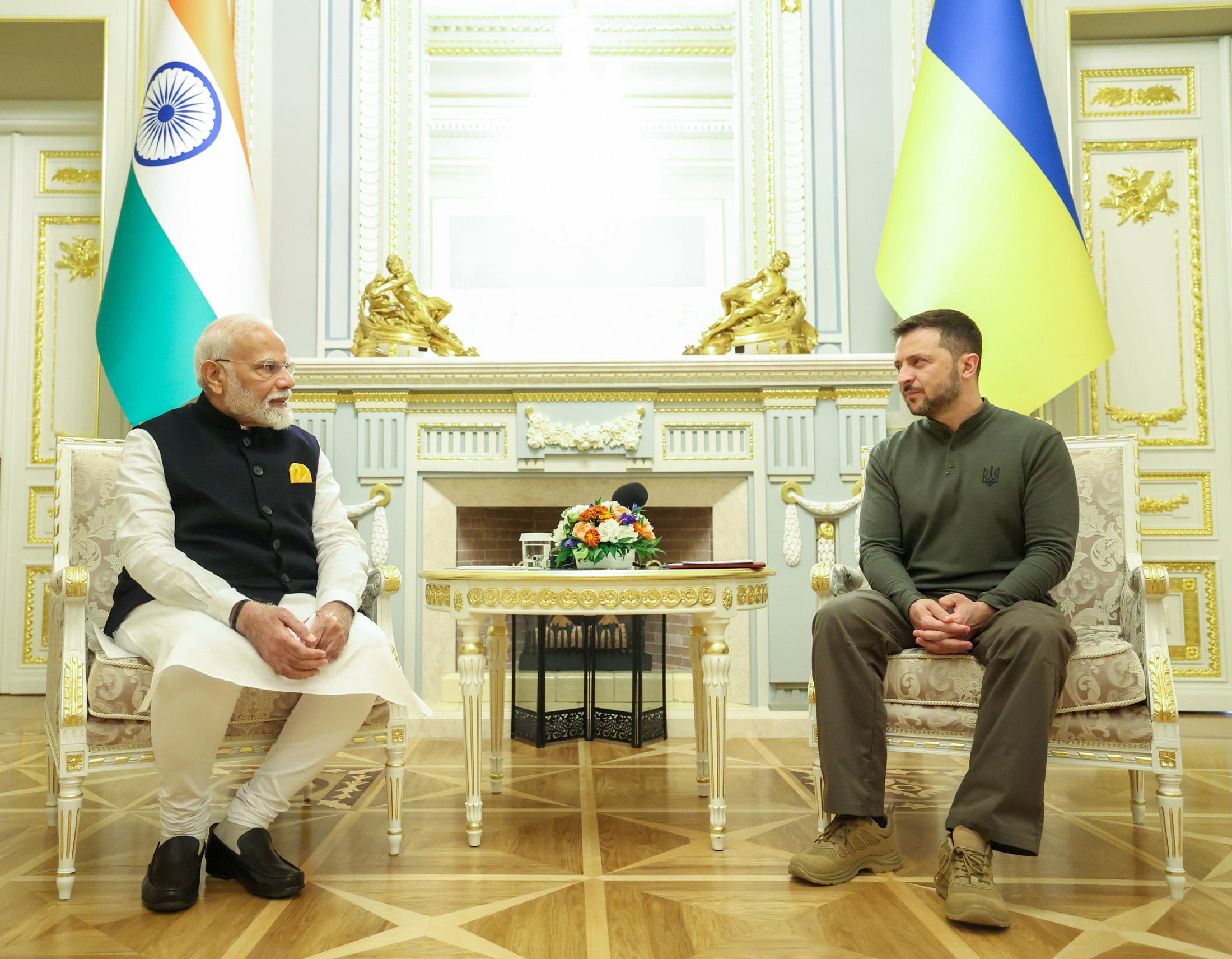
KYIV, Ukraine (Diya TV) — Ukrainian President Volodymyr Zelenskyy urged Indian Prime Minister Narendra Modi to help secure food corridors through the Black Sea, linking the proposal to renewed U.S.-mediated talks between Ukraine and Russia in Abu Dhabi.
The two leaders spoke Monday, Nov. 9, as Ukrainian and Russian delegations prepared to meet with U.S. negotiators. Zelenskyy said he briefed Modi on the diplomatic process and discussed Russia’s obstruction of grain exports through the Black Sea. He said India was ready to mediate efforts to establish food corridors and that their teams would stay in contact.
India’s public statement after the call described Modi’s offer more broadly: he said India would contribute to efforts for a peaceful resolution and reiterated that the conflict should end through dialogue and diplomacy. On Tuesday, however, India’s foreign ministry confirmed it had exchanged ideas with both Russia and Ukraine about food corridors. Spokesperson Randhir Jaiswal said India was also discussing safe shipping in the Black Sea, grain and energy exports, and possible arrangements to stop attacks on infrastructure. He did not announce an agreement or provide details of a proposed corridor.
The diplomatic outreach coincided with the start of trilateral talks in Abu Dhabi on Tuesday. The first session between Russian, Ukrainian and U.S. negotiators lasted about four hours, and officials scheduled another round for Wednesday. Zelenskyy said Kyiv would propose de-escalation measures and seek a path toward a meeting between the countries’ leaders.
The Abu Dhabi discussions opened with humanitarian issues, including prisoner exchanges, the return of Ukrainian civilians held in Russia and children taken from Ukraine. Delegates also discussed security guarantees. The first day produced no announced breakthrough, and the two governments remain divided over territory, Ukraine’s military and the terms of a ceasefire.
India’s effort extends beyond the Zelenskyy call. On Monday, External Affairs Minister Subrahmanyam Jaishankar spoke with Russian Foreign Minister Sergey Lavrov about diplomatic initiatives. India’s foreign ministry said it had raised its proposals with both governments and other interested parties. The proposals cover commercial shipping safety, grain and energy exports, and avoiding attacks on infrastructure.
The Black Sea route matters because Ukraine ranks among the world’s major producers and exporters of wheat, corn and sunflower oil. Russia withdrew from the U.N.-brokered Black Sea Grain Initiative in July 2023. Ukraine later restored commercial traffic through its own corridor, but attacks on ports and vessels disrupted the route again. By August 2026, Ukraine had rerouted 90% of its grain and oilseed exports through European Union land and river routes, according to EU figures.
The disruption reaches far beyond Ukraine’s economy. Grain shipments help supply import-dependent countries, and interruptions can tighten markets and raise costs. Zelenskyy said blocked sea routes hurt the global economy and people in countries that depend on food imports. India has framed shipping and export access as part of its wider push to address food and energy security.
Zelenskyy presented India as a potential mediator in setting up the corridors. India’s confirmation that it has exchanged ideas with Moscow and Kyiv gives the proposal a firmer public footing, but officials have not disclosed what either side would accept or how a corridor would operate. With negotiations underway and Black Sea traffic still sharply constrained, the proposal remains a diplomatic effort rather than an agreed reopening plan.


