AUSTIN, Texas (Diya TV) — A drone boat developed by a defense technology company co-founded by Indian American engineer Vibhav Altekar played a key role in what the U.S. military says was its first personnel rescue mission using an autonomous surface vessel.
The operation took place near the Strait of Hormuz after two U.S. Army personnel were forced into the water when their Apache helicopter crashed during a mission in the region. Military officials said rescuers recovered the service members within about two hours and transported them to safety.
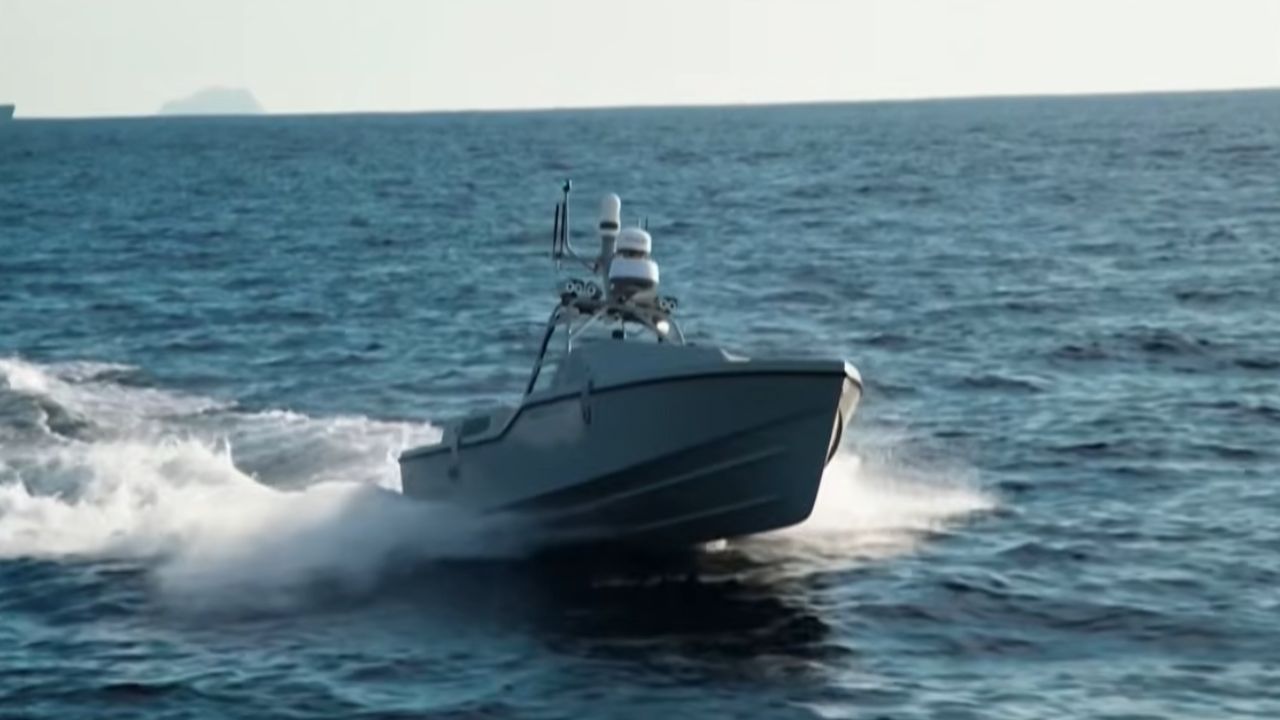
The mission marks a major milestone for autonomous maritime technology and highlights the growing role of unmanned systems in military operations. The rescue marked the first time the U.S. military used an autonomous surface vessel to recover personnel at sea. The vessel, known as the Corsair, is a 24-foot autonomous boat designed for high-speed operations. It can travel at speeds of up to 35 knots and carry payloads of up to 1,000 pounds. The craft also has a range of more than 1,000 nautical miles.
The U.S. Navy remotely operated the Corsair through Task Force 59, a unit focused on integrating unmanned technologies into maritime missions. Capt. Tim Hawkins described the operation as a major step forward for autonomous maritime systems. He said the mission demonstrated that unmanned vessels can move beyond surveillance roles and support life-saving operations in real-world conditions.
The Corsair was developed by Saronic Technologies, a defense technology company founded in 2022 in Austin, Texas.
Former Navy SEAL Dino Mavrookas, Indian American engineer Vibhav Altekar, and other founders launched the company to build autonomous maritime defense platforms. Since its launch, Saronic has grown rapidly. The company secured a $392 million production contract with the U.S. Navy to develop autonomous surface vessels.
The successful rescue mission highlights how the Corsair has evolved from a startup project into an operational military asset. Defense experts view autonomous vessels as a way to extend naval capabilities while reducing risks to personnel. The Corsair can operate in contested waters and support a wide range of missions. These include surveillance, logistics, reconnaissance, and emergency response operations.
Altekar serves as chief technology officer at Saronic Technologies. He oversees the company’s autonomous systems, software architecture, and advanced navigation technologies.
He earned his engineering education at the University of California and built a career focused on robotics, machine learning, and autonomous systems. Before joining Saronic, Altekar worked at Anduril Industries. There, he contributed to advanced defense projects, including the Royal Australian Navy’s Ghost Shark autonomous submarine program.
His work centers on perception systems, navigation technology, and software integration. These capabilities help autonomous vessels operate safely in complex maritime environments. Industry observers credit Altekar and his team with helping advance autonomous maritime technologies used by the U.S. Department of Defense.
The helicopter crash occurred during patrol operations aimed at restricting Iranian maritime activity in the region. U.S. officials blamed Iran for the downing of the Apache helicopter. The incident increased tensions in an already volatile area.
Following the crash, the United States launched airstrikes against Iranian targets. Iran responded with attacks targeting locations in Bahrain, Kuwait, and Jordan. The exchange raised concerns about a broader regional conflict and added pressure to diplomatic efforts aimed at preserving a fragile ceasefire.