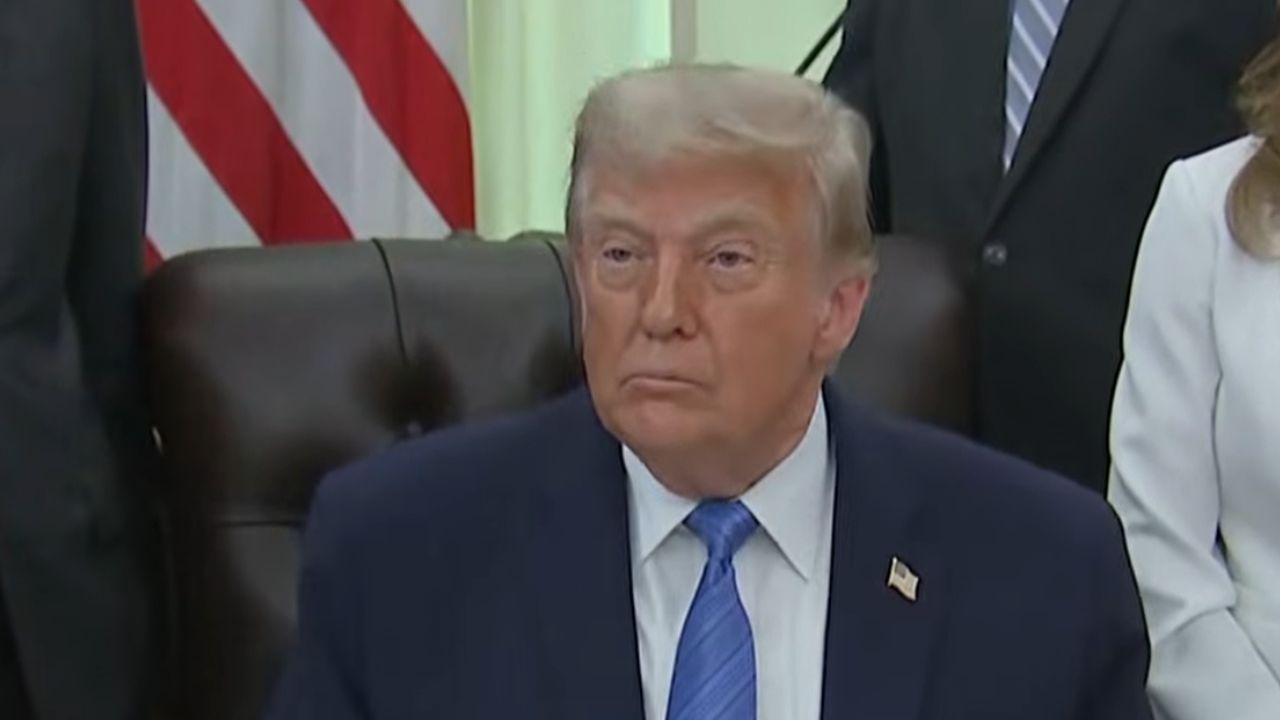
WASHINGTON (Diya TV) — President Donald Trump on Friday accused Iran of launching a failed drone attack against Indian ships departing the Strait of Hormuz, calling the alleged action “totally unacceptable” as tensions continued to rise in one of the world’s most important shipping routes.
Trump made the remarks in a post on Truth Social. He claimed Iran attempted a drone strike against Indian vessels leaving the strategic waterway but said the attack failed.
“Their total rebuffed Drone attack last night against Indian Ships leaving the Hormuz Strait is TOTALLY UNACCEPTABLE,” Trump wrote. “They’d better get their act together, and FAST!”
Trump did not identify the vessels involved. Iranian officials had not publicly responded to the allegation at the time of publication.
Meanwhile, India increased diplomatic pressure following a series of attacks on commercial ships near the coast of Oman. The Ministry of External Affairs summoned U.S. Chargé d’Affaires Jason Meeks for the second time this week. Indian officials raised concerns over attacks that affected merchant vessels carrying Indian crew members.
The latest diplomatic move followed the deaths of three Indian sailors aboard a tanker struck earlier this week. According to Indian authorities, several vessels with Indian crew members have come under attack in waters near Oman during recent days.
One of the incidents involved the tanker Settebello, which carried 24 Indian sailors. Three crew members died after the vessel was hit during an attack. Another ship, Jalveer, carried 20 Indian crew members when it also came under attack. Indian officials have expressed concern over the safety of thousands of seafarers operating in the region.
As a result, India’s Directorate General of Shipping issued a fresh security advisory. The agency urged nearly 18,000 Indian seafarers working around the Strait of Hormuz and the Gulf of Oman to remain on high alert and follow enhanced safety measures. At the same time, Iran strongly criticized U.S. military actions in the region. Iranian Foreign Ministry spokesperson Esmaeil Baqaei condemned attacks on merchant vessels and said such actions threaten international peace and security.
Baqaei also offered condolences to the families of the three Indian sailors who lost their lives. He extended sympathy to the Indian government and people while calling for greater protection of civilian shipping. The exchange of accusations came as Washington and Tehran continued to present conflicting accounts of ongoing negotiations aimed at easing regional tensions.
In another part of his social media statement, Trump accused Iran of leaking inaccurate details about a proposed agreement between the two countries. He argued that public reports did not reflect the actual terms discussed during negotiations.
“The terms that Iran leaked out to the Fake News have NOTHING to do with the terms that were agreed to, in writing,” Trump said.
He also criticized Iranian officials, saying their public statements about a potential agreement did not match the facts and showed a lack of good-faith negotiation. Reports from Iranian media outlets suggested that a draft framework for a possible peace agreement remains under discussion. According to those reports, the proposal includes sanctions relief, the release of frozen Iranian assets, and a temporary period of negotiations following the signing of a memorandum of understanding.
The reported framework also calls for reopening the Strait of Hormuz, a key shipping lane that handles a significant share of global energy exports. However, Iranian officials have stated that no final agreement has received approval.
Additionally, reports indicated that the draft proposal does not introduce new restrictions on Iran’s nuclear program during the initial phase of talks. That issue would likely remain a central topic in future negotiations. A White House official offered a different view on Friday. The official said Iran had agreed to dismantle its nuclear program and destroy nuclear material as part of a broader agreement with the United States. The official also said Iran would not gain access to frozen funds until it fulfilled its commitments under a performance-based arrangement.
Despite growing optimism from some officials, major differences remain between the public positions of Washington and Tehran. As negotiations continue, uncertainty surrounds both the future of the proposed agreement and the security situation in the Strait of Hormuz. For now, rising maritime tensions and competing claims from both sides continue to draw international attention, especially as global trade and regional stability remain at stake.