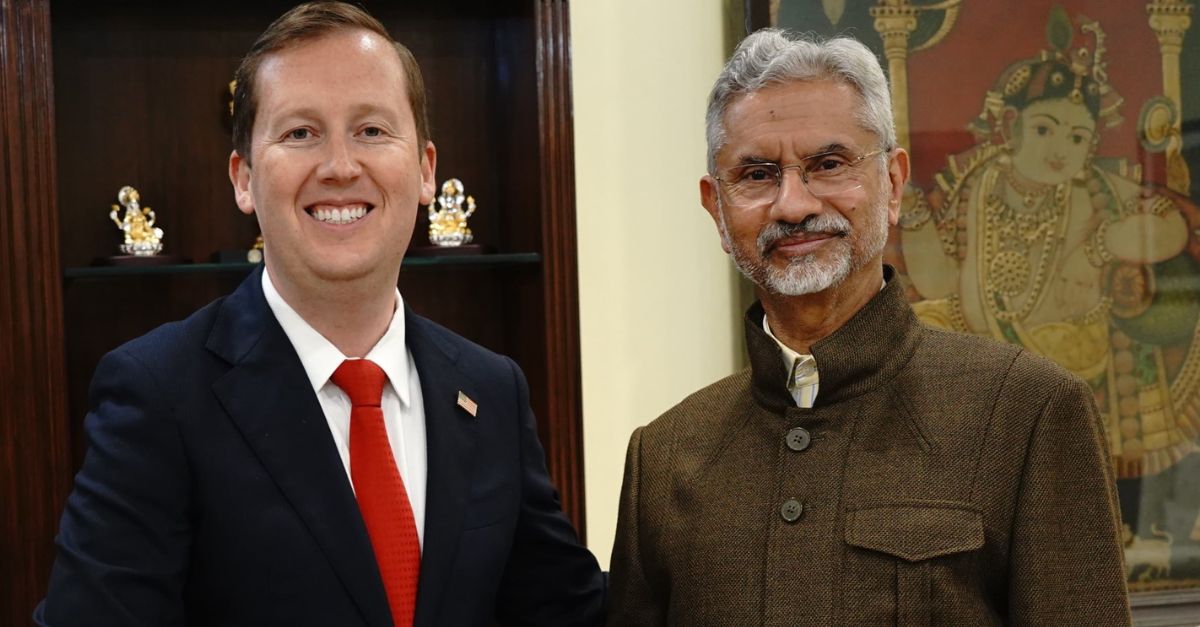
NEW DELHI, (Diya TV) — United States and India moved to deepen their strategic partnership this week as Indian External Affairs Minister S. Jaishankar held wide-ranging talks with U.S. Ambassador to India Sergio Gor ahead of Jaishankar’s planned visit to Washington. The discussions focused on trade, defense, and critical minerals, areas that both countries see as central to their long-term cooperation. The meeting comes at a key moment for India-U.S. relations, as global supply chains face pressure and both sides look to strengthen economic and security ties.
Jaishankar met Ambassador Gor in New Delhi on Thursday, Jan. 29, just days before his expected travel to the United States. The visit is likely to include participation in the inaugural Critical Minerals Ministerial in Washington on Feb. 4, hosted by the U.S. Department of State.
“Pleased to meet U.S. Ambassador to India Sergio Gor today in New Delhi. Our conversation covered the many dimensions of our partnership,” Jaishankar wrote on X, formerly Twitter. He also expressed confidence that Gor’s tenure would further strengthen India-U.S. relations.
Gor, who assumed office earlier this month, described the talks as productive and forward-looking. “Always a pleasure to spend time with Dr. S. Jaishankar. We had a highly substantive discussion that covered everything from defense, trade, critical minerals, and working towards our common interests,” he said in a post on X.
Jaishankar’s U.S. visit is expected to focus strongly on cooperation in critical mineral supply chains. These minerals play a key role in electric vehicles, renewable energy, and advanced defense systems. The U.S. State Department has said Secretary of State Marco Rubio will host partners from around the world at the ministerial. The goal is to build resilient and reliable supply chains for minerals vital to economic growth, national security, and the energy transition.
Lithium, cobalt, nickel, and rare-earth elements remain high on the agenda. Both India and the United States aim to reduce dependence on a limited number of global suppliers. They also want to secure long-term access to these resources as demand rises. India sees cooperation in this area as essential for its clean energy goals and manufacturing ambitions. The U.S. views India as a key partner in diversifying supply chains away from strategic vulnerabilities.
Trade also featured prominently in the Jaishankar-Gor discussions. India and the United States held several rounds of negotiations last year on a proposed bilateral trade agreement. Talks slowed after President Donald Trump imposed steep tariffs on Indian goods in August, including a 25% levy linked to India’s purchase of Russian oil.
Those measures strained economic ties and added uncertainty to negotiations. Differences over immigration policy and other diplomatic issues also tested the relationship. Claims of U.S. mediation in the India-Pakistan conflict further complicated matters. Despite these challenges, both sides have recently worked to regain momentum. New Delhi has continued engagement with Washington even as it concluded a free trade agreement with the European Union. Officials on both sides now see scope for progress on long-pending trade issues.
Defense cooperation remains another pillar of the U.S.-India partnership. The two countries have expanded military exercises, technology sharing, and defense trade over the past decade. Leaders in both capitals view this cooperation as central to stability in the Indo-Pacific region. Jaishankar’s expected meeting with Secretary Rubio could help align priorities on regional security and global challenges.