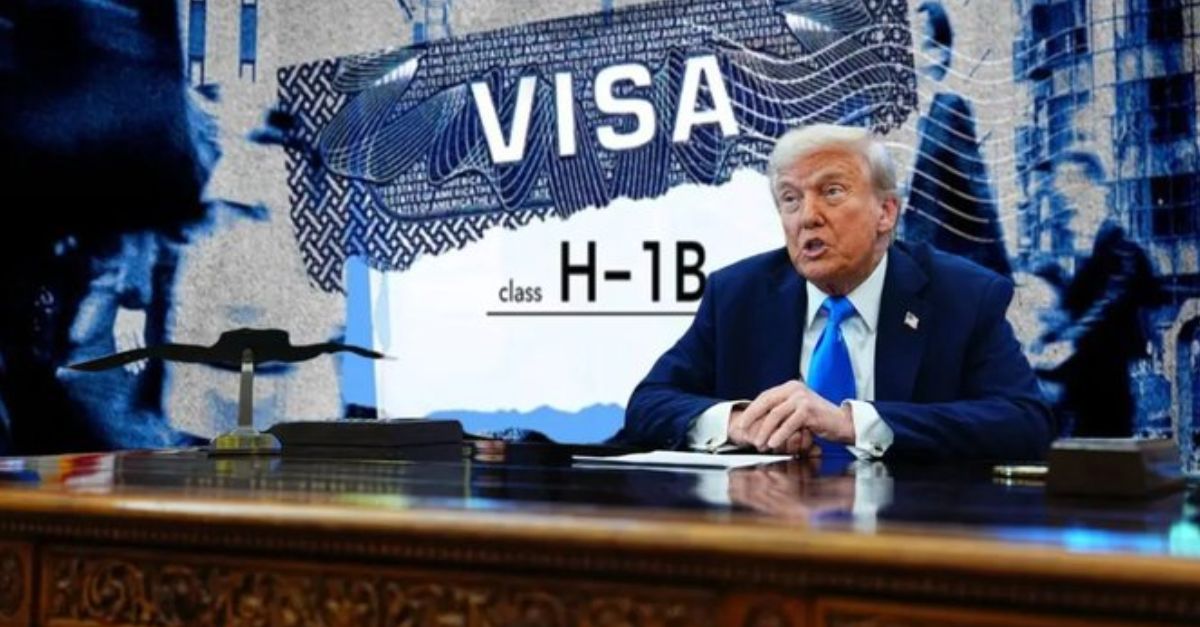
WASHINGTON (Diya TV) — The U.S. Chamber of Commerce has filed a federal lawsuit challenging the Trump administration’s new $100,000 H-1B visa fee, calling it unlawful and harmful to American businesses that depend on skilled foreign workers. In a complaint filed Thursday in the U.S. District Court for the District of Columbia, the Chamber argued that the fee violates the Immigration and Nationality Act (INA) and exceeds the authority of the executive branch.
The lawsuit seeks to block the administration from enforcing the fee, which took effect on Sept. 21 and applies to all new petitions for H-1B specialty occupation visas. The move marks the second lawsuit filed against the new visa fee. The change has drawn sharp criticism from U.S. companies, universities, and organizations that rely on foreign talent to fill critical technical and professional roles.
The Trump administration’s announcement surprised employers across industries. Many companies scrambled to file applications or bring workers back to the United States before the policy took effect. Although the White House later clarified that the fee applies only to new H-1B petitions, many questions about its implementation remain unanswered.
Before the new rule, employers typically paid about $3,600 in government fees per H-1B petition. The sudden jump to $100,000, business groups say, would dramatically raise labor costs and make it harder for American companies to compete globally.
The U.S. Chamber argues that Congress—not the president—controls visa fee structures under the INA. The law allows the executive branch to set fees only to cover the cost of administering visa services, not to impose new charges without legislative approval. Traditionally, such fees have been created through a notice-and-comment rulemaking process that includes public feedback. The Chamber said the new fee was instead imposed by presidential proclamation, bypassing standard administrative procedures.
The lawsuit warns that if the president can impose such a fee unilaterally, it would effectively create a “shadow immigration system” not authorized by Congress. “It would find the proverbial elephant in a textual mousehole,” the Chamber argued, saying the proclamation stretches the president’s power beyond what the law allows. The Chamber’s complaint emphasizes that the new cost will hit small and midsize businesses the hardest. Many startups and growing firms rely on the H-1B visa program to hire engineers, researchers, and other specialized professionals when qualified U.S. workers are unavailable.
“The new $100,000 visa fee will make it cost-prohibitive for U.S. employers, especially start-ups and small and midsize businesses, to utilize the H-1B program,” said Neil Bradley, the Chamber’s executive vice president and chief policy officer. “Congress created this program to help American businesses of all sizes access the global talent they need to grow their operations here in the U.S.”
The Chamber said the fee would make the H-1B program “practically unavailable” for many of its members and could push companies to move operations abroad rather than pay inflated hiring costs at home. Earlier this month, a coalition of unions, health-care recruiters, universities, and religious organizations filed the first legal challenge to the new fee. That lawsuit also claimed the rule is arbitrary and capricious, violates the INA, and would worsen labor shortages in critical sectors such as health care.
Supporters of the policy argue it is necessary to reform the H-1B program and ensure that only top-tier talent receives visas. “The administration’s actions are lawful and are a necessary, incremental step toward reform,” said White House spokeswoman Taylor Rogers in an email statement. The outcome of the Chamber’s lawsuit could reshape how future administrations use presidential authority to alter immigration and visa rules. Legal experts say the case could test the limits of executive power under the INA, especially as presidents increasingly rely on proclamations and executive orders to change immigration policy.