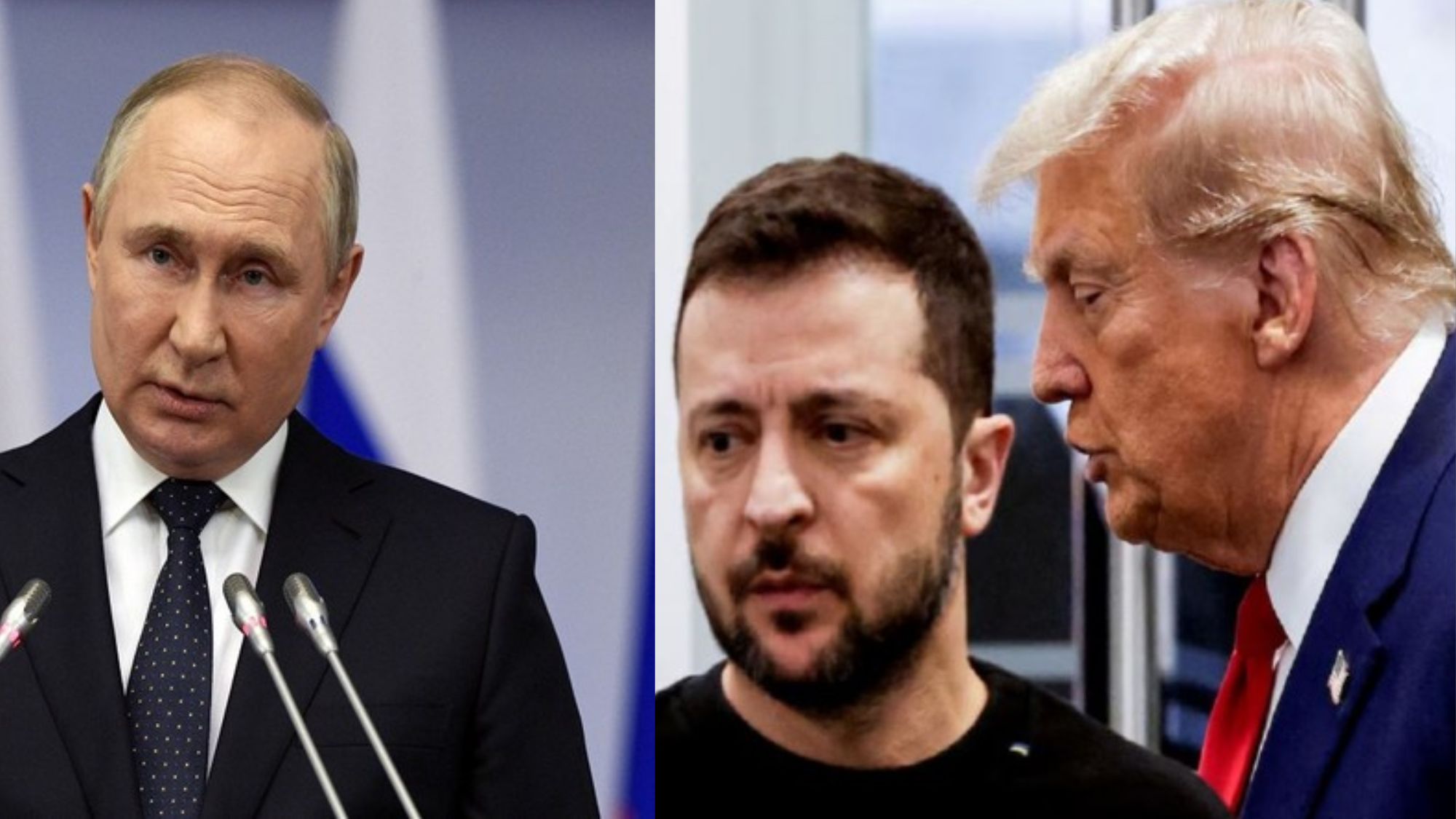
WASHINGTON (Diya TV) — President Donald Trump has urged Ukraine to carry out deeper attacks inside Russian territory, even suggesting strikes on Moscow and St. Petersburg. His comments came during a private call with Ukrainian President Volodymyr Zelenskyy on July 4, according to multiple reports. This call marks a significant change in Trump’s stance on the war and shows his increasing frustration with Russian President Vladimir Putin.
During their conversation, Trump reportedly asked Zelenskyy if Ukraine could hit Moscow, as long as the United States provided long-range weapons. Zelenskyy replied that Ukraine could target such locations if it had the right tools. The day before, Trump had spoken to Putin and felt disheartened after the call. He believed Putin had no real interest in bringing an end to the war.
The White House has not publicly confirmed the details of the call. However, sources familiar with the conversation told the Financial Times that Trump seemed eager to push Kyiv towards stronger military action. This talk with Zelenskyy happened amid broader changes in U.S. defense policy.
Recently, the Pentagon paused military aid to Ukraine. At the same time, Trump announced that billions of dollars’ worth of U.S.-made weapons would be diverted to NATO allies. Speaking from the Oval Office alongside NATO Secretary-General Mark Rutte, Trump stated, “We are going to produce top-of-the-line weapons, and they will go to NATO.” This move indicates a shift in American military priorities.
Trump also warned Russia. He stated that Moscow had 50 days to agree to a peace deal or face serious consequences. Specifically, Trump threatened 100 percent secondary tariffs on any country or company that purchases Russian exports. These sanctions would put significant pressure on Russia’s economy and trading partners.
Privately, Trump told Zelenskyy that stronger military action could push Russia to negotiate. “Volodymyr, can you hit Moscow?… Can you hit St. Petersburg too?” Trump reportedly asked. These remarks show a clear contrast to his earlier position, when he promised to end the war quickly without involving the U.S. further.
In public, Trump has continued to criticize Putin. On Sunday, he expressed that he was “disappointed but not done” with the Russian leader. He also announced plans to send Patriot missile systems to Ukraine, stating the move was necessary to protect Ukraine from ongoing Russian strikes.
Putin’s government responded quickly. Kremlin spokesman Dmitry Peskov warned that Trump’s comments could encourage Ukraine to prolong the war. He said NATO’s backing for Ukraine would likely be interpreted in Kyiv as a signal to continue fighting. “Such a decision made in Washington and NATO countries will be viewed by Kyiv not as a signal for peace but as a call to keep the war going,” Peskov stated during a press briefing.
Despite Washington’s efforts to encourage peace talks, Russia has refused to agree to a ceasefire. In recent months, Moscow has ramped up drone and missile attacks on Ukrainian cities. The war, now in its fourth year, shows no clear end.
Trump’s shift might be part of a broader strategy to pressure both sides. By proposing tougher military support and sanctions, he may be attempting to force negotiations. His team argues that only strong action will bring Russia to the table.
Still, critics caution that striking targets like Moscow could escalate the war. They fear it might draw the U.S. and NATO further into the conflict. Yet, Trump appears determined to assert strength and reset the dynamics.
For now, Ukraine continues to request more weapons. Whether Washington will provide long-range missiles remains uncertain. But Trump’s new approach makes one thing clear: his patience with Putin is running thin.