
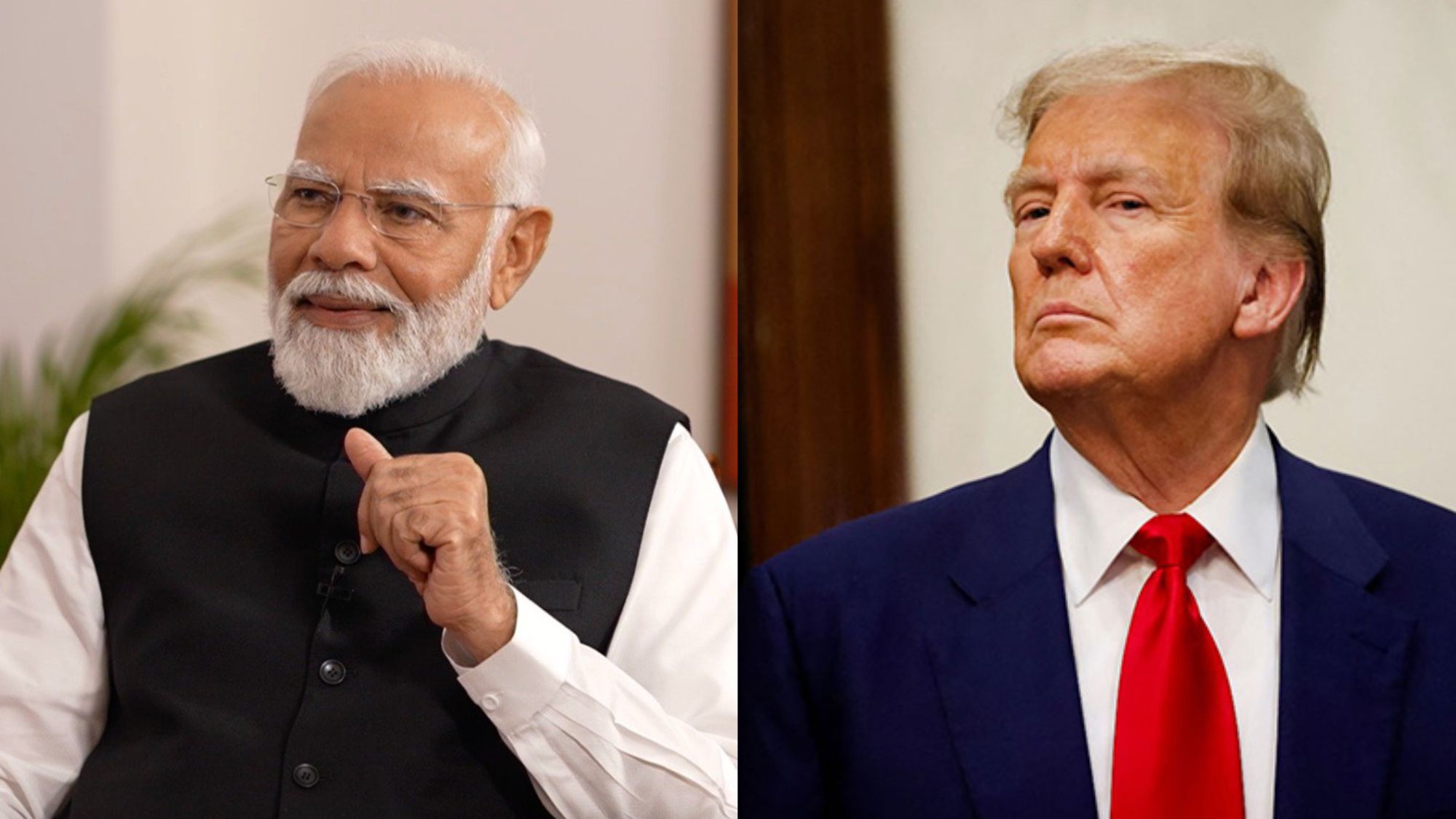
WASHINGTON (Diya TV) — President Donald Trump announced Tuesday that the United States is close to finalizing a trade agreement with India, as his administration revealed a sweeping tariff package targeting 14 other countries. The new tariffs are set to take effect on August 1 and are part of Trump’s wider push to reset global trade terms in favor of the U.S.
Speaking alongside Israeli Prime Minister Benjamin Netanyahu at the White House, Trump said trade deals had already been secured with the United Kingdom and China. India, he added, is likely to be the next. “We’ve spoken to everybody. It’s all done. I told you we’d make some deals, but for the most part, we’re going to send a letter,” Trump said. “Welcome to the United States, if you’d like to participate in the greatest, most successful country ever.”
The president explained that the U.S. had held meetings with multiple countries, but only a few were willing to reach mutually acceptable terms. Those that failed to make progress, he said, would face tariffs instead. “We’re sending out letters to various countries telling them how much tariffs they have to pay,” Trump said. “Some will maybe adjust a little bit depending on whether they have a cause. We’re not going to be unfair about it.”
The tariffs target a range of nations across Asia, Europe, and Africa. According to documents released on Trump’s social media platform, Truth Social, the new duties will impact imports from Thailand, Myanmar, Bangladesh, South Korea, Japan, and others. Thailand and Cambodia will be hit with a 36 percent tariff. Bangladesh and Serbia will face 35 percent. Myanmar and Laos will see tariffs at 40 percent, while Indonesia will be taxed at 32 percent. Malaysia and Kazakhstan will be subject to a 25 percent rate, the same as Japan, South Korea, and Tunisia. South Africa and Bosnia and Herzegovina will face 30 percent duties.
Trump emphasized that the tariffs are part of a “reciprocal” trade approach and warned of additional increases if countries retaliate. However, he also said the U.S. might lower tariffs if foreign governments adjust their trade policies to better align with U.S. interests. “We could be asking for much more,” he said. “But for the sake of relationships that we’ve had with a lot of really good countries, we’re doing it the way I do it.”
India, meanwhile, continues to negotiate. In April, Trump imposed a 26 percent retaliatory tariff on Indian goods, which was later reduced to a 10 percent basic duty. A 90-day suspension period for further talks began on April 10. Indian officials traveled to Washington in June for intense discussions aimed at closing the deal before the extended deadline.
“We’re close to making a deal with India,” Trump said again during the briefing. “Others we met with, and we don’t think we’re going to be able to make a deal. So, we just send them a letter.”
Although the new tariff deadline is August 1, Trump signaled flexibility. “I would say firm but not a 100 percent firm,” he noted. “If they call up and say they would like to do something in a different way, we will be open to that.”
Earlier in the day, White House Press Secretary Karoline Leavitt confirmed Trump would sign an executive order delaying the previous July 9 deadline to August 1. The extension gives countries more time to complete trade deals and avoid steep tariffs.
This development follows Trump’s April 2 announcement of reciprocal tariffs, with some rates reaching as high as 50 percent. Those tariffs, implemented on April 9, triggered a wave of selling on Wall Street and unrest in the bond market. In response, Trump paused enforcement and offered countries a 90-day window for negotiations.
As the August 1 deadline approaches, nations are weighing their options. Trump insists the U.S. is acting fairly and doing what’s necessary to protect its economic interests. “It’s a small fraction compared to what we should be getting,” he said. “We could ask for a lot more than what we’re asking for.”
With negotiations underway and tariffs looming, the next few weeks could reshape how the U.S. trades with much of the world. Trump’s message to trading partners is clear: make a deal, or pay the price.


