
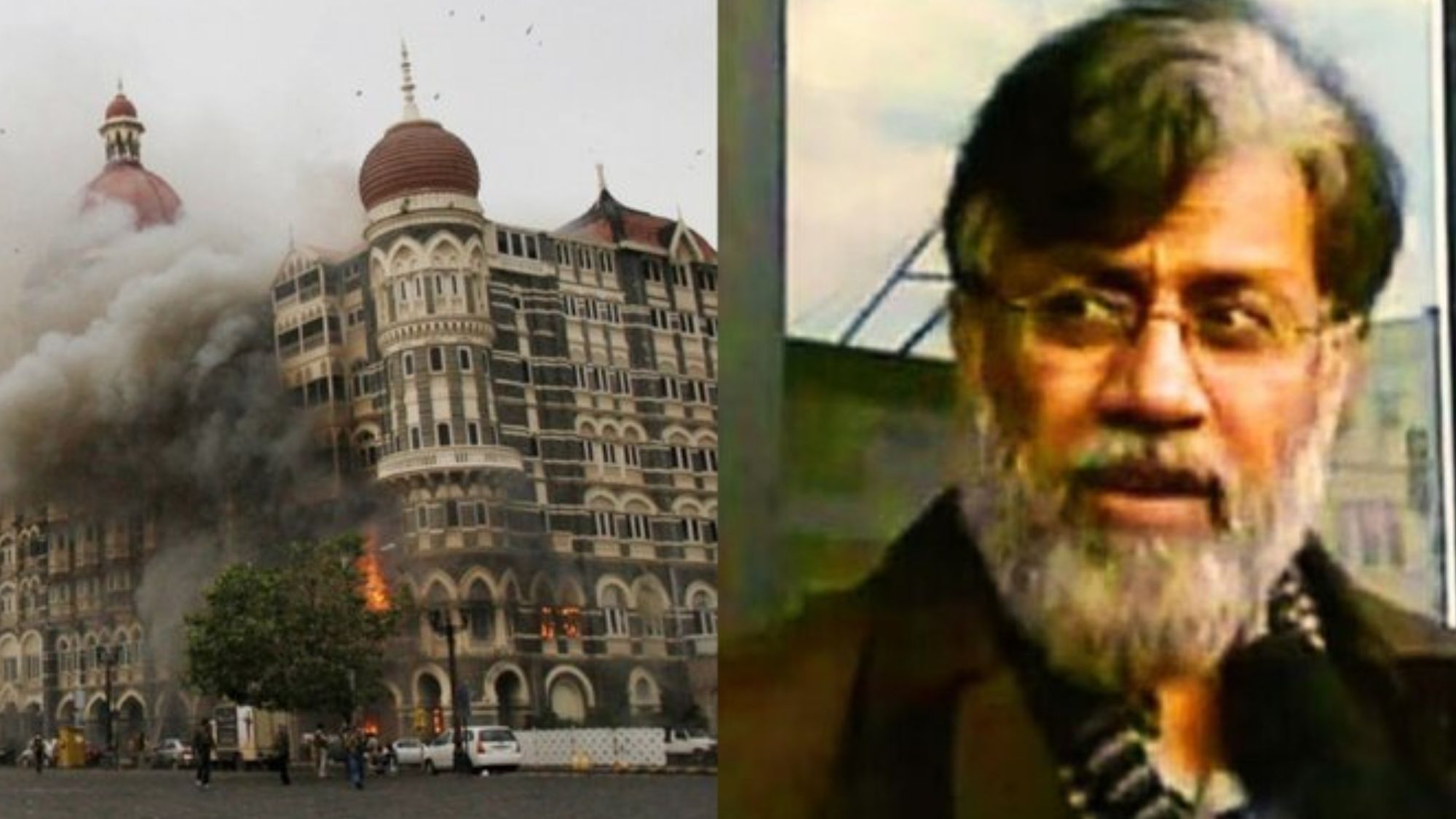
NEW DELHI (Diya TV) — A Delhi court on Wednesday extended the judicial custody of Tahawwur Rana, a key accused in the 26/11 Mumbai terror attacks, until August 13. The National Investigation Agency (NIA) also filed a supplementary charge sheet against Rana, further tightening its case against the Pakistani-Canadian national. Rana, a former officer in the Pakistan Army’s Medical Corps, was produced via video conference before the Patiala House Court.
His custody was set to expire, prompting the court appearance. The new charge sheet adds to an earlier one filed in 2012. It includes Rana’s arrest memo, seizure records, and several other related documents. These are expected to strengthen the NIA’s argument that Rana played a critical role in planning the 2008 Mumbai attacks, which killed 166 people and injured hundreds more.
According to officials, the NIA collected voice and handwriting samples from Rana. These samples are being matched with audio recordings of phone calls between him and David Coleman Headley, another accused in the 26/11 case. Headley is currently serving time in a U.S. prison. Investigators believe Rana passed handwritten instructions, maps, and coordinates to Headley, who used them to conduct reconnaissance missions in Mumbai.
These missions were key in selecting the targets for the 2008 attacks. The NIA also revealed plans to take Rana to Mumbai and other cities. This step will help reconstruct the events that led to the terror strike. Earlier on June 6, a Special NIA Court had ordered Rana to remain in judicial custody until July 9. During that hearing, Rana’s legal team raised concerns about his health.
The court asked Tihar Jail authorities to submit a health status report. Rana has reportedly been facing deteriorating health conditions while in custody. While in NIA custody, Rana denied any link to the 26/11 plot. He claimed that David Headley, his childhood friend, acted alone in planning the attacks.
Rana said he had “no connection whatsoever” with the planning or execution of the Mumbai carnage. According to the NIA, Rana also mentioned that he had visited several Indian cities, including Delhi, Mumbai, and Kerala. When questioned about his trip to Kerala, he said he went to meet an acquaintance. He even provided the person’s name and address to investigators.
Despite his denial, the NIA believes Rana’s association with Headley and his movements across India point to a deeper role in the planning of the attacks.
Rana was extradited from the United States to India earlier this year after a long legal process. The extradition followed requests from Indian authorities who wanted him to face trial in connection with the 2008 Mumbai terror attacks.
In April, the Special NIA Court extended Rana’s custody after the agency claimed it needed more time to uncover his full involvement. The NIA told the court that Rana used evasive tactics during interrogation, making it harder to extract the truth. He was also questioned by officers from the Mumbai Police, who are collaborating with the NIA in the ongoing probe.
David Headley, the co-accused in the case, turned approver during an earlier stage of the investigation. He confessed to conducting surveillance missions across India, including locations in Mumbai, on behalf of Lashkar-e-Taiba (LeT).
Headley’s testimony played a crucial role in revealing the planning stages of the 26/11 attacks. His links to Rana are under scrutiny by both Indian and international intelligence agencies.
With the supplementary charge sheet now filed, the NIA is expected to push for a detailed trial. The agency hopes to uncover the full extent of Rana’s role in one of the deadliest terror attacks in Indian history. The case continues to draw national attention, as victims and their families await justice nearly 17 years after the attacks.


