
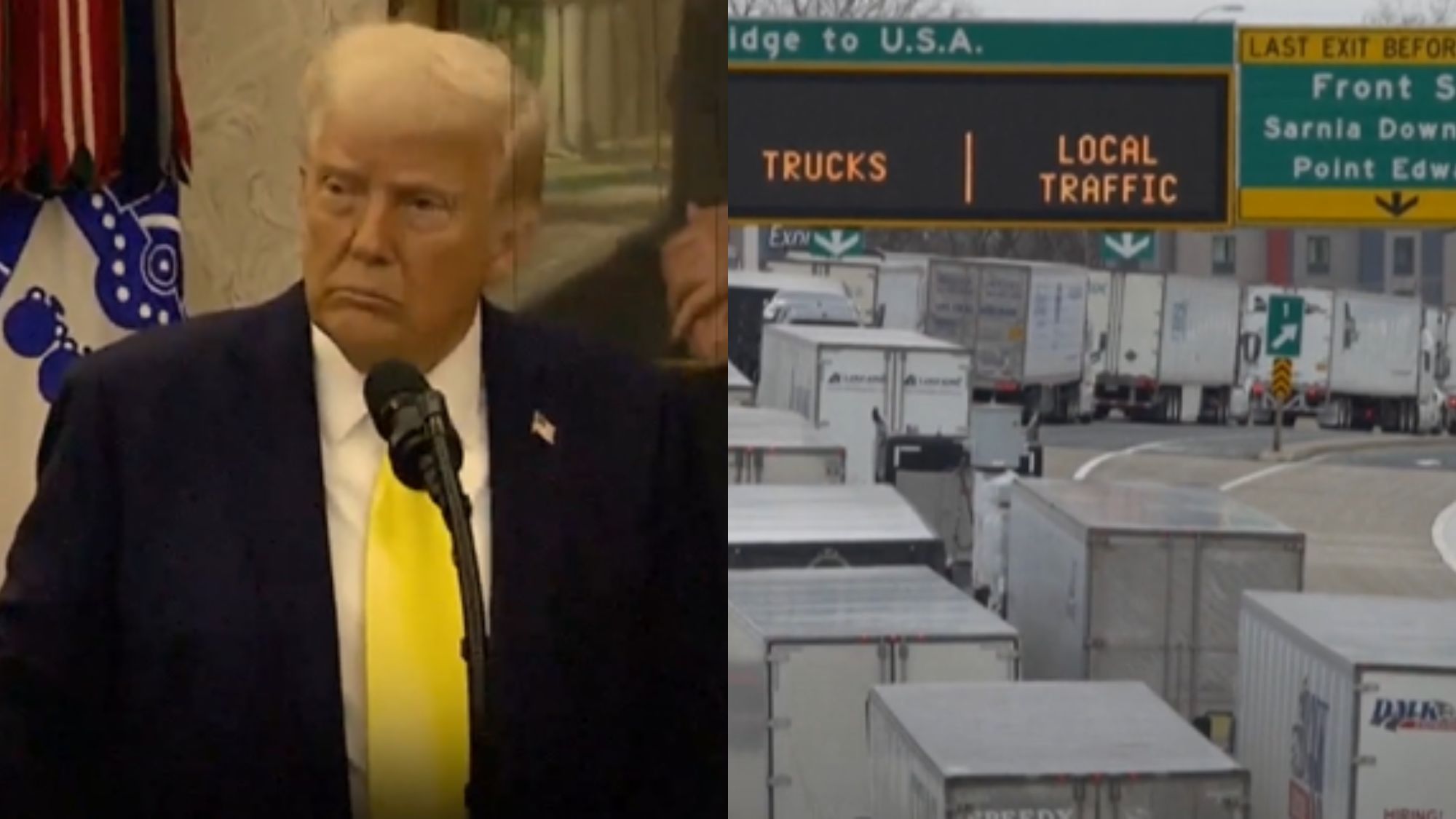
WASHINGTON (Diya TV) — President Donald Trump on Monday signed an executive order requiring all commercial truck drivers in the United States to demonstrate proficiency in English, sparking concerns among Sikh advocacy groups about the potential impact on their community, which makes up a significant portion of the American trucking workforce.
Titled “Enforcing Commonsense Rules of the Road for America’s Truck Drivers,” the order asserts that English proficiency is a “non-negotiable safety requirement” for professional drivers. The directive reinforces a long-standing federal regulation mandating that drivers must be able to read and speak English well enough to understand road signs, communicate with law enforcement, and complete necessary documentation.
“Proficiency in English ensures that drivers can respond appropriately in safety-critical situations,” Trump said in a statement. “It is a basic, commonsense standard that protects everyone on the road.”
According to the order, the Secretary of Transportation—currently Sean Duffy—is tasked with identifying and implementing regulatory changes within 60 days to enforce these requirements. That includes revoking what the administration calls a “dangerous Obama-era policy” that, in 2016, directed inspectors not to disqualify drivers solely for failing English proficiency tests. The Department of Transportation claims the rollback of enforcement has led to safety issues, citing cases in which fatal accidents were attributed to language barriers.
The move has drawn sharp criticism from the Sikh Coalition, which said the measure could have a discriminatory effect on immigrant communities, particularly Sikhs, who have helped fill labor shortages in the trucking industry.
“We are deeply concerned that this order could create unnecessary barriers for qualified drivers,” the Sikh Coalition said in a statement. “Our community has played a vital role in keeping goods moving across America, especially during times of economic and supply chain stress.”
According to a 2018 report by The Economist, an estimated 150,000 Sikhs work in the U.S. trucking industry, with 90% serving as drivers. Between 2016 and 2018 alone, more than 30,000 Sikhs reportedly entered the profession, highlighting the community’s growing footprint in the sector.
While the executive order does not explicitly target any religious or ethnic group, advocacy organizations say that emphasizing English-language enforcement without adequate support systems disproportionately affects immigrants who may otherwise meet all safety and qualification standards.
The Trump administration maintains that the order is focused solely on safety and efficiency, arguing that the ability to read highway signage and communicate with enforcement personnel is essential for safe commercial vehicle operation.
“The Department will always put America’s truck drivers first,” said Transportation Secretary Duffy. “A driver who cannot sufficiently read or speak English is unqualified to operate a commercial vehicle on our roads.”
Still, the Sikh Coalition and other advocacy groups say they are consulting legal experts and community partners to assess the broader implications of the order and to ensure that it is implemented fairly.
“We support road safety,” the Coalition said, “but we urge the administration to consider practical ways to support drivers through language training and not blanket policies that can restrict access to employment.”
The Department of Transportation has not announced whether it will offer resources or training to assist non-native English speakers in meeting the new enforcement standards.
As the trucking industry continues to face labor shortages, the tension between safety enforcement and workforce inclusion remains a central issue. National security implications are also a factor in this decision, political analysts tell Diya TV.
With a major portion of the sector relying on immigrant labor, how the order is enforced may determine its long-term effects on both road safety and the economy.


