OTTAWA, Canada (Diya TV) — Mark Carney, a former central banker turned politician, has led Canada’s Liberal Party to a dramatic election victory, securing a fourth term in power amid growing tensions with President Donald Trump. The election, held Monday, marked a remarkable political reversal for the Liberals, who had trailed badly in polls just months earlier.
Carney’s campaign, which heavily focused on protecting Canadian sovereignty and pushing back against Trump’s aggressive rhetoric and tariffs, resonated with voters. Trump’s threats—including comments about making Canada the 51st U.S. state and imposing crippling tariffs—sparked a wave of nationalism that helped reshape the race.
“We were dead and buried in December. Now we are going to form a government,” former Liberal Justice Minister David Lametti told CTV. “We have turned this around thanks to Mark.”
While it remains unclear whether the Liberals secured a majority in the 343-seat House of Commons, Carney is expected to form a government. A majority requires at least 172 seats. If short, Carney may need support from smaller parties to pass legislation.
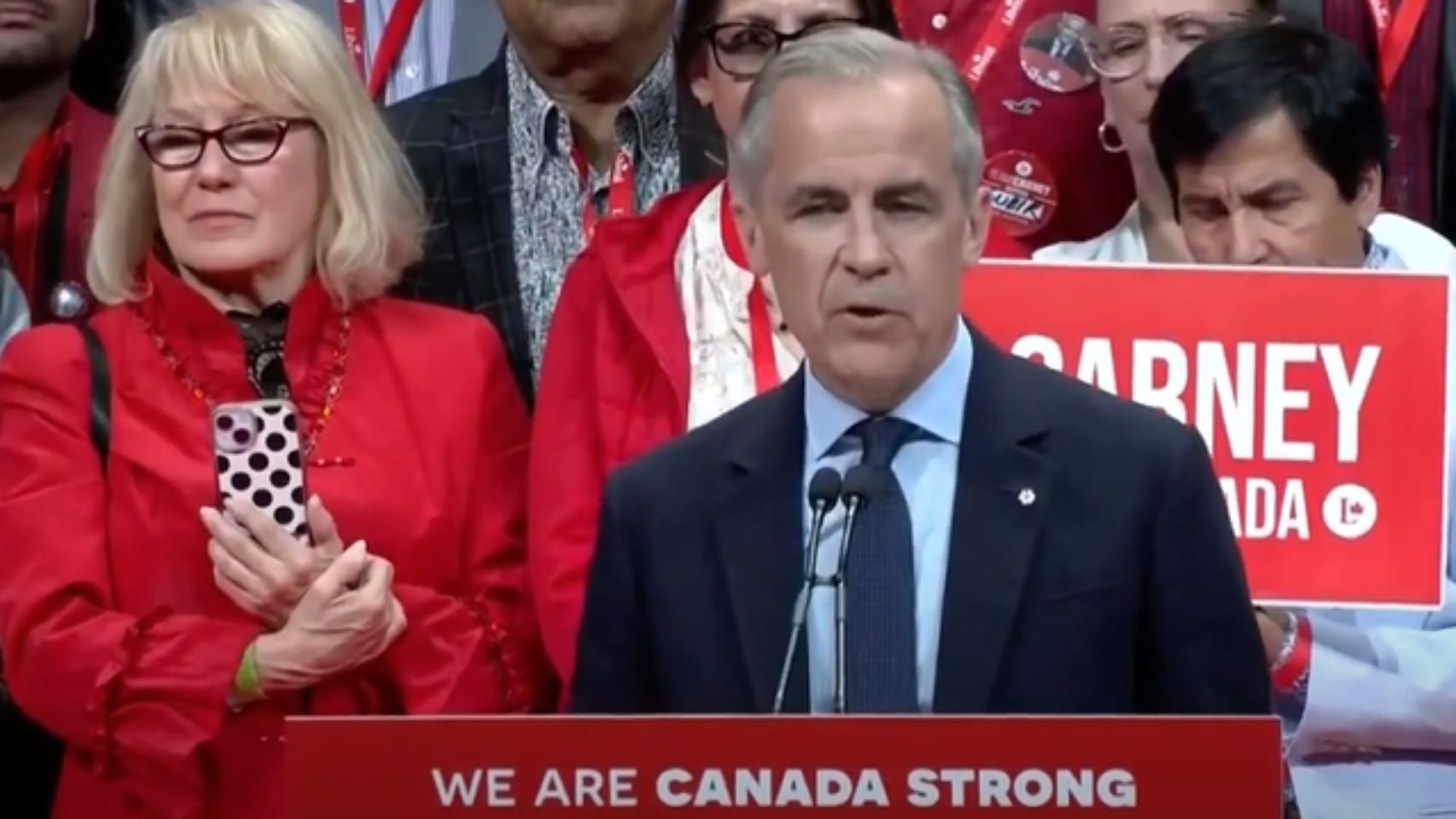
In his victory speech early Tuesday in Ottawa, Carney struck a defiant tone against Trump, vowing to protect Canada’s independence and economy. “President Trump is trying to break us so he can own us. That will never happen,” he told supporters. “America wants our land, our resources, our water, our country.”
Carney, who only became Liberal leader and prime minister last month after Justin Trudeau’s resignation, ran a campaign centered on trade protectionism, economic resilience, and expanding alliances beyond the United States. He pledged to maintain Canada’s retaliatory tariffs against the U.S. and direct all revenue from those tariffs to Canadian workers harmed by the trade war.
According to The New York Times, Carney and Trump have not met in person, though the two spoke by phone before the election. Carney claimed during the campaign that Trump repeated the 51st state comment during their call.
The Conservatives, led by Pierre Poilievre, ran a campaign targeting high living costs and Trudeau’s legacy. Initially expected to win, Poilievre ultimately conceded the election—and lost his own seat in Ottawa, a stunning personal blow. He has vowed to stay on as leader despite the setback, framing the outcome as the start of a long-term Conservative resurgence.
“We know that change is needed, but change is hard to come by,” Poilievre told supporters Monday night. “It takes time. It takes work.”
However, Poilievre’s Trump-lite tone may have worked against him. Historian Robert Bothwell told The Times, “Trump talking is not good for the Conservatives.” Some voters, such as Toronto resident Reid Warren, cited Trump’s interference as a deciding factor: “Poilievre sounds like mini-Trump to me.”
Despite their loss, the Conservatives are projected to gain their highest share of the popular vote since 1988. The New Democratic Party fared poorly, and its leader, Jagmeet Singh, announced he would step down, adding to the uncertainty surrounding the balance of power in Parliament.
Canada’s trade dependence on the U.S., with over 75% of exports going south, makes Trump’s tariffs a critical issue. Carney promised to shield the Canadian economy by diversifying trade partnerships and recently traveled to Europe to emphasize that strategy.
He also faces pressing domestic challenges, including high inflation, housing affordability, and public sector funding. Carney has pledged to maintain dental care programs, lower middle-class taxes, return immigration to sustainable levels, and boost support for the Canadian Broadcasting Corporation.
The new prime minister is expected to quickly form a cabinet and begin a new parliamentary session. He will also host the upcoming G7 summit in June at Kananaskis, Alberta, where he will face Trump and other world leaders in his first major diplomatic test.
Though the Liberals’ majority status remains uncertain, Carney’s election marks a major shift in Canadian politics—one defined by economic anxiety, national pride, and a wary eye on its southern neighbor.