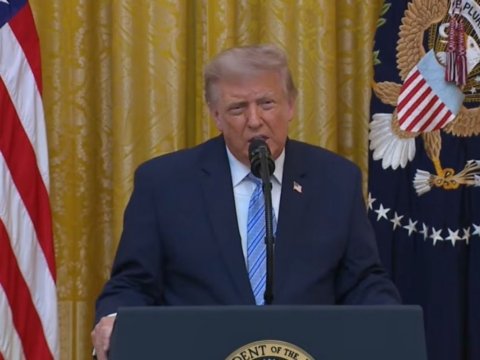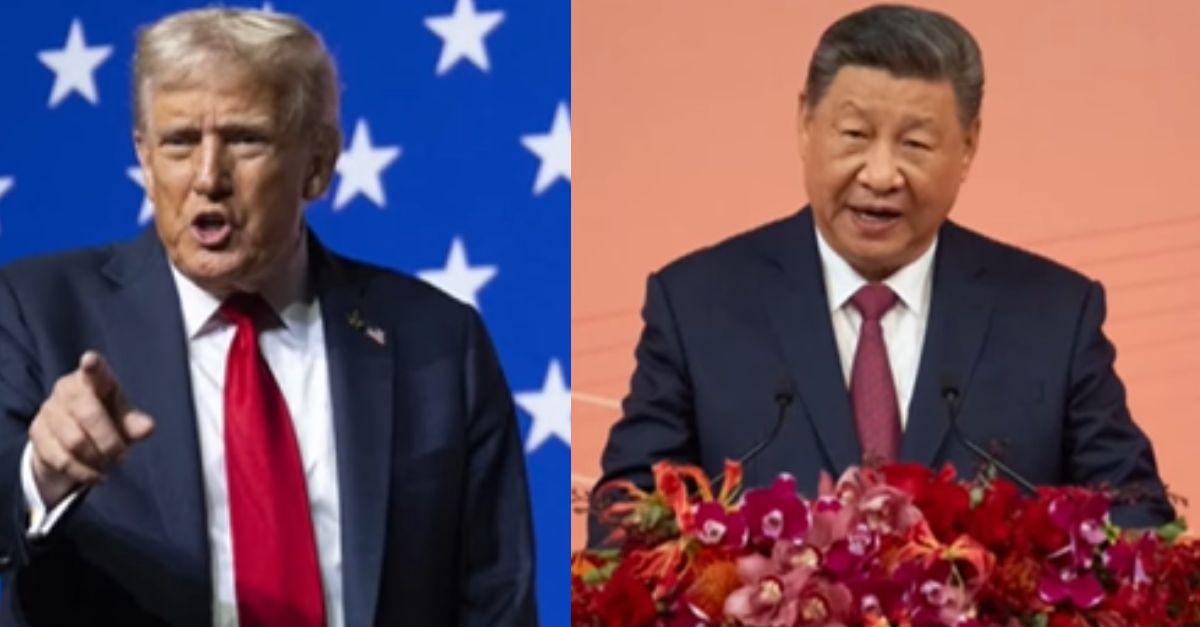
KUALA LUMPUR, Malaysia (Diya TV) — President Donald Trump’s trip to Asia this week could reshape America’s trade relationship with China. His meetings with leaders in Malaysia, Japan, and South Korea come as U.S. and Chinese officials move closer to a new trade agreement. The key event will be Trump’s expected sit-down with Chinese President Xi Jinping on Thursday during the Asia-Pacific Economic Cooperation Summit in Gyeongju, South Korea.
Trump said he expects a “good meeting” with Xi. “We have a lot to talk about with President Xi, and he has a lot to talk about with us,” Trump told reporters before leaving Washington on Friday night.
The talks follow months of rising trade tensions between the world’s two largest economies. Tariffs, export controls, and shifting alliances have defined relations since Trump declared “Liberation Day” in April. At that time, he accused China of “taking tremendous advantage of us.” Last week, however, he struck a softer tone, saying Beijing has been “very respectful of us.”
Currently, the U.S. has tariffs of about 58% on most Chinese imports, while China imposes roughly 33% on American goods. The friction escalated earlier this month after Beijing announced export controls on its rare earth minerals, which are vital to industries from electric vehicles to semiconductors. In response, Trump threatened to double tariffs on Chinese imports starting on November 1.
That threat now appears to be on hold. Treasury Secretary Scott Bessent said Sunday that the two countries have reached a “very substantial framework” to delay new tariffs and ease restrictions. Speaking at the ASEAN Summit in Kuala Lumpur, Bessent said the deal removes Trump’s planned 100% tariff increase and likely extends the current tariff truce beyond its November 10 expiration. He added that China is expected to postpone for a year its rollout of new export limits on rare earths.
“I’m also anticipating that we will get some kind of a deferral on the rare earth export controls,” Bessent said. “The president’s tariff threat is effectively off the table.”
Chinese officials were more cautious. Vice Premier He Lifeng’s team said both sides reached a “preliminary consensus,” while top trade negotiator Li Chenggang called the talks “intense but constructive.” He said Beijing remained firm in protecting its interests while seeking “practical solutions.”
U.S. Trade Representative Jamieson Greer said the framework could help rebalance trade, expand access to Chinese rare earths, and restore confidence in supply chains. He said both sides also discussed TikTok’s U.S. ownership transfer, cooperation to curb fentanyl exports, and other trade issues, including port fees.
The upcoming meeting between Trump and Xi could also address China’s pivot toward buying soybeans from Argentina instead of the U.S. The move has hit American farmers hard and sparked political backlash. Rep. Marjorie Taylor Greene, R-Ga., called the administration’s recent $40 billion loan package and currency swap with Argentina “probably one of the grossest things I’ve ever seen.”
Bessent said he expects China to resume large-scale soybean purchases from the U.S. soon. “We’re optimistic this deal will bring relief to American farmers,” he said. According to the American Soybean Association, China has not bought any of the current U.S. crop, even though by this time last year, one-third of exports had already been sold.
“The frustration is overwhelming,” ASA President Caleb Ragland said. Farmers across the Midwest are urging quick action to reopen Chinese markets.
The broader deal, if finalized, would mark a turning point after months of escalating sanctions, export bans, and threats. It could also reduce global uncertainty in industries dependent on rare earth supplies.
Still, caution remains high. Chinese officials have yet to confirm the Gyeongju meeting, even as Washington has announced it. Trump said he is optimistic and hinted that more talks with Xi could follow, possibly in Beijing or at his Mar-a-Lago resort in Florida.
“I think we’re going to have a deal with China,” Trump said before his five-day Asia tour began.
If successful, the agreement could cool one of the world’s most volatile economic rivalries and restore some stability to global markets. For now, the tentative framework signals a fragile but hopeful step toward easing U.S.-China trade tensions.