WASHINGTON (Diya TV) — President Donald Trump’s senior trade adviser has drawn backlash from Hindu American groups after using the word “Brahmins” to criticize India’s elite. The remark has sparked accusations of Hinduphobia and calls for his removal.
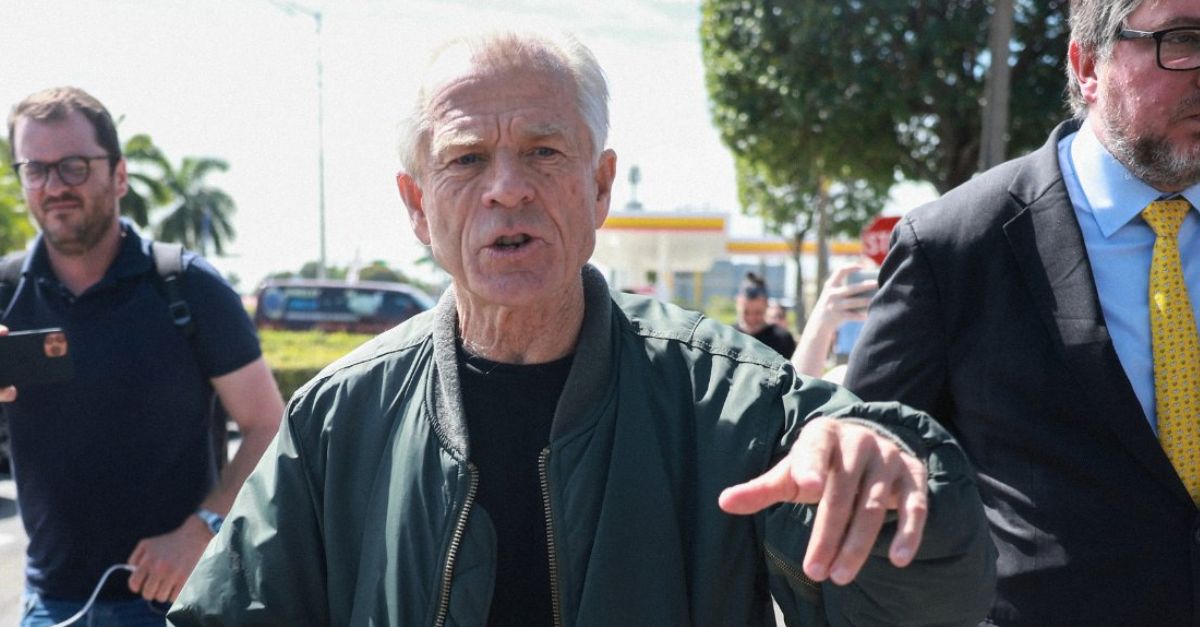
Peter Navarro, a top White House trade adviser, commented Sunday during an appearance on Fox News. He was defending the administration’s new 50% tariff on Indian goods. Navarro argued that India’s economic policies were unfair before shifting to caste rhetoric.
“You have got Brahmins profiteering at the expense of the Indian people, and we want that to stop,” Navarro said. He also accused New Delhi of acting as “nothing but a laundromat for the Kremlin.”
The remarks quickly spread on social media, where critics mocked Navarro’s understanding of India’s caste system. Others condemned the comment as an attack on Hindus worldwide.
HinduPACT, a U.S.-based advocacy group, released a statement on Tuesday calling Navarro’s words “weaponized Hinduphobia.” The group argued that invoking caste divisions is harmful and undermines ties with India, a key American ally.
“This is not foreign policy,” said Ajay Shah, executive chair of HinduPACT. “Dividing Hindus through colonial scripts doesn’t build relationships. It destroys them. People like Navarro have no place in American political life.”
American Hindus Against Defamation, a watchdog linked to HinduPACT, co-signed the statement. The group demanded Navarro’s firing, saying his words “endanger the dignity of over a billion Hindus.”
Navarro’s comments came at a tense moment in U.S.-India relations. The Trump administration recently announced a steep tariff on Indian goods. The measure also includes penalties tied to India’s purchase of Russian weapons and oil.
Indian officials denounced the tariff as “unfair, unjustified, and unreasonable.” The policy marks one of the toughest trade actions against a U.S. partner.
The controversy also coincided with Indian Prime Minister Narendra Modi’s high-profile visit to China, where he met with Russian President Vladimir Putin and Chinese President Xi Jinping.
In Hindu tradition, Brahmins are the highest caste, historically linked to priestly and scholarly duties. Today, they make up only 4% to 5% of India’s population.
Navarro’s use of the word drew pushback from Indian leaders and business figures. Industrialist Harsh Goenka wrote on social media that many of India’s most powerful business families are not Brahmins. He argued that linking economic elites to caste shows ignorance of India’s reality.
Indian politician Priyanka Chaturvedi also weighed in, calling Navarro’s statement “shameful and sinister.” She noted that caste rhetoric in U.S. political debates often misrepresents Indian society.
In the United States, the term Brahmin has also carried other meanings. In 19th- and early 20th-century New England, “Boston Brahmins” referred to wealthy white Protestant elites.
Caste remains a sensitive topic among Indian Americans. Some argue that the caste system is outdated and no longer shapes opportunities in modern India. Others say caste-based discrimination still exists, both in India and abroad.
A 2024 Carnegie Endowment study found that 32% of Indian Americans said they did not identify with any caste, while 46% identified as “general or upper caste.” Most respondents supported legal measures against caste discrimination.
Despite these debates, Hindu advocates say the use of caste as a political weapon in the U.S. has real consequences.
“When someone like Navarro uses caste to shame India, it lands on Hindus here,” said Deepa Karthik, general secretary of HinduPACT. “Kids get bullied. Workers get profiled. We get treated like we owe the world an apology for our heritage.”
Navarro’s words have now become a flashpoint in both Washington and New Delhi. Hindu American groups are urging the White House to act quickly to distance itself from the comment.
Critics say the administration risks damaging its relationship with India by allowing caste rhetoric to overshadow policy. Supporters of Hindu advocacy groups argue that the episode is a reminder of how harmful stereotypes can spread when used in political debates.
For now, Navarro remains in his post, but the pressure on him continues to grow.