
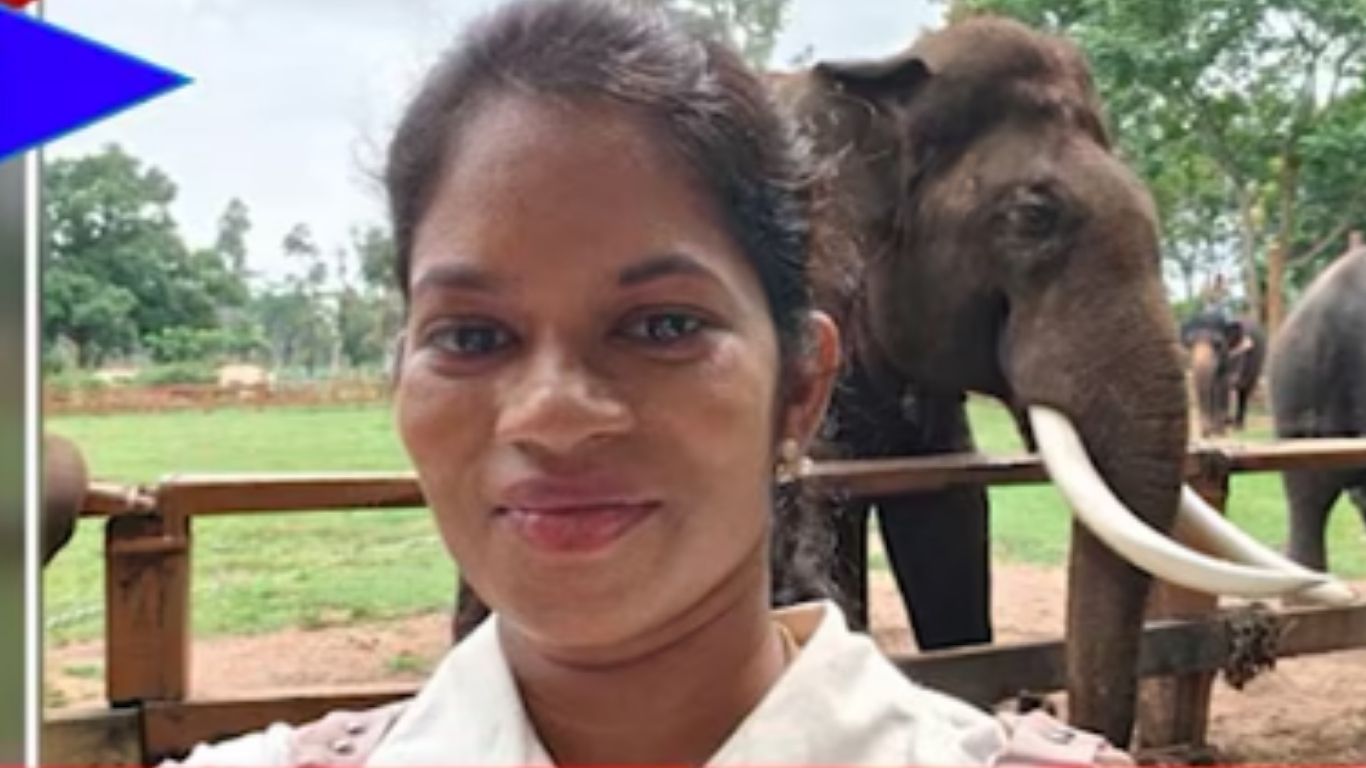
KUSHALNAGAR, India (Diya TV) — A tourist died after two trained elephants suddenly began fighting during a public bathing session at the popular Dubare Elephant Camp in Karnataka, prompting officials to tighten safety rules at elephant camps across the state.
The victim, identified as Tulasi, 33, had traveled from Chennai with her husband and young child to visit the camp on the banks of the Kaveri River in Kodagu district. The incident happened on Monday while visitors watched elephants being bathed in the river.
Authorities said two male elephants, Kanjan and Marthanda, started clashing in the water during the routine bathing session. In the chaos, Marthanda lost balance and fell onto Tulasi, crushing her to death.
Video footage from the scene showed Tulasi’s husband trying to pull her away while holding their child. Both escaped without injuries, but Tulasi remained trapped beneath the elephant. The tragic accident has raised fresh concerns about tourist safety at elephant camps in Karnataka, where close interactions with elephants have long attracted visitors from across India.
Dubare Elephant Camp is one of Karnataka’s best-known wildlife tourism destinations. Hundreds of tourists visit the camp every day to watch elephants bathe in the Kaveri River. Many visitors gather near the riverbed to take photographs and watch mahouts scrub the elephants. Some tourists also pay extra fees to help bathe or feed the animals.
Officials said the close-proximity viewing area contributed to the deadly accident. Tulasi reportedly stood near the elephants when the fight suddenly broke out, leaving little time for people nearby to escape. Following the incident, the Karnataka government immediately banned tourists from approaching elephants during bathing sessions. Authorities now require a minimum distance of 100 feet between visitors and elephants at all camps in the state.
The government also stopped several popular tourist activities involving direct contact with elephants. Visitors can no longer touch elephant trunks, stand beside elephants for photos, help bathe them, or hand-feed food items such as bananas and jaggery. Officials said the new rules aim to reduce risks for both tourists and elephant handlers.
Wildlife experts have often warned that elephants, especially adult males, can become aggressive without warning. Even trained elephants may react unpredictably in crowded environments.
Reports said Kanjan, one of the elephants involved in the clash, showed signs of musth before the incident. Musth is a natural condition in male elephants marked by sharply increased testosterone levels and aggressive behavior. During this period, elephants can become highly territorial and difficult to control. Experts said male elephants in musth often display sudden aggression toward other elephants and humans.
Camp authorities believe Kanjan likely initiated the confrontation with Marthanda while the animals were in the river. The incident has renewed debate about whether camps should allow close public interaction with elephants, especially during periods when male elephants may show aggressive behavior.
Kanjan previously made headlines during the famous Mysuru Dasara festival in September 2024. During the festival, the elephant reportedly clashed with another well-known festival elephant named Dhananjaya at the Mysuru Palace grounds during feeding time. The confrontation caused panic among people attending the event. No major injuries were reported then, but the latest tragedy has intensified scrutiny over elephant management and public safety measures.
Forest officials said they are reviewing safety procedures at wildlife tourism centers across Karnataka. Authorities may introduce stricter monitoring of elephants showing signs of aggression or musth. Officials also plan to improve crowd control during public elephant activities.