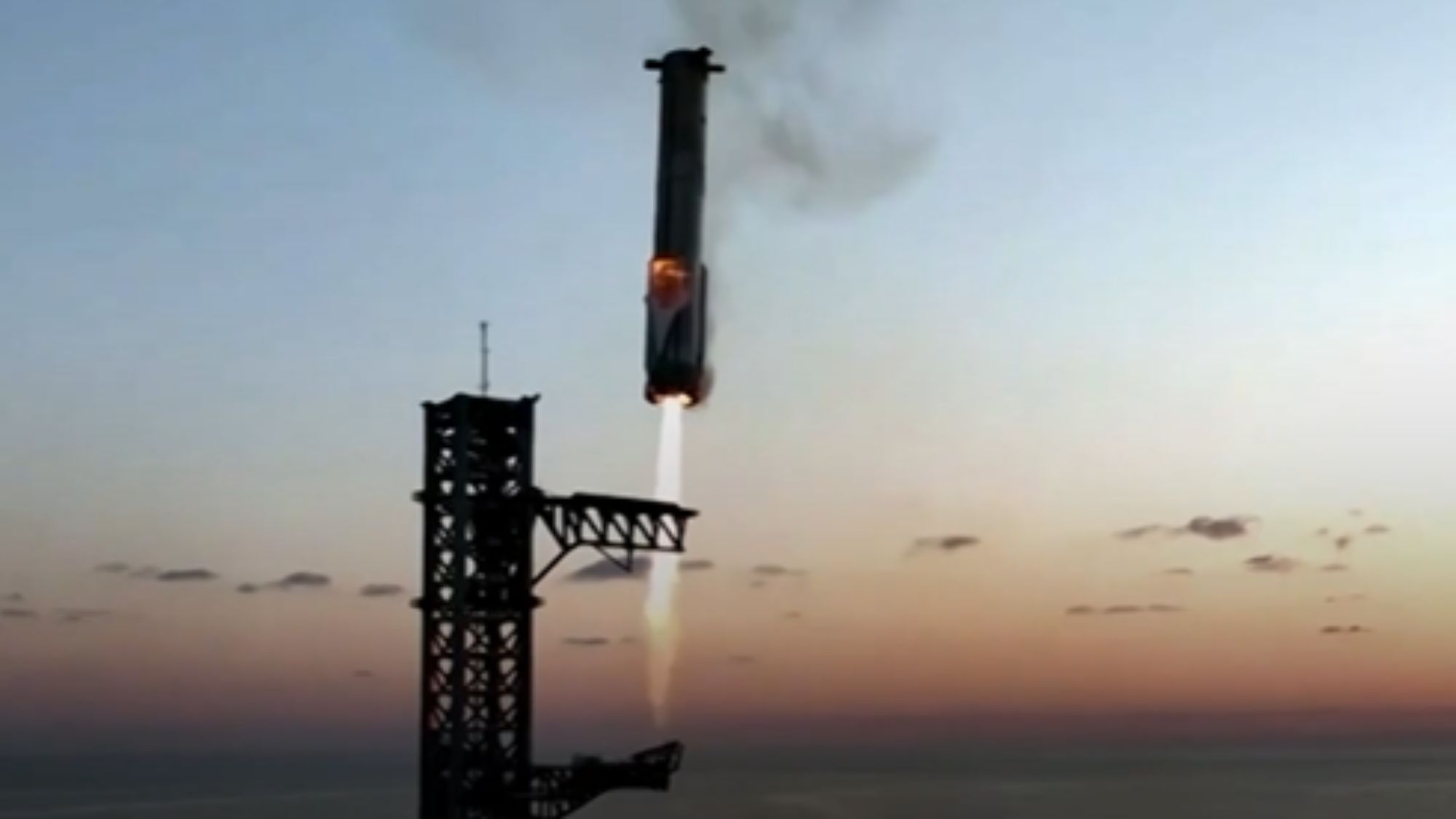
BOCA CHICA, Tx. (Diya TV) — SpaceX captured a rocket booster in mid-air for the first time, marking a monumental step in the quest to make space travel more cost-effective. It happened on the fifth test flight of the Starship system. At 230 feet tall, the Super Heavy booster returned to Earth after launching the second-stage Starship spacecraft, which continued its journey into space. As it began descending, the booster was caught as gently as a summer zephyr by massive mechanical arms playfully dubbed “chopsticks” attached to a launch tower at SpaceX’s facility in Boca Chica, Texas.
It marks a giant step toward SpaceX’s vision of building fully reusable spacecraft. But whereas in earlier missions, the booster had splashed into the ocean or landed on a platform, in this mission, it landed back at the launchpad by firing three of its engines to break its fall. This was a major step toward a rapidly reusable rocket, according to Elon Musk, CEO of SpaceX. This technology should dramatically cut the cost of space travel, paving the way for missions to the Moon, Mars, and further afield.
The first part of the test was successful, but not without issues. During this test, the second-stage Starship was traveling far and high enough to achieve 17,000 miles per hour at an altitude of 89 miles, but it could not make it back as smoothly. Although the Starship successfully splashed down in the Indian Ocean, it sustained major damage and blew up soon thereafter, reminding everyone that with risk comes reward in the exploration of space. In general, Musk and his team were a lot more optimistic as they focused more on the success of the booster catch as one of the most important steps forward.
This successful booster recovery is a milestone in the long-term plan of SpaceX. It will play a part in NASA’s Artemis program intended to send astronauts back to the Moon by 2026. The technology will revolutionize space missions as it allows rockets to be launched and reused in rapid sequences, cutting significantly a part of the costs and time incurred in launching new missions.