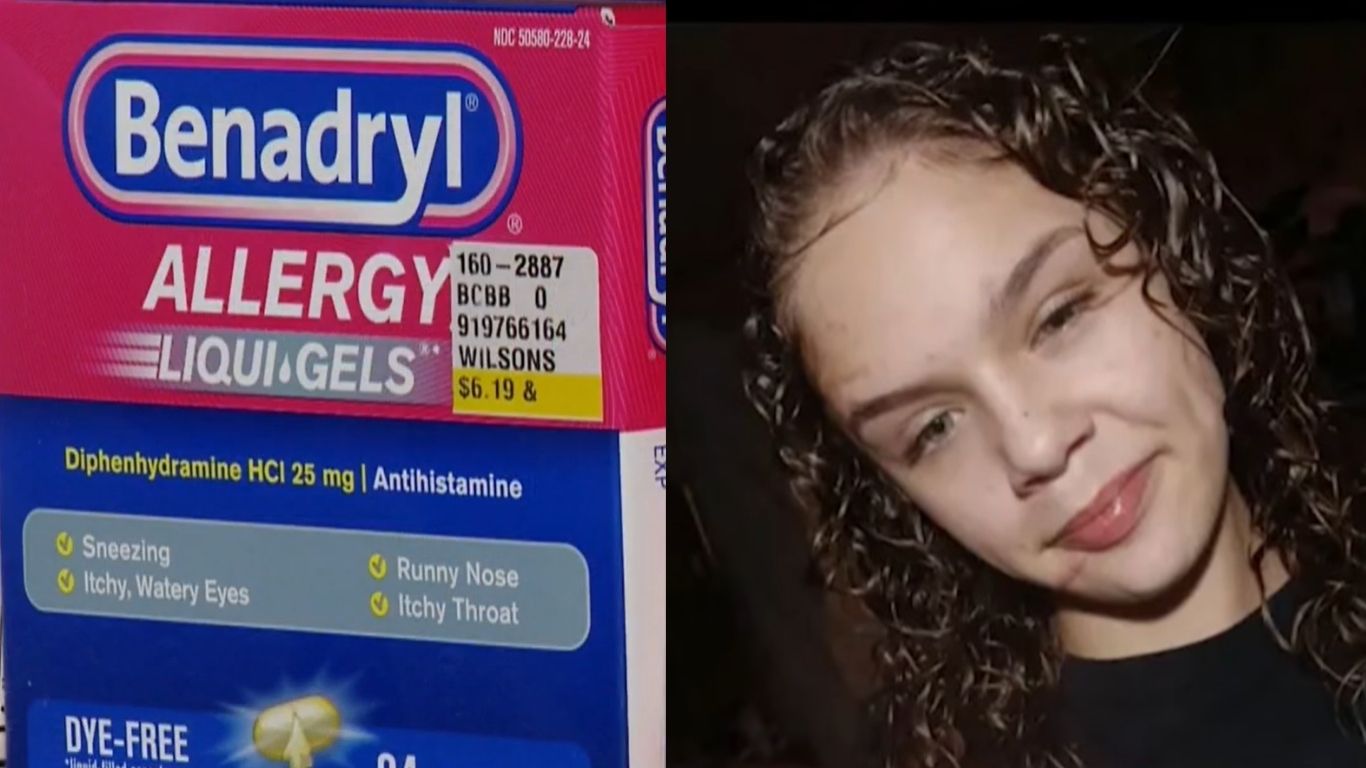
ENID, Okla. (Diya TV) — A dangerous social media trend known as the “Benadryl Challenge” has again raised alarm after a 15-year-old Oklahoma girl suffered a severe medical emergency following an apparent overdose of the over-the-counter allergy drug diphenhydramine. Health officials and parents continue to warn about the risks of viral internet challenges that encourage teens to misuse common medicines for online attention.
The case has renewed concern about how social media trends can push young users into life-threatening behavior. Doctors say diphenhydramine, widely sold under the brand name Benadryl, becomes extremely dangerous when taken in large amounts. The drug can cause confusion, hallucinations, heart problems, seizures, and coma. In severe cases, it can lead to death.
Local reports identified the teenager as 15-year-old Leah Presson of Enid, Oklahoma. She was rushed to Integris Health Baptist Medical Center in Oklahoma City after what appeared to be a diphenhydramine overdose.
Medical staff placed her in intensive care. Reports also stated she showed no brain activity following the incident, raising fears about long-term survival and recovery.
Her father, Richard Presson, said his daughter had attempted the challenge before. He said she wanted to become famous on social media platforms such as TikTok. He described the situation as devastating for the family and urged other parents to talk more openly with their children about online risks.
“I don’t even want to think about a funeral because I feel like there’s still hope,” he said in comments reported by local media. He added that he believes in miracles and still hopes for recovery.
The Benadryl Challenge refers to a viral online trend where teens intentionally take high doses of diphenhydramine. The goal is often to experience hallucinations and record the effects for social media platforms.
Medical experts strongly discourage this behavior. They warn that the difference between a dose that causes hallucinations and a dose that causes life-threatening toxicity is very small. This makes accidental overdose extremely likely.
Diphenhydramine is an antihistamine used to treat allergies and help with sleep. When used correctly, it is generally safe. However, high doses can overwhelm the central nervous system. Doctors describe this condition as anticholinergic toxicity, which can disrupt brain and heart function.
Health authorities have repeatedly warned about the dangers of the Benadryl Challenge. In 2020, the U.S. Food and Drug Administration issued a Drug Safety Communication about diphenhydramine misuse. The agency warned that taking more than the recommended dose can lead to serious heart issues, seizures, coma, or death.
Doctors say the risk increases quickly with an overdose. Emergency physicians report that patients can deteriorate rapidly once symptoms begin. They stress that immediate medical care is critical in suspected cases of overdose.
Medical professionals also warn parents to keep over-the-counter medications stored safely. They say easy access can increase the risk of experimentation among teens influenced by social media trends.
The rise of the Benadryl Challenge has highlighted ongoing concerns about online safety. Platforms like TikTok have taken steps to block search results related to the trend. However, reports suggest that some users still find ways to bypass restrictions by using misspellings or private group chats.
Experts say social media companies face a continuing challenge in stopping harmful content from spreading. They also stress that education at home and in schools plays a key role in prevention.
This is not the first time the trend has led to tragedy in Oklahoma. In 2020, another teenage girl died after participating in a similar attempt involving diphenhydramine. Cases like these have fueled renewed calls for stronger awareness campaigns and better digital safety tools.
As Leah Presson remains in critical care, her case has become another warning in a growing list of incidents linked to viral internet challenges. Health officials continue to urge parents, teachers, and teens to understand the real-world dangers behind online trends that can turn deadly in minutes.