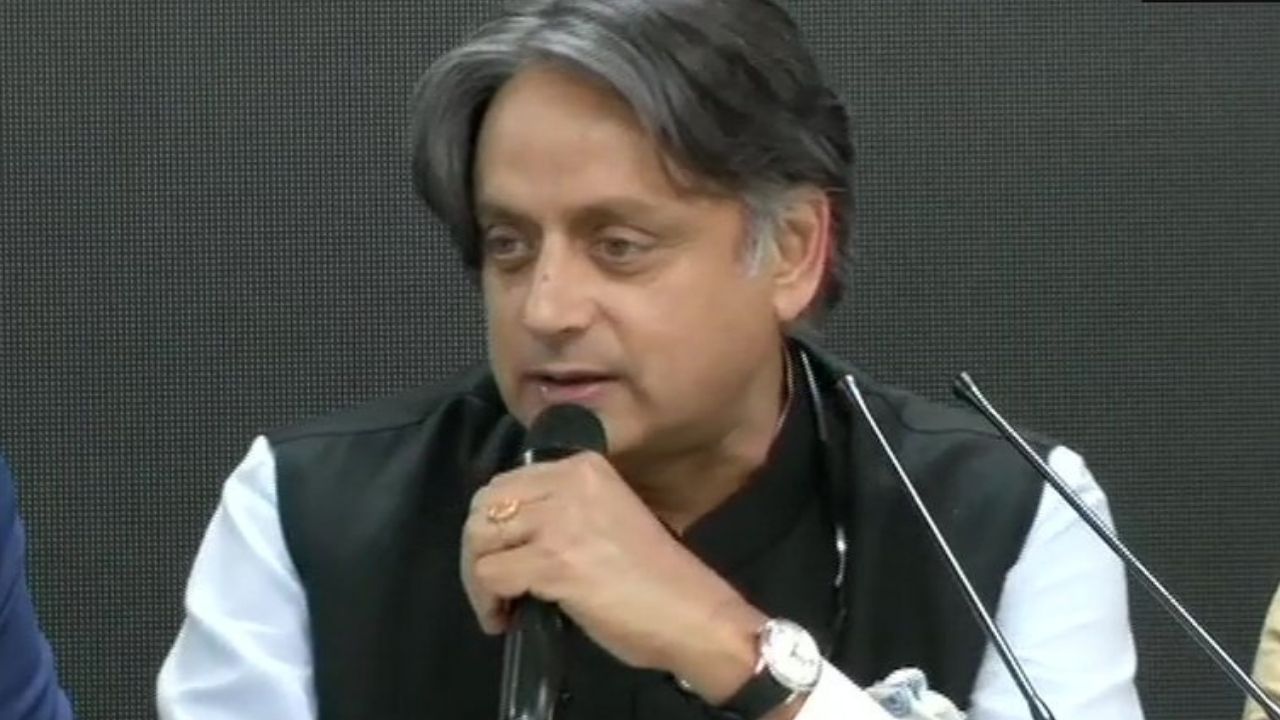
BOGOTA, Colombia (Diya TV) — Congress MP Shashi Tharoor said he was disappointed by Colombia’s response to India’s military action under Operation Sindoor. He made the remarks during a visit to Colombia as part of a multi-party Indian delegation.
The Colombian government had expressed condolences to Pakistan over deaths that followed India’s retaliatory strikes on May 7. India launched the strikes after the April 22 terror attack in Pahalgam, Jammu and Kashmir.
Tharoor said India could not ignore the Pahalgam attack. He also stressed that India targeted terrorist infrastructure and acted in self-defense.
Tharoor currently leads a multi-party delegation on a five-country tour. The delegation has visited Panama and Guyana and is also traveling to the United States. The group aims to explain India’s position on terrorism and highlight its concerns about Pakistan.
During a press briefing in Bogota, Tharoor addressed Colombia’s statement directly. He said India expected other countries to understand the circumstances behind Operation Sindoor.
“We were a little disappointed in the reaction of the Colombian government,” Tharoor said, according to ANI. He added that Colombia appeared to focus on deaths in Pakistan rather than the victims of terrorism.
Tharoor said India had exercised its right to self-defense. He also rejected any comparison between India and Pakistan over the conflict.
According to Tharoor, India carried out the strikes against terrorist bases. He said the action followed years of attacks that India has faced.
He also referred to the April 22 Pahalgam attack. The attack killed tourists and triggered a sharp rise in tensions between India and Pakistan. The Resistance Front, which Indian authorities have linked to Lashkar-e-Taiba, claimed responsibility for the attack.
Tharoor said Colombia has also faced terrorism over the years. Therefore, he argued that Colombia should understand India’s concerns about cross-border terrorism.
The Congress leader also pointed to alleged links between terrorist groups and Pakistani officials. He shared an image that he said showed Pakistani military officials attending funerals for terrorists killed during Indian strikes.
Tharoor argued that such incidents raised questions about Pakistan’s alleged support for militant groups. However, Pakistan has rejected Indian accusations that it supports terrorism.
Tharoor also suggested that Colombia may not have had the full context when it issued its statement of condolence. He said India wanted to clarify its position through direct diplomatic engagement.
“We are very happy to talk to Colombia in some detail about the circumstances,” he said.
Meanwhile, Tharoor urged governments around the world to pressure Pakistan to stop providing haven to terrorist groups. He said international action could help prevent further attacks.
Tharoor also discussed Pakistan’s military ties with China during his remarks in Bogota. He said Chinese equipment makes up a major share of Pakistan’s military hardware.
He cited a figure of 81% for China’s share of Pakistani defense equipment. Tharoor argued that some of the equipment supports offensive capabilities rather than only defensive needs.
He also mentioned the China-Pakistan Economic Corridor, or CPEC. The project forms a major part of China’s Belt and Road Initiative. It connects parts of western China with Pakistan’s Gwadar port and supports trade and infrastructure development.
The remarks came as India and Pakistan continued to face diplomatic tensions following the Pahalgam attack and Operation Sindoor. India has maintained that its military action focused on terrorist targets. Pakistan has criticized India’s strikes and disputed New Delhi’s claims.
Tharoor’s comments in Colombia highlight India’s effort to explain its actions to international partners. At the same time, Colombia’s condolences to Pakistan show the differing responses among governments to the India-Pakistan conflict.
As the delegation continues its tour, Tharoor said India will keep making its case to foreign governments. He stressed that India wants international partners to recognize the threat posed by terrorism while avoiding what he called a false equivalence between attackers and those defending themselves.