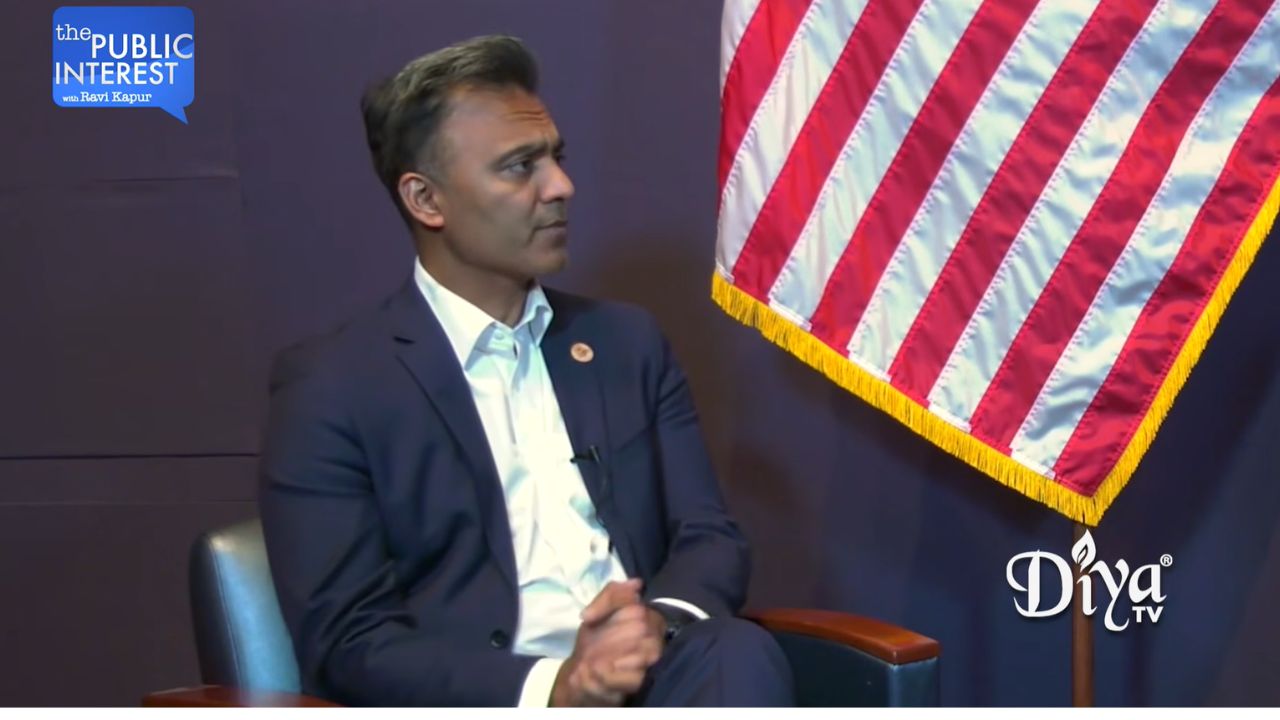
PHOENIX (Diya TV) — Democrat Amish Shah defeated Republican Jay Feely in Arizona’s 1st Congressional District, flipping the open seat for Democrats. The Associated Press called the race Thursday. At the time, Shah led 52.5% to Feely’s 45.4%, a margin of 22,494 votes. Arizona’s results remain unofficial until election officials finish counting ballots and certify the canvass.
Shah, an emergency room physician and former Arizona state representative, will represent a district that includes Scottsdale, Cave Creek and parts of north Phoenix. He becomes the first Democrat to represent the north Valley area in Congress in years. Republican David Schweikert held the seat for 15 years before leaving to run unsuccessfully for governor.
The result caps Shah’s second campaign for the seat. He challenged Schweikert in 2024 and lost by 3.8 percentage points. This year, Shah won the Democratic primary against Marlene Galán-Woods, Jonathan Treble and Rick McCartney. The Democratic Congressional Campaign Committee had backed Galán-Woods in the primary, then supported Shah after he secured the nomination.
The general election drew more than $25 million in outside spending after the primary, according to campaign finance filings reported by KTAR. About $16 million went to help Feely or oppose Shah, while roughly $9 million went to help Shah or oppose Feely. Spending had already topped $25 million by mid-October, with contributions from groups aligned with both parties and a group tied to tech billionaire Elon Musk.
The candidates debated water, data centers, household costs, health care and border security during their only debate, held Oct. 7. Their sharpest disagreement centered on data centers. Feely argued Arizona should build them to compete in artificial intelligence, while Shah opposed new facilities in the district, citing concerns about water, power, noise and traffic.
Feely criticized Shah for supporting state tax breaks for data centers while serving in the Arizona Legislature. Shah said the circumstances had changed, arguing that artificial intelligence and its demand for data centers were not prominent when lawmakers considered those tax credits.
The candidates also offered different approaches to household costs. Shah called for rolling back President Donald Trump’s tariffs, which he argued raise costs for families and businesses. Feely supported extending Trump-era tax cuts, reducing regulations and increasing domestic energy production. Shah emphasized protecting Medicare and reversing Medicaid cuts; Feely focused on border security, including more border wall construction and deportations of violent offenders.
Feely, a former NFL kicker and broadcaster who played four seasons for the Arizona Cardinals, entered the race with Trump’s endorsement. He first launched a campaign in the more Republican 5th Congressional District, then switched to the 1st after Trump endorsed Mark Lamb in the 5th. Feely presented his relationship with Trump as an asset, while Shah argued that Feely would put the president’s priorities ahead of the district’s.
After declaring victory, Shah said he had spoken with Feely and praised his opponent’s campaign. Shah pledged to represent district voters regardless of whom they supported. Feely told supporters on election night that he and his wife had made peace with the possibility of losing.