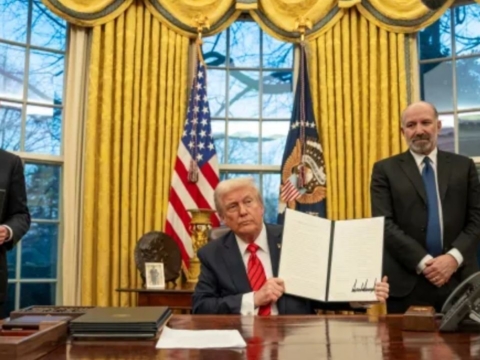
WASHINGTON (Diya TV) — The Trump administration has issued a new rule that will bar green card holders from accessing loans backed by the U.S. Small Business Administration. The policy limits eligibility for SBA loans to businesses that are fully owned by U.S. citizens or U.S. nationals. The change marks a major shift in federal small business lending policy. It could affect thousands of legal permanent residents who own or plan to start small businesses across the United States.
The SBA notice states that, beginning March 1, businesses seeking SBA-backed loans must be 100% owned by U.S. citizens or U.S. nationals. The owners must also list their principal residence in the United States. The rule removes legal permanent residents, also known as green card holders, from eligibility. It also rescinds earlier guidance that allowed limited foreign ownership in some cases. Under the previous rule, up to 5% of a business could be owned by foreign nationals or by U.S. citizens, U.S. nationals, or green card holders who lived outside the United States. The new notice eliminates that exception.
The notice states that legal permanent residents “will not be eligible to own any percentage interest in an Applicant/Borrower” under SBA-backed loan programs. The SBA provides billions of dollars each year in loan guarantees. It supports small businesses through programs such as 7(a) loans and 504 loans. Many entrepreneurs rely on these programs to secure funding when traditional financing proves difficult.
Green card holders are authorized to live and work permanently in the United States. Many operate small businesses in industries such as retail, technology, food service,s and construction.
The new SBA loan rule does not prevent non-citizens from owning businesses. It also does not block them from applying for conventional bank loans. However, SBA-backed loans often offer lower down payments, longer repayment terms, and government-backed guarantees. These features reduce risk for lenders and increase access to capital for small businesses.
Without access to SBA loans, some legal immigrants may struggle to secure affordable financing. Industry experts say the change could limit growth opportunities for immigrant-owned businesses, which play a key role in local economies. Small businesses account for a large share of job creation in the United States. Immigrant entrepreneurs contribute significantly to that growth. Many start businesses that serve local communities and create employment opportunities.
Democratic U.S. Rep. Grace Meng criticized the decision. She said the SBA’s action denies “hard-working legal immigrants the capital they need to start or grow a business.” She added that the rule locks them “out of the American Dream.”
Human rights groups have also raised concerns about the administration’s broader immigration policies. They argue that recent actions, including visa revocations, green card reviews, and deportation efforts, have created fear among immigrant communities. President Donald Trump has defended his administration’s approach. He has cited domestic security concerns and fraud prevention as key reasons for tighter immigration and lending policies. Several of these policies have faced legal challenges in federal courts.
Supporters of the new SBA rule argue that taxpayer-backed loan programs should prioritize U.S. citizens. They say the change ensures that federal benefits go directly to American-owned businesses. Critics counter that green card holders pay taxes, hire workers, and contribute to the U.S. economy. They argue that excluding them from SBA loan programs sends a negative message to legal immigrants who follow the law and invest in their communities.
The SBA has not announced any transition period beyond the March 1 effective date. Businesses with green card holders listed as owners may need to review their ownership structures if they plan to apply for SBA financing. The policy does not affect existing loans that the SBA already approved. However, new applications must meet the updated ownership requirements.
The rule adds a new layer of complexity for immigrant entrepreneurs. Many will now turn to private lenders, venture capital, or alternative financing options. The long-term economic impact remains unclear. The decision could reshape access to federal small business loans and influence how immigrant-owned companies plan for growth.